
How to Choose Hollow Body Frogs for a Wholesale Range
A frog lure is easy to judge by its paint and surprisingly difficult to judge through a sealed pack.
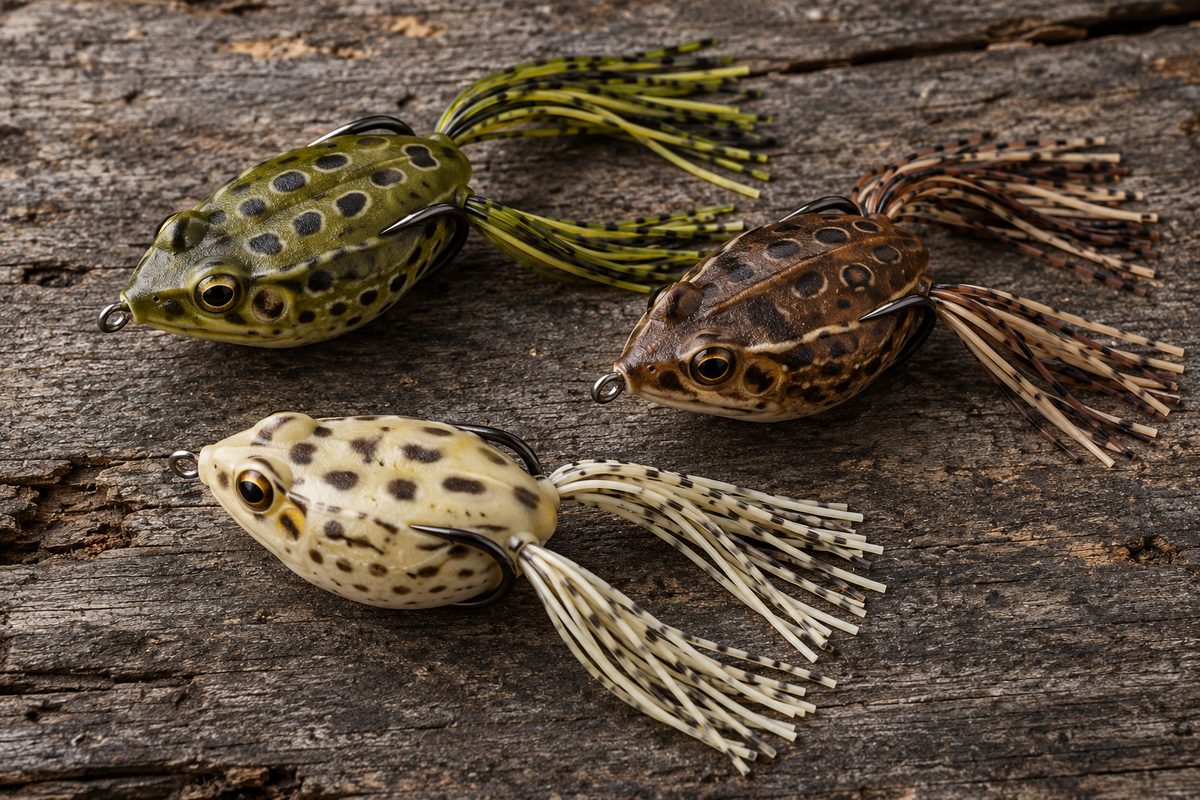
Body shape, hook fit and skirt configuration need a shared approval reference. AI-generated editorial illustration.
A frog lure is easy to judge by its paint and surprisingly difficult to judge through a sealed pack. The details that matter are often underneath: the way the body collapses, the position of the double hook and the balance that lets the lure sit and move on the surface.
For a wholesale assortment, start with the intended retrieve and cover conditions. A walking frog and a popping frog can serve different needs even when their bodies are similar in length. Approve the finished assembly before spending time on a long list of color options.
Give each frog a clear role
Decide whether the core model is intended for a walking retrieve, a popping presentation or another specific action. Ask the supplier to demonstrate that action with a documented tackle setup. A short edited clip can show a possibility, but an uncut sequence makes it easier to see how much input the lure requires.
SPRO’s Bronzeye Shad 65 is described as a floating hollow-body lure with a gliding action, while the Bronzeye Pop 70 is presented as a popping model. [1][2] These are examples of distinct product roles, not evidence that any similarly shaped frog will perform the same way.
Keep target species and market language accurate. A product promoted for bass in one country should not inherit an unsupported claim about catch rates for another species. Your description can explain the intended surface presentation without promising a particular result.
Evaluate body compression with the hook installed
A soft body in the hand is only part of the assembly. Check whether the body can move enough to expose the points and whether it returns to its intended shape afterward. Compare multiple samples using the same procedure. If a quantitative compression requirement matters, ask a suitable provider to define the fixture and measurement.
Examine how the hook follows the body. Points standing too far clear of the surface may undermine the intended snag-resistant presentation. Points buried too deeply can create a different problem. Set the acceptable position against an approved sample and drawing rather than writing “weedless” as if it were a measurable guarantee.
Check balance and water entry during use
Observe how the frog lands, its resting angle and its recovery after each retrieve. Use the proposed hook, skirt and internal weight configuration. Test across an agreed number of casts and retrieve cycles, recording any rotation, sinking or need to empty water.
Hollow-body designs can differ in how they admit and release water. Ask the supplier for the intended behavior and user instructions, then compare the sample with that explanation. Do not approve a sinking sample merely because squeezing it restores buoyancy once. Determine whether the behavior fits the actual use and the agreed sample criteria.
| Buying point | What to specify | What to verify |
|---|---|---|
| Role | Walking or popping presentation | Demonstrate with the stated setup |
| Body | Compression and recovery | Check with the hook installed |
| Balance | Resting angle and water entry | Observe repeated retrieve cycles |
| Assembly | Hook and skirt configuration | Retain the exact approved sample |
Keep skirt and color changes under control
Skirt material, length and quantity should be recorded with the body specification. A change to the appendages may alter the profile or retrieve. Evaluate the configuration that will go into the retail pack rather than a hand-trimmed sample that customers will never receive.
Choose the first colors with your market in mind and keep the distinction visible on the shelf. If dealer requests support a natural pattern and a high-contrast option, that may be a sensible starting trial. It is not a universal rule about what fish will strike. Avoid adding a dozen patterns based only on an attractive sample board.
Ask whether minimums apply per body, skirt combination or painted pattern. A shared body mold does not necessarily mean every finish can be supplied in any quantity. Put the proposed mix on the quotation so the opening order is commercially clear.
Use the belly view in the sample review
Ask for clear underside and side photographs as well as the usual front-facing product shot. These views help document the hook position, body seam and visible weight arrangement. They also give the buyer a reference for checking later samples. Photographs cannot establish the internal construction or prove a watertight seal, so connect them with the physical sample and the water trial. That combination is more informative than approving a frog from a color chart alone.
Write useful instructions and approve the pack
A frog pack should identify the product’s intended presentation and basic rigging information supported by the supplier. Avoid a fixed promise that an angler should wait a certain number of seconds after every strike; the situation and tackle can differ. Keep the article and packaging focused on product behavior that can be explained accurately.
Check that the packaging protects the hook position and skirt arrangement. Remove samples after the agreed storage trial and compare body shape and paint condition with the approval reference. Record length and weight using a stated method, including whether the skirt is part of the length measurement.
A strong first inquiry names the intended action, body size, target market and proposed color count. Ask for finished samples, a clear view of the hook fit and a continuous action demonstration. Approving those details first makes the final range easier to explain and reduces the chance that a cosmetic choice conceals a functional compromise.
Research sources
Sources checked on 7 October 2026. Manufacturer examples are attributed and are not independent tests. Sample procedures and buying decisions are editorial recommendations. Worked examples and scenarios are hypothetical, not market data.
[1] SPRO — Bronzeye Shad 65. Manufacturer example of a floating gliding hollow-body model.
[2] SPRO — Bronzeye Pop 70. Manufacturer example of a popping model with specified hook and dimensions.