
Lure selection for US waters
This page maps lure sub-type to US fishery and states, for each, the published band and MOQ our own samples record.
- Sub-type decides the tooling, so choosing a sub-type is a tooling decision before it is a stocking decision.
- Our samples differ in size and completeness by sub-type, so the bands are not equally strong evidence.
- Hard lure records MOQ 100 on every listing in our sample, the most uniform band in the catalogue.
This is a buyer's table, not a fishing guide. It maps sub-type to fishery and states what our own samples record, including where those samples are too small to carry a claim.
Sub-type first, price second
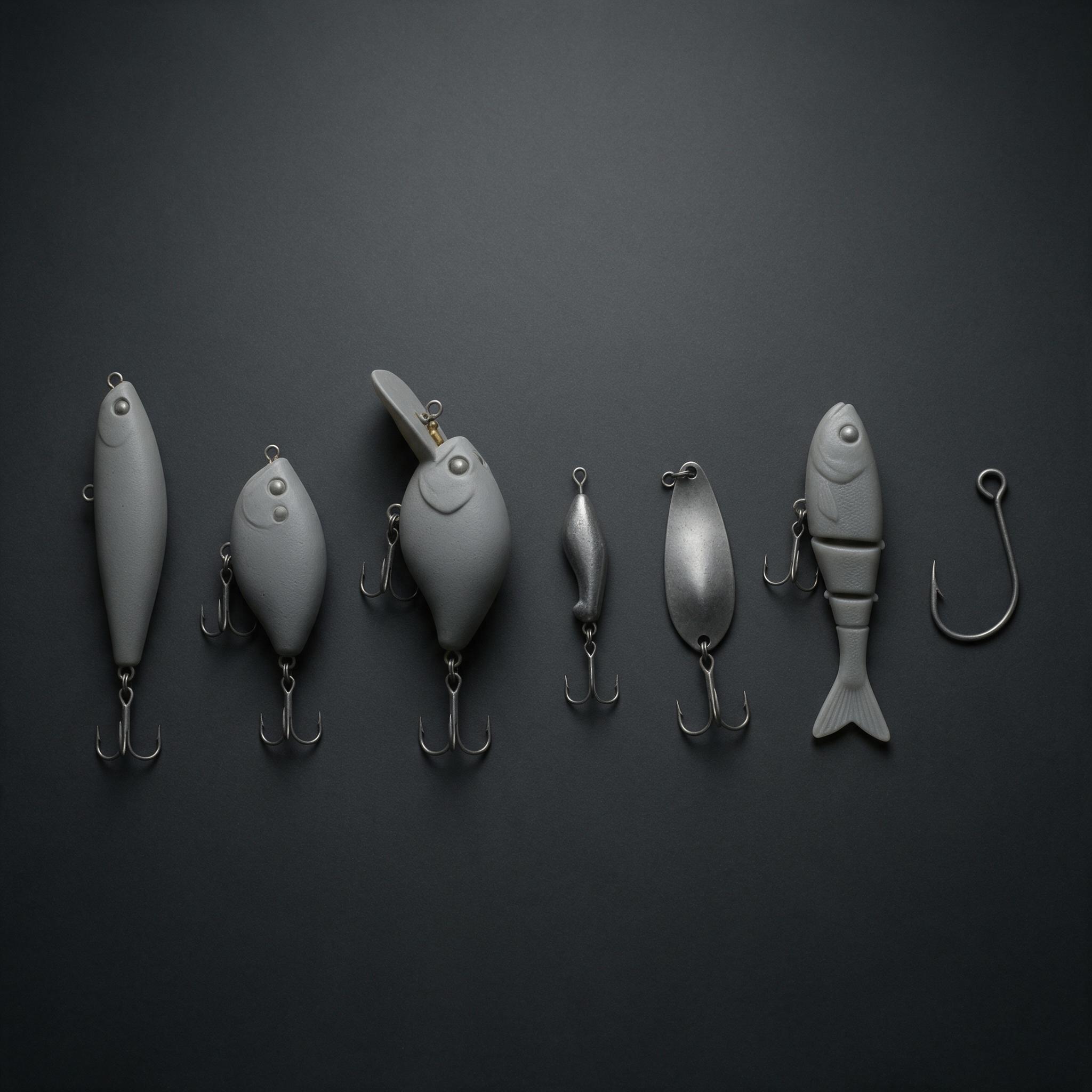
A sub-type decides the tooling. A square-bill crankbait and a deep diver are different moulds with different bills and different weighting, and a soft plastic swimbait and a metal jig are different processes altogether. So the selection is a tooling decision before it is a stocking one, and it has to be settled before any price is comparable.
The fishery decides the sub-type list. A freshwater bass programme and an inshore saltwater programme draw different sub-types from the same catalogue, which is why a single "lure range" brief produces a quotation for whichever sub-type the supplier happens to hold.
What our samples record, and how strong each is
- Hard lure - six listings at US$1.85 to US$3.20 per piece, MOQ 100 on every one. The most uniform MOQ band in the catalogue. Six listings that share a sub-type, so the band is not a price for the category.
- Soft lure - six listings at US$0.20 to US$3.85, MOQ 50 to 1,000. The widest MOQ spread in the catalogue, and the spread reflects two different processes rather than a negotiable band.
- Crankbait - three listings at US$0.30 to US$0.85, MOQ 200 to 500. The narrowest band in the catalogue and a sampling artefact: all three are plain ABS bodies, and no deep diver or lipless bait appears.
- Spoon and spinnerbait - six listings at US$0.31 to US$6.00, the widest published band. Two of the six are priced per bag, which is most of the apparent spread.
- Metal jig - five listings at US$0.97 to US$2.01, MOQ 200 on four of five. A 2.1x band, so price does not separate the options.
- Minnow and VIB - the two types where buoyancy class and rattle configuration decide the product, and where the order has to state those fields explicitly.
- Rod - three listings at US$9.15 to US$132.55, the widest price spread in the catalogue, MOQ 20 to 100. The cheapest listing carries the highest MOQ.
- Fishhook - nine listings, the largest sample, at US$0.07 to US$2.40 per piece, MOQ 100 to 2,000. Five different products under one type name.
Two of those samples are three listings. A three-listing band cannot carry a market claim, and we publish it as a description of the sample rather than of the category.
The fields that travel across sub-types
Whatever sub-type is chosen, four fields recur in every order on this site: the unit and pack count, the material or construction, the hook or terminal configuration, and the finish. In our catalogue, at least one listing per type fails at least one of those, usually the unit.
That is the practical reason to fix sub-types first. A brief built on four well-stated fields per sub-type can be quoted and compared. A brief for "lures" cannot, because the supplier chooses the sub-type and the buyer never sees which one was priced.
What this page does not do
It does not say which bait works in which water. That is a fishing question and this site is a sourcing one, and our editorial rules are explicit that we record claims rather than make them.
Sources 6 cited
- The hard lure sample behind the MOQ and band figures
- The soft lure sample, which carries the widest MOQ spread in the catalogue
- The rod sample, which carries the widest price spread
- Our editorial rules on what this site will and will not claim
- UN Comtrade — China export statistics under HS 9507, 2023-2024 (retrieved from the official API)
- Harmonized System heading 9507 (rods, hooks, reels, lures) — US HTS lookup
Every figure on this page traces to one of these. The same list is declared in the page structured data (schema.org citation) and in the Markdown twin.