
Sabiki rigs and luminous shrimp baits
A sabiki rig carries any number of small hooks, usually six to ten, each on its own short dropper line spaced roughly 15 cm apart, with a weight at the end.
- A sabiki rig carries any number of small hooks, usually six to ten, each on its own short dropper line spaced roughly 15 cm apart, with a weight at the end (Wikipedia).
- The dressed hooks normally carry luminescent or iridescent material, and public rig descriptions list glow beads on gold hooks as standard rather than premium (Wikipedia, Bassmaster).
- Bait rigs are counted and sold in rigs, not hooks: a UK wholesaler lists a 7-hook luminous shrimp sabiki at a minimum buy of one pack of 50 pieces, hook size 0/2, 65 lb main line and 20 lb hook links (Power Cast Tackle).
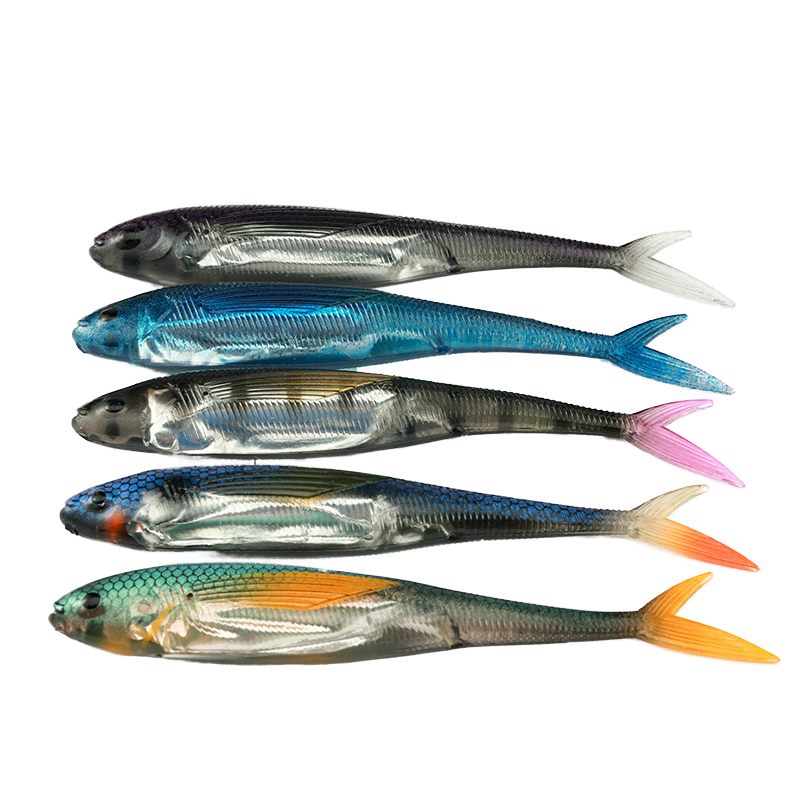
A sabiki rig is a piece of terminal tackle pretending to be a lure: a string of small dressed hooks on dropper lines, weighted at the bottom, dropped into a baitfish school and hauled back with several fish on it. The luminous version adds beads or a glow shrimp body so the same rig keeps working in low light, which is why the winter and night baiting season is where the volume sits.
For a buyer the shape is not the product. Hook count, hook size, line strength, glow pigment load and the rig count inside a pack decide whether a quote is real, and the trade sells these by the pack rather than by the hook. This record keeps the price conversation on our own sampled factory figures, because no retail price survey for this category exists in our data.
- A sabiki rig carries any number of small hooks, usually six to ten, each on its own short dropper line spaced roughly 15 cm apart, with a weight at the end (Wikipedia).
- The dressed hooks normally carry luminescent or iridescent material, and public rig descriptions list glow beads on gold hooks as standard rather than premium (Wikipedia, Bassmaster).
- Bait rigs are counted and sold in rigs, not hooks: a UK wholesaler lists a 7-hook luminous shrimp sabiki at a minimum buy of one pack of 50 pieces, hook size 0/2, 65 lb main line and 20 lb hook links (Power Cast Tackle).
- Baitfish named in public rig descriptions include sardines, threadfin herring, cigar minnows, blue runners and mackerel (Bassmaster, Wikipedia).
- Soft plastic bodies in this category are PVC plastisol, PVC resin carried in liquid plasticizer, while silicone is a cured elastomer with different tear behaviour and a higher material cost (Family Fishin).
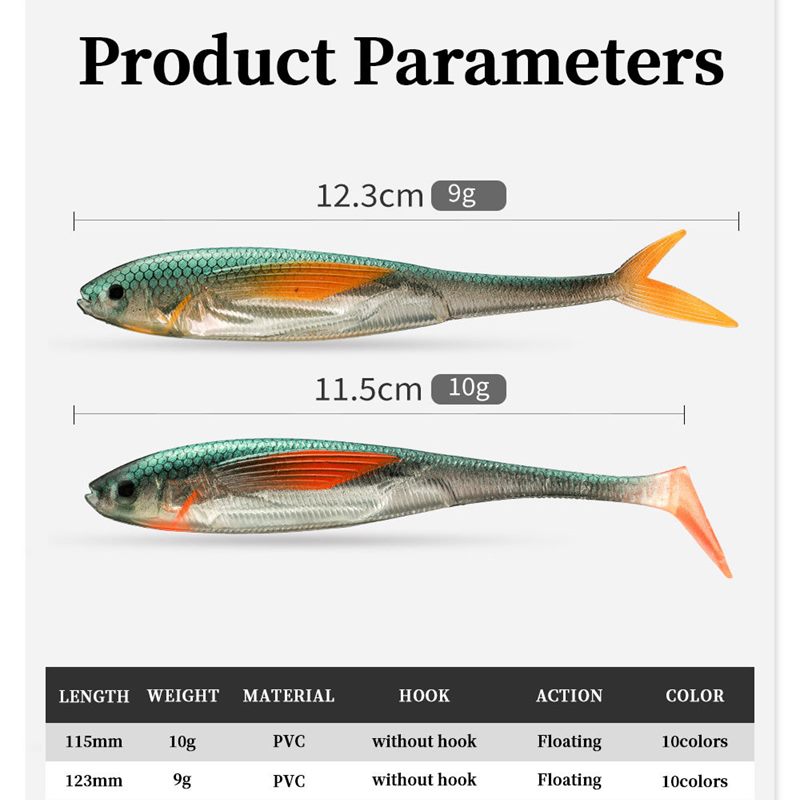
- Our sampled listings quote US$0.20 to US$0.23 per piece at MOQ 1,000 pieces for a luminous shrimp sabiki soft bait, and the wider sampled soft-lure band is US$0.20 to US$3.85 per piece at MOQ 50 to 1,000 pieces - a factory price basis.
What moves the unit price
| Cost driver | Why it moves the price | How to control it in the order |
|---|---|---|
| Hook count per rig | Each additional hook adds a hook, a dropper knot and a shrimp body - the rig is priced per hook, not per rig. | Fix the hook count first. A three-hook and a six-hook rig are different products at different price points. |
| Hook size, model and finish | A named hook with a plated finish costs several times an unbranded one, and plating is what rusts first. | Name the hook and the finish. This is the substitution that ends a saltwater programme. |
| Main line and hook link strength | The rig fails at its weakest link, so line strength and the dropper knot are priced against the target species. | State the main line and branch line strengths, and ask which knot is used at the dropper. |
| Glow pigment load and afterglow | Glow is a pigment cost, and a longer afterglow means more pigment and a slower, more expensive moulding. | Specify the afterglow you need and the charge conditions - not the word luminous. |
| Beads, film and dressing | Every bead, flake and fiber is a separate assembly step on a rig that already has several. | List the components you want. On these rigs the dressing is where a cheap quote hides. |
| Rig count per pack and pack format | The trade buys these in packs of tens, so the pack count multiplies the unit and sets the retail price. | Agree the count and the pack together; this SKU is sold by the pack far more often than by the piece. |
Which hook count for which job
| Hook count | What it is for | What it changes in the product |
|---|---|---|
| 5-6 hooks | Short rigs for small baitfish and tight structure, where a long rig tangles | Fewer hooks per rig means more rigs from the same tying time, so hook size and dropper spacing have to be stated |
| 7-8 hooks | The common wholesale format; a luminous shrimp rig sold this way is priced by the pack of 50 pieces | Main line and hook link strength move the cost more than the body does at this count |
| 9-10 hooks | Long rigs dropped or jigged over schooling baitfish from a pier or boat | More hooks and more droppers means more hand-tying labor, which is where a bait rig quote is really decided |
Pack formats and how the trade buys them
| Pack format | Who buys it | What to lock in writing |
|---|---|---|
| Retail sleeve, single rig | E-commerce and mass retail | Rig count per sleeve, hook size printed on the card, and a barcode that matches the carton marks |
| Wholesale pack, 50 pieces | Distributors and specialist tackle wholesale | Whether a piece means one rig or one hook, plus the named hook model and line strengths |
| Bulk carton, unpacked | Boat, charter and commercial bait supply | A packing method that keeps rigs straight, because a jumbled rig is a rejected carton |
Glow: turning bright into a specification
| Glow element | How to specify it | Why it decides the order |
|---|---|---|
| Luminous beads | Bead diameter, glow color, and afterglow in minutes after a fixed charge time | The cheapest glow element on a rig, and usually the whole difference between two quotes |
| Luminous shrimp body | Pigment load in the body plus the base color, tested on a production sample | Phosphorescent pigment is sold by weight, so pigment load is the first cost a factory will trim |
| Iridescent film or flash | Film or foil pattern agreed from a physical sample | Daylight appeal only; it carries no afterglow, so it must not be priced as a glow upgrade |
Material choice for the shrimp body
| Material | Behaviour | Where it wins |
|---|---|---|
| PVC plastisol | PVC resin in liquid plasticizer, fused with heat; softness set by plasticizer load | High-count bait packs, where the lowest unit cost is the whole proposition |
| Silicone | Cured elastomer, higher tear resistance, higher material cost | Premium bodies and reorder arguments built on durability |
| TPE or TPR | Thermoplastic rubber, tougher and springier than plastisol | Mid-tier bodies that need both action and durability at a known cost step |
Questions buyers ask about sabiki rigs and luminous shrimp baits
Each question has its own page, so it can be found and cited on its own.
- What is a sabiki rig?A sabiki, also called a flasher or fish skin rig, is a pre-tied string of small hooks.
- What is a luminous shrimp bait actually for?It is a dressed hook or a soft plastic body shaped like a small shrimp, and the luminous element exists for low light.
- Which species are caught with these rigs?Sabiki rigs are bait rigs first.
- How many hooks are on a rig, and how many rigs are in a pack?Hook count and pack count are separate fields and both move the price.
- Should the shrimp body be silicone or PVC?Most soft plastics in this category are PVC plastisol: PVC resin carried in liquid plasticizer and fused with heat.
- How do you specify a glow finish so it is not just a word?Specify afterglow, not brightness: charge the part for a fixed time under a fixed light, then measure how long it stays visible and in what color.
- How is this product priced from a Chinese factory?Our sampled listings quote US$0.20 to US$0.23 per piece at MOQ 1,000 pieces for a luminous shrimp sabiki soft bait, and the wider sampled soft-lure band runs US$0.20 to US$3.85 per piece at MOQ 50 to 1,000 pieces.
- Why is the minimum order higher than on other soft lures?Our one sampled luminous shrimp sabiki listing runs at MOQ 1,000 pieces, the top of our sampled soft-lure range, where other soft lures in the same sample start at MOQ 50 pieces.
What to send for a comparable quote
| Field | Why it changes the price |
|---|---|
| Hook count per rig | Sets the rig count per pack and the tying labor, which is the largest cost inside a bait rig |
| Hook size and model | Hook size drives the whole format, and a named model is the difference between two identical-looking quotes |
| Main line and hook link strength | Heavier line costs more material but breaks less, and it is the first field substituted on a reorder |
| Dropper spacing | Longer spacing uses more leader per rig and changes both the fishing and the packing |
| Body material | PVC plastisol, TPE or silicone, each with a different material cost and tear behaviour |
| Glow pigment load | Glow is a priced additive, so pigment load is where a supplier protects margin on a fixed quote |
| Afterglow duration | A measured figure in minutes after a fixed charge; it is the only defensible glow specification |
| Beads, film and dressing | Bead grade, foil pattern and color count each add a component and a setup to the order |
| Swivels, snaps and weight clip | Corrosion-resistant hardware costs more and is where saltwater returns begin |
| Rig count per pack | A pack of 50 pieces can mean 50 rigs or 50 hooks, and nothing else in the quote matters until that is fixed |
| Price basis and order quantity | FOB or EXW, plus the run size the price applies to; a bait rig price without an MOQ is not a price |
What to agree in writing, and the tolerance to name
| Field | What the order has to state | Tolerance or standard to name |
|---|---|---|
| Hook count per rig | The exact number of hooks on the rig | Exact count, checked on a sampled rig rather than on the drawing. |
| Hook size, model and finish | Hook model, size and the plating used | Name the model and size, and state the plating. For saltwater, name a salt-spray standard - ISO 9227 or ASTM B117 - with the hours required. |
| Main line and hook link strength | The strength of each line, and the knot used at the dropper | State both line strengths in writing; the rig is only as strong as the weaker one. |
| Dropper spacing | The distance between hooks along the rig | Agree the spacing in millimetres, since spacing decides whether the rig tangles. |
| Glow pigment and afterglow | The pigment load and the afterglow time | State the charge time, the light source and the decay threshold. Luminous without measurement conditions is not a specification. |
| Beads, film and dressing | Which components are present and where they sit | List them, and check them against a retained approved rig; components get dropped silently. |
| Rig count per pack | Rigs per pack and packs per carton | Exact counts inspected to AQL ISO 2859-1, with the label content agreed. |
What we have not verified
- Unit volumes: we publish no figure for how many sabiki rigs or luminous shrimp baits sell per month in any market, and no shipment or sell-through data was checked.
- Retail prices: we have not run a retail price survey, so no retail or margin table is published here, and any retail figure seen on a listing belongs to that listing.
- Supplier count on Alibaba or 1688: we did not audit how many factories list luminous shrimp sabiki rigs, so no supplier-count claim is made.
- Catch performance: no test data supports a claim that a glow body outfishes a plain one; only the specification itself is measurable.
- Pigment restrictions by market: we have not checked whether any market restricts a specific phosphorescent pigment, and the buyer's customs broker decides the classification.
Where this record leads
- Sampled soft lures listings - reference prices and MOQ per listing.
- Specification builder - turn these fields into a spec sheet you can send.
- Reference price bands - the band this record sits in, with its unit stated.
- The sourcing playbook - the process these questions sit inside.
- US and EU compliance - what has to be true before the shipment clears.