
Private-label value rod programmes from Weihai
Own-brand rod buyers in Weihai specify six things: blank grade, guides, reel seats, action labels, grips and travel format.
- Our Weihai cluster page carries the sourced cluster numbers: industry reporting attributes roughly 60% of global fishing rod output and about 90% of the domestic Chinese rod market to the city, exports grew 18.4% year on year in the first two months of the reported period, and local blank, guide and reel-seat supply means component changes rarely stall a production run (internal cluster page).
- Wired2Fish's rod explainer states that IM6 and IM8 were a proprietary graphite material from one supplier that makers rolled with their own resins, and that the industry now talks about modulus and tonnage instead, with 30-ton and 40-ton blanks and rods blending several grades in one build (Wired2Fish).
- Kentucky Fish and Wildlife Resources, writing in Game & Fish, defines action as where the rod bends most, called deflection, running from extra fast at the tip to slow near the handle, and power as how much weight the rod can cast; it adds that a medium action rod does not exist and that the angler usually means a medium power rod with a fast action (Game & Fish).
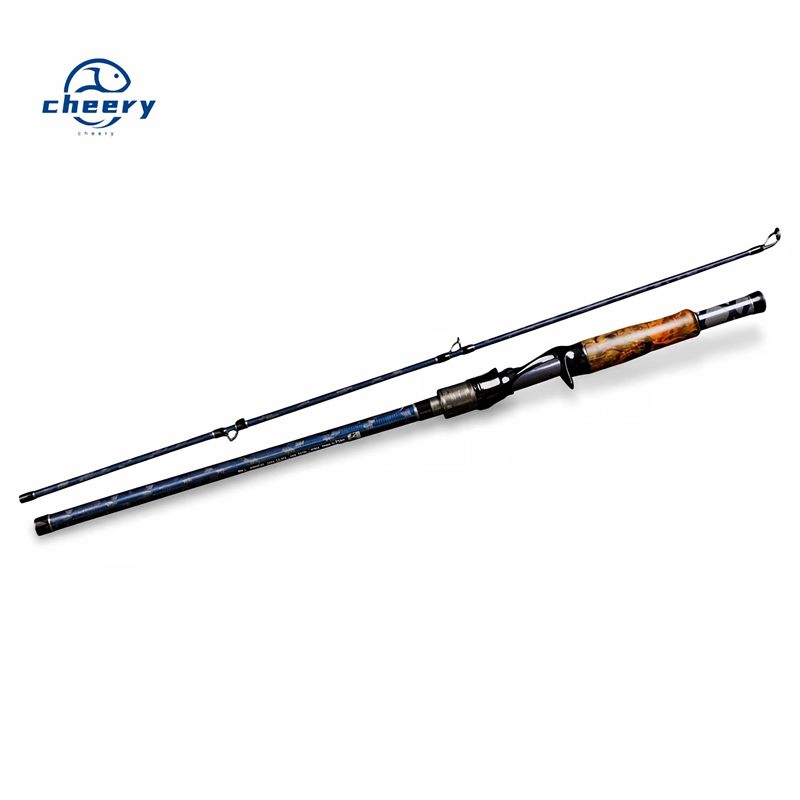
A private-label rod programme is the part of the value end of the tackle trade that looks simplest and is not. The factory supplies a blank it already knows how to roll, hardware it already stocks and a finish it already sprays, and the buyer supplies a name, a model matrix and a specification. The trade describes these programmes as available with low minimum order quantity entry points and several levels of customisation, which is what makes them accessible to a retailer or a distributor without a factory relationship. Everything that follows is specification work, and the specification is where the programme is either protected or quietly cheapened. Our own Weihai cluster page carries the sourced cluster numbers behind that offer: industry reporting attributes roughly 60% of global rod output and about 90% of the domestic Chinese rod market to the city, exports grew 18.4% year on year in the first two months of the reported period, and blank, guide and reel-seat supply is local, so a component change rarely stalls a run.
The two specification fields that decide whether a repeat order arrives identical are the blank and the hardware. Wired2Fish's explainer notes that carbon alone says very little, that the old IM6 and IM8 names came from one supplier's proprietary graphite, and that makers now speak in modulus and tonnage while blending grades inside a single rod; a grade change is therefore a different rod with the same model number. On hardware, Fuji's own tiering shows what a substitution costs: FazLite sits between Alconite and economical aluminum oxide, and corrosion control frames are claimed at seven times the corrosion resistance of standard stainless steel. Our Weihai cluster page states the risk plainly, naming guide and reel-seat hardware as the most common substitution in a rod programme. Add the labeling problem described in Game & Fish - action is where the rod bends, power is what it can cast, and a medium action rod does not exist - the travel format decision, where modern tip-over-butt and spigot ferrules carry the engineering, and the grip and handle length that decide how a heavy rod balances, and the buyer's job is clear: write every field, then approve a production sample rather than a showroom piece.
- Our Weihai cluster page carries the sourced cluster numbers: industry reporting attributes roughly 60% of global fishing rod output and about 90% of the domestic Chinese rod market to the city, exports grew 18.4% year on year in the first two months of the reported period, and local blank, guide and reel-seat supply means component changes rarely stall a production run (internal cluster page).
- Wired2Fish's rod explainer states that IM6 and IM8 were a proprietary graphite material from one supplier that makers rolled with their own resins, and that the industry now talks about modulus and tonnage instead, with 30-ton and 40-ton blanks and rods blending several grades in one build (Wired2Fish).
- Kentucky Fish and Wildlife Resources, writing in Game & Fish, defines action as where the rod bends most, called deflection, running from extra fast at the tip to slow near the handle, and power as how much weight the rod can cast; it adds that a medium action rod does not exist and that the angler usually means a medium power rod with a fast action (Game & Fish).
- Fuji's guide programme is tiered by ring material: FazLite sits between the hardness of Alconite and economical aluminum oxide, the rings are described as braid tough, and the CC Corrosion Control frames are stated to have tested seven times more corrosion resistant than standard stainless steel (Wired2Fish).
- A Game & Fish travel rod roundup reports that modern tip-over-butt and spigot ferrules are engineered to maintain blank continuity and reduce the flat spots that troubled early travel rods, and that travel models in the roundup are built on 30- and 40-ton carbon blanks with aluminum-oxide guide inserts on stainless frames and cork handles (Game & Fish).
- Our sampled listings quote US$9.15 to US$132.55 per piece for Fishing Rod at MOQ 20 to 100 pieces - a factory price basis; one travel rod row in the same sample is quoted per bag at US$28.05 to US$29.45 at a 20-bag minimum, so the unit basis has to be normalised before two rod quotes are compared.
What moves the unit price
| Cost driver | Why it moves the price | How to control it in the order |
|---|---|---|
| Blank material and grade | Carbon content and grade decide weight, sensitivity and where the rod breaks, and a named grade is a different material purchase. | Name the grade you are quoting - IM7 and 30T are not the same blank at the same price. Ask which grade the sampled price assumes. |
| Guide set | Guides are bought by the set, and a branded set with a named frame and ring material can cost more than the blank on a value rod. | Count the guides and name the brand and ring material. This is the single commonest substitution on a repeat order. |
| Reel seat and hood material | A moulded seat, a graphite seat and a machined seat are three different components at three different prices. | State the seat type and the hood material. An unnamed seat is where a value programme loses its feel. |
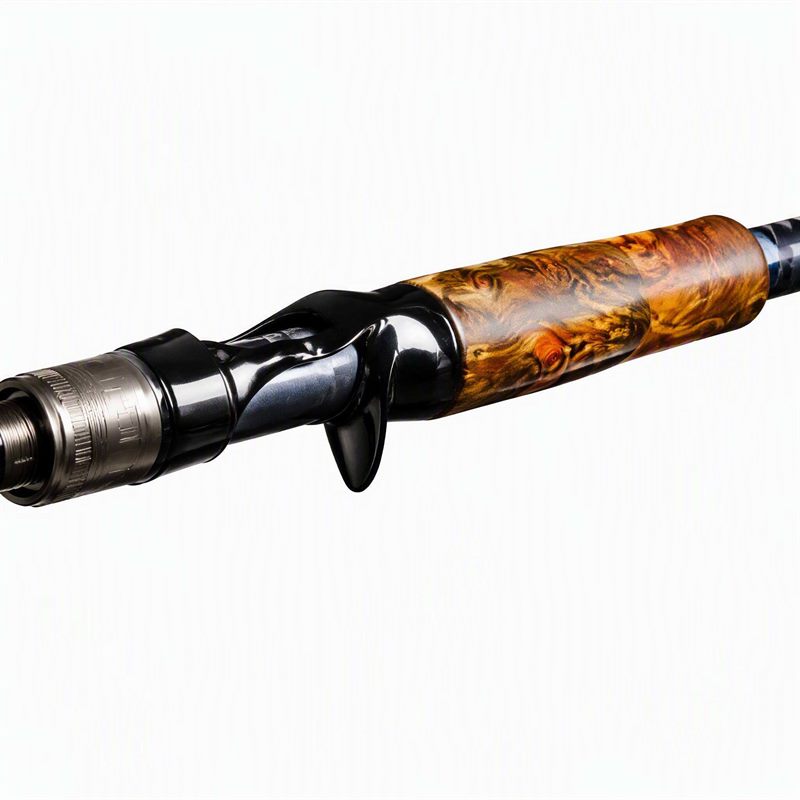
| Grip material and configuration | EVA grades, cork and split grips differ in material cost and in the labor to fit them. | Specify the material and whether the grip is full or split; the split grip is a labor decision as much as a style one. |
| Finish, decals and own-brand artwork | Decals, a secondary wrap color and a clear coat are separate operations, and low volumes make the setup cost per rod worse. | Fix the decal count and the wrap colors. Artwork changed after the price is agreed is a new quotation, not an adjustment. |
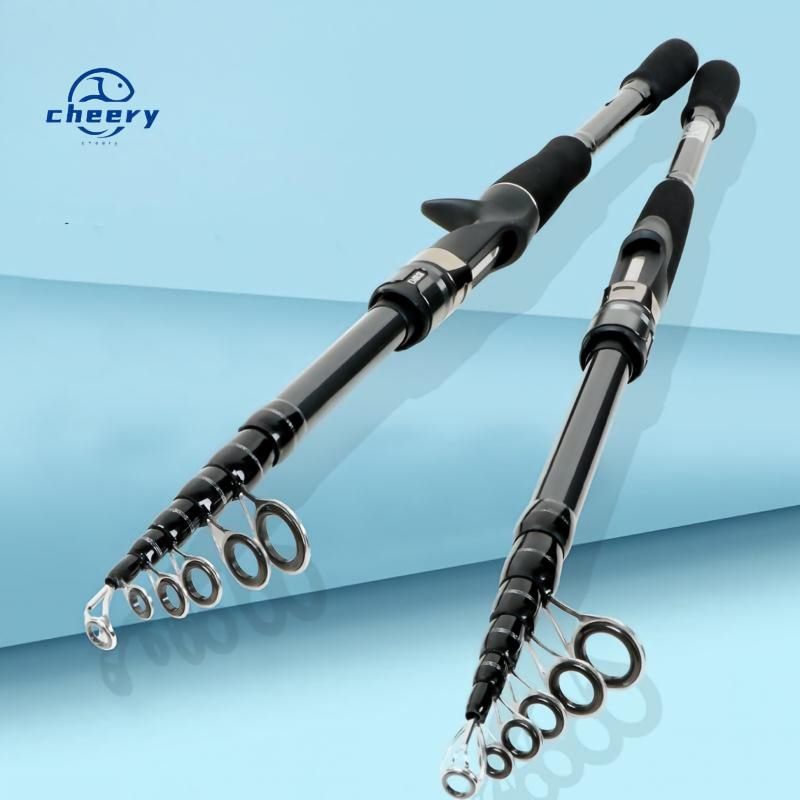
| Length, section count and travel format | A two-piece, a five-section travel rod and a one-piece blank are different tooling, different packaging and different freight. | Decide the travel format early: it changes the blank, the ferrule and the carton size all at once. |
The rod models in our sample, field by field
| Field | Retractable lure rod | Travel spinning rod | Casting rod set |
|---|---|---|---|
| Reference price and MOQ | US$9.15 - 15.25 / piece, MOQ 100 pieces | US$28.05 - 29.45 / bag, MOQ 20 bags | US$39.21 - 132.55 / piece, MOQ 20 pieces |
| Blank material and grade | Carbon, grade not stated | Carbon, grade not stated | Carbon, grade not stated |
| Action | Fast | Medium | Not stated |
| Power class | Ultra light | Not stated | XXH |
| Length and section count | Not stated | 1.98 m / 2.13 m / 2.28 m, 5 sections | Not stated |
| Line and lure rating | Not stated | Not stated | 0.6 kg stated, without saying what it measures |
| Guide set | Not stated | Fuji named; no model, ring material or count | Not stated |
| Reel seat | Not stated | Not stated | Not stated |
| Grip material | Not stated | Cork | Not stated |
| Handle and butt length | Not stated | Not stated | Not stated |
| Finish, decals and own-brand artwork | Not stated | Not stated | Not stated |
Blank material and grade: what a factory can actually quote
| Blank statement | What the published source says | What to write on the order |
|---|---|---|
| Carbon or graphite, unqualified | Our Weihai cluster page states that blank material and action determine the rod's real-world feel and that carbon alone means very little (internal cluster page) | A named material class plus the finished blank weight you will accept, with the sample as the reference rather than the word |
| Modulus or tonnage figure | Wired2Fish reports that makers now describe stiffness by modulus and tonnage, such as 30-ton and 40-ton, and blend several grades within one rod (Wired2Fish) | One grade figure per model, held across repeat orders, plus which grade sits in the tip and which in the butt |
| Legacy grade names such as IM6 or IM8 | The same explainer states IM6 and IM8 were a proprietary graphite material from one supplier, rolled by each maker with its own resins and finishes (Wired2Fish) | If you inherit an old grade name, ask for its current equivalent and re-approve the sample instead of assuming the blank is unchanged |
Guide set and reel seat: the repeat-order substitution risk
| Component | What the published source defines | How to hold it on a repeat order |
|---|---|---|
| Guide ring material | Fuji's FazLite rings are positioned between Alconite and economical aluminum oxide in hardness and are described as braid tough, with the family also offered in silicon carbide and titanium-framed tiers (Wired2Fish) | Ring material named by trade name for each guide position or size group, not a general statement that the rod uses quality guides |
| Guide frame corrosion | Fuji's CC Corrosion Control frames are stated to have tested seven times more corrosion resistant than standard stainless steel (Wired2Fish) | Frame treatment named for any saltwater programme, and the corrosion or salt-spray report asked for rather than a promise |
| Reel seat and hoods | Our Weihai cluster page lists guide and reel-seat hardware as the most common substitution risk in a rod programme, and grip material as a further specification point (internal cluster page) | Seat type, hood material and any named brand or equivalent written into the specification, with the fitted part checked on the production sample |
Action and power labeling: what the label has to say
| Label field | What the term describes | What the buyer has to fix |
|---|---|---|
| Action | Action describes where the rod bends most, from extra fast at the tip to slow close to the handle (Game & Fish); a related explanation frames it as tip movement and how fast the rod returns to straight (Wired2Fish) | One action term per model, plus the bend position stated numerically if the term is ambiguous between makers |
| Power | Power refers to how much weight the rod can cast and runs from ultralight to extra-extra-heavy, on a separate scale from action (Game & Fish; Wired2Fish) | Power plus a cast-weight range in grams or ounces, which is the figure an angler can compare between two rods |
| Printed ratings and the shelf label | Wired2Fish states that power, action and length together define what a rod does, and Game & Fish notes that a medium action rod is really a medium power rod with a fast action (Wired2Fish; Game & Fish) | Line rating in lb and lure rating in grams or ounces printed on the blank and repeated on the packaging and the web listing |
Travel format, ferrules and handle length
| Format decision | What the published source says | What it changes for the order |
|---|---|---|
| Multi-piece travel build | Modern tip-over-butt and spigot joints are engineered to maintain blank continuity and reduce the flat spots that troubled early travel rods (Game & Fish) | Ferrule type, fit tolerance and section count become named specifications and a check on the production sample |
| Blank and guide spec on travel models | Travel models in the roundup are built on 30- and 40-ton carbon blanks with aluminum-oxide guide inserts on stainless frames and cork handles (Game & Fish) | Section count and ferrule reinforcement set the blank cost before grip, finish or branding is priced |
| Grip material and handle length | Cork, rubber and EVA foam are all in use, split grips cut weight while full grips suit two-handed casting, and longer handles build a fulcrum for heavy lures (Wired2Fish) | Grip material, split or full, and rear handle length measured on the sample, because this is where a value rod is usually cheapened |
What a rod model table has to carry
| Field | Why it decides the order | Stated in the sample |
|---|---|---|
| Length and section count | Sets the freight format, the blank and the carton at the same time | 1 of 3, including a five-section travel model |
| Blank material and grade | Grade decides weight, sensitivity and price more than any other field | All 3 name carbon; none names a grade such as IM7 or 30T |
| Action | Where the rod bends, which decides what it can cast and how it hooks fish | 2 of 3 (Medium, Fast) |
| Power class | The load range, and the field retailers print on the shelf | 1 of 3 (XXH, Ultra Light) |
| Line and lure rating | What the rod is sold to cast, and the first number a buyer compares | 1 of 3 gives a figure (0.6 kg) but does not say what it measures; no line rating anywhere |
| Guide set | The commonest substitution on a repeat order | 1 of 3 names the brand (Fuji); no model, ring material or count |
| Reel seat | Decides the feel of the rod in the hand, and it is a bought-in component | None of the 3 states the seat type or hood material |
| Grip material and configuration | Material cost and fitting labor, and a visible quality signal | 1 of 3 (cork); none states full or split |
| Handle and butt length | One of the few rod dimensions a buyer feels immediately | None of the 3 states it |
| Finish, decals and own-brand artwork | Setup cost per rod, and worse at low volume | None; decals are visible in the photographs only |
| Packaging, order quantity and price basis | Decides the freight and whether two quotes can be compared at all | MOQ on all 3; price basis (FOB or EXW) on none |
Questions buyers ask about private-label value rod programmes from Weihai
Each question has its own page, so it can be found and cited on its own.
- What is a private-label rod programme and what does it commit the buyer to?It means the factory builds rods carrying your brand rather than its own.
- How should blank material and grade be written on a purchase order?Not as the word carbon.
- Why are guides and reel seats the biggest repeat-order risk?Because they are the components a factory can change without touching the blank or the mould, and the swap is invisible in a product photograph.
- What is the difference between rod action and rod power, and why does the label matter?Action describes where the rod bends most, called deflection, running from extra fast at the tip to slow near the handle.
- Which grip and handle specification should a value programme use?Trade guidance describes cork, rubber and EVA foam as the mainstream options, with EVA denser, lighter and easier to use well at a low cost, and cork still favoured for feel in wet conditions.
- How does a travel format change the rod a factory has to build?A multi-piece rod adds ferrules, and the ferrule becomes the engineering.
- What do private-label rods cost from a Chinese factory?Our sampled listings quote US$9.15 to US$132.55 per piece for Fishing Rod at MOQ 20 to 100 pieces, which is a factory price basis and nothing more; it excludes freight, duty, packaging and every margin after the factory gate.
- What belongs in the sample approval and compliance pack?Our Weihai cluster guidance is direct: approve a production-line sample rather than a showroom piece, because showroom rods are often hand-built, and set color against a physical or measured reference rather than a screen.
What to send for a comparable quote
| Field | Why it changes the price |
|---|---|
| Length and section count | One-piece, two-piece, five-piece or telescopic; every extra section adds a ferrule, fitting labor and a separate blank build |
| Blank material and grade | The modulus or tonnage class per model; a higher grade costs more per blank and is the field most easily substituted between orders |
| Action, meaning where the rod bends | Fast, moderate-fast, moderate or slow; a different taper means a different flag pattern and often a different mandrel |
| Power class from ultralight to extra-extra-heavy | Power sets blank wall thickness and butt diameter, so it changes material consumption and the guide set the blank needs |
| Line and lure rating | The cast weight in grams or ounces and the line weight in lb the blank is built for; quoting both forces the factory to commit to a test standard |
| Guide set, by position | Guide count, size progression, ring material and frame treatment; a ring upgrade and a corrosion-treated frame are each a priced line item |
| Reel seat type and hood material | Pipe, trigger or palm-support seats in graphite, nylon or carbon; a branded or carbon seat is one of the largest component differences on a value rod |
| Grip material and configuration | Cork, EVA or composite, split or full; cork is graded by quality and EVA is the usual value choice, and the two price differently at the same length |
| Handle and butt length | A longer rear handle builds a fulcrum for heavy lures and consumes more grip material and a longer blank section, so length has to be measured on the sample |
| Finish, decals and own-brand artwork | colorway, logo method by decal, laser or pad print, and clear-coat quality; own-brand artwork adds proofing and often a plate or screen cost |
| Packaging, order quantity and price basis | Polybag, cloth bag, hard tube or blister, with the minimum per model and per color and a stated EXW or FOB basis; our sample even quotes one travel rod per bag, so the unit must be normalised |
What to agree in writing, and the tolerance to name
| Field | What the order has to state | Tolerance or standard to name |
|---|---|---|
| Blank material and grade | The grade, named, and whether it is the same blank as the approved sample | Name the grade and keep the approved sample rod. A grade claim without a sample is not checkable. |
| Action and power labeling | Where the rod bends, and the power class printed on it | Agree the deflection at a stated load, or the point on the blank where it bends - a label alone is marketing. |
| Line and lure rating | The ratings printed on the blank | State the units and the test method for the rating, since a lure rating is a range the rod can cast, not a limit. |
| Guide set | Brand, model, ring material and the number of guides by position | Name them by position on the order. A guide count one short is invisible until the rod is loaded. |
| Reel seat | Seat type and hood material | Name both, and check the seat on a production sample, not only on the showroom rod. |
| Grip and handle length | Grip material, and the handle and butt lengths | State lengths in millimetres with a band; handle length is one of the few rod dimensions a buyer actually feels. |
| Production sample versus showroom sample | Which sample the run will be measured against | Ask for a production-line sample above a stated quantity, because a hand-built showroom rod is not a production reference. |
| Carton and freight format | Pieces per carton and the packed length | Agree the packed length and the carton count; on rods the freight format can cost more than the finish. |
What we have not verified
- Market size and unit volumes for private-label or own-brand rods: no sourced figure was found for any market, and none is invented here.
- Retail prices and margins on own-brand rods: we publish no retail price survey, and no retail figure is restated here; any price seen on a listing or in an article belongs to that source.
- Factory capability in Weihai for private-label rod programmes: we have not audited which sampled factories can run an own-brand programme, so no capacity, tooling or supplier claim is made.
- Which guide and reel-seat brands each factory stocks as standard: not verified, so component availability has to be confirmed per factory and per order.
- Equivalence between tonnage, modulus and legacy IM grade names for rod blanks: no published conversion table was found, so any equivalence a supplier offers should be treated as unverified and compared by sample.
Where this record leads
- Sampled fishing rods listings - reference prices and MOQ per listing.
- Specification builder - turn these fields into a spec sheet you can send.
- Reference price bands - the band this record sits in, with its unit stated.
- The sourcing playbook - the process these questions sit inside.
- US and EU compliance - what has to be true before the shipment clears.
Related reading
- What is a private-label rod programme and what does it commit the buyer to?
- Why are guides and reel seats the biggest repeat-order risk?
- How does a travel format change the rod a factory has to build?
- What is the difference between rod action and rod power, and why does the labe
- Which grip and handle specification should a value programme use?
- How should blank material and grade be written on a purchase order?