
Octopus skirt trolling lures: Kona heads and speed windows
Skirt length, strand style and head construction decide a trolling lure, and the head shape sets the speed it is built for.
- The dished-out Hawaiian head shape was first called a conventional head before someone coined the name Kona head; the original Kona leader hole sat below center in the front dish and centred at the back, and those Hawaiian lures were trolled at 4 to 6 knots (InTheBite).
- Later head shapes and face angles opened a trolling band of 7 to 15 knots, and the tuning note for a slant head is 8 knots with a pop and splash every 5 to 8 seconds (InTheBite).
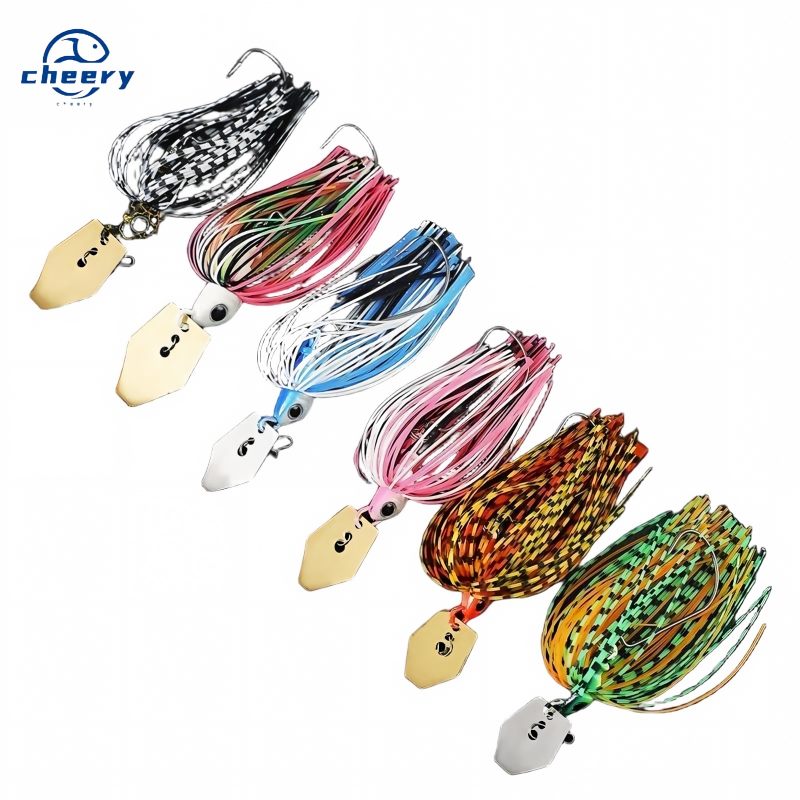
- The Kona head is a scooped nose with an offset pulling point, described as a wild lure that will not sit still and tends to duck aside as a fish closes its mouth; Sevenstrand began making them in bulk in the 1970s (FishTrack).
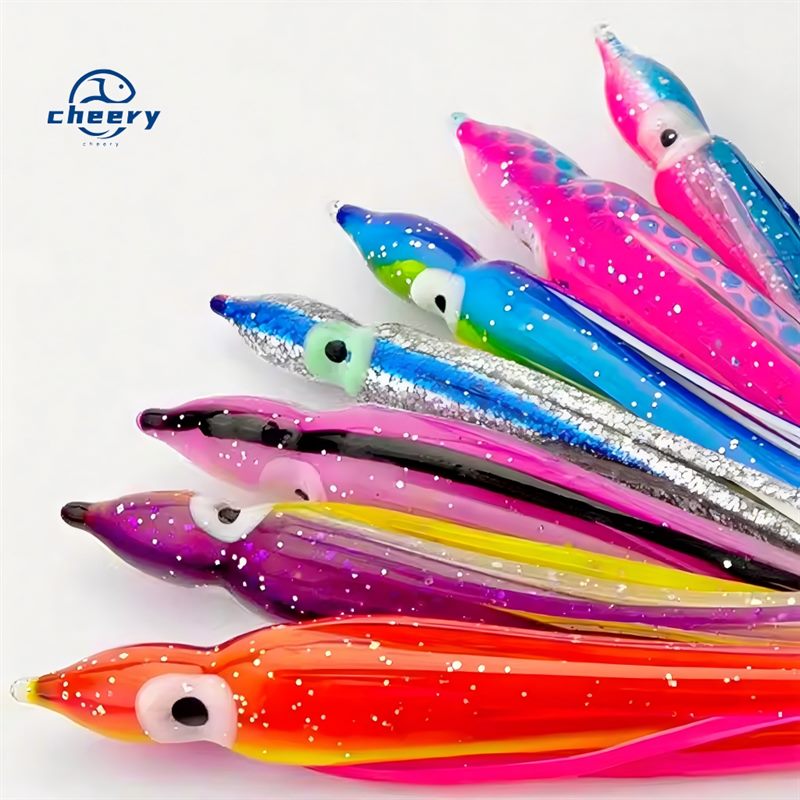
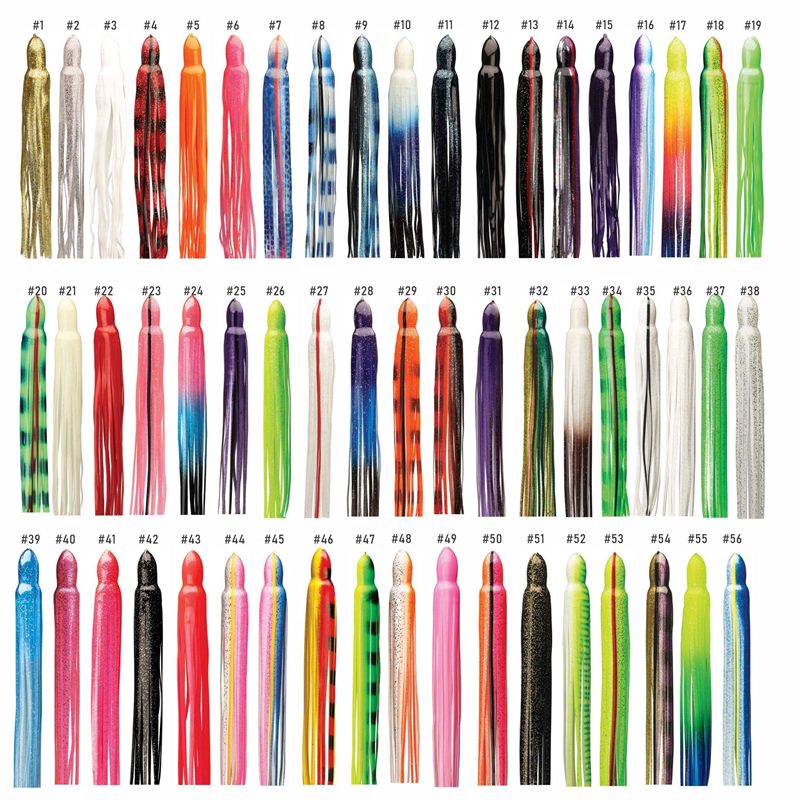
An octopus skirt trolling lure is a head, a collar and a bundle of plastic strands, and the strands are the part that has to be sold as numbers. Published guidance ties skirt length to the rig - eight to nine inches for ballyhoo and schoolie mahi, thirteen to fourteen for large marlin and tuna - and ties strand style to speed, with thicker octopus strands pulsing at six to eight knots while slimmer squid skirts track straighter when the boat is pushed. The Kona head sits at the wandering end of that family: a scooped nose with an offset pulling point that will not sit still.
The sourcing consequence is that head material is the field that decides the quote. A hand-poured resin head is labor and finishing; a lead head is metal weight, freight weight and, in some markets, a warning label; a soft injection-moulded head is the cheapest of the three and is priced accordingly. For this family our sampled listings quote US$0.08 to US$2.80 per piece at MOQ 100 to 2,000 pieces, a factory price basis, and the sample includes a resin-head Kona, so a buyer can compare a poured head against a PVC skirted bait inside our own data.
- The dished-out Hawaiian head shape was first called a conventional head before someone coined the name Kona head; the original Kona leader hole sat below center in the front dish and centred at the back, and those Hawaiian lures were trolled at 4 to 6 knots (InTheBite).
- Later head shapes and face angles opened a trolling band of 7 to 15 knots, and the tuning note for a slant head is 8 knots with a pop and splash every 5 to 8 seconds (InTheBite).
- The Kona head is a scooped nose with an offset pulling point, described as a wild lure that will not sit still and tends to duck aside as a fish closes its mouth; Sevenstrand began making them in bulk in the 1970s (FishTrack).
- Retail skirt guidance matches 8 to 9 inch skirts to ballyhoo and schoolie mahi rigs and 13 to 14 inch skirts to large marlin and tuna lures, sells replacement skirts across a 4.5 to 14 inch range, and describes octopus strands as thicker and pulsing at 6 to 8 knots against slimmer squid skirts that track straighter when speed rises (Tackle Room).
- A published lead bullet trolling lure carries its weight in the metal at 13 oz with a 9 inch skirt and 25 oz with a 14 inch skirt, is sold lure-only or cable-rigged with double hooksets, and ships with a California lead exposure warning (Fathom Offshore).
- For this family our sampled listings quote US$0.08 to US$2.80 per piece at MOQ 100 to 2,000 pieces - a factory price basis, not a retail price - and the three Octopus Skirt listings in the sample include a resin-head Kona.
What moves the unit price
| Cost driver | Why it moves the price | How to control it in the order |
|---|---|---|
| Head material: resin, lead or soft plastic | Resin heads are cast and finished by hand, lead heads are moulded by weight, and soft heads are a third process entirely. | Choose the head material from the trolling speed and the depth you fish, then quote. The three are not interchangeable at one price. |
| Head weight and face angle | Weight sets the depth band and the face angle sets how the lure tracks; both are mould features. | Quote by weight band and state the face angle you need, or send a head you already fish. |
| Skirt material and strand count | Silicone, rubber and synthetic fiber sit at different material costs, and each strand is a separate assembly step. | Specify the material and the strand count. On a skirted lure the assembly is a large share of the unit cost. |
| Skirt length | Longer skirts take more material and more assembly time, and they are matched to different rigs. | Match the length to the rig you are selling it for; a skirt length that does not suit the head is a return. |
| color count per head | A two-tone or three-tone skirt is more than one material run and more than one assembly pass. | Fix the color count. Head color plus skirt color is already two decisions, not one. |
| Jet holes and keel weighting | Jet holes and a keeled head change the mould, and the leader tube is an extra component. | State whether the head has jet holes and a keel, because these are mould-level decisions rather than finishing. |
Skirt length and the rig it is matched to
| Skirt length | Matched to | What it changes in the order |
|---|---|---|
| 8 to 9 inch | Ballyhoo rigs and schoolie mahi, the usual starting size in retail guidance (Tackle Room) | Collar diameter and the hook size the skirt has to cover, plus how much skirt material each lure uses |
| 13 to 14 inch | Large marlin and tuna lures, matched to heavy hook sets and bigger bait profiles (Tackle Room) | Longer strands mean more material per lure, a larger head collar and a bulkier export carton |
| Replacement packs, 4.5 to 14 inch | Spare skirts bought on their own to re-dress a head after a bite or a wahoo slash (Tackle Room) | A separate SKU whose variables are color count, strand style and pack count rather than head tooling |
Head material: resin, lead or soft plastic
| Head material | Behaviour | What it changes in the order |
|---|---|---|
| Resin, hand poured | Holds a sharp face and paint detail, but the leading edge of a resin head chips if it is handled carelessly (FishTrack) | Pouring and finishing labor, color batches, and any keel weighting or jet tubes set inside the head |
| Lead | The weight is the metal itself: a published lead bullet runs fast and straight just under the surface for wahoo and tuna (Fathom Offshore) | Metal cost and freight weight, plus a lead exposure warning label that some markets require |
| Soft plastic | Injection-moulded soft heads give a squishy feel on the bite and cost less than custom-built lures (FishTrack) | Moulding instead of pouring, a lower unit cost, and a different story to tell on durability |
Trolling speed windows
| Speed window | What runs there | What it demands of the head and skirt |
|---|---|---|
| 4 to 6 knots | The original Hawaiian Kona heads, whose leader hole sat below center at the front (InTheBite) | A head that still works at low speed; the offset pulling point is what makes it wander and duck |
| 6 to 8 knots | Octopus skirts, whose thicker strands pulse at this speed (Tackle Room) | Strand weight and skirt length do the work, so the head tooling itself can stay relatively simple |
| 7 to 15 knots | Modern head shapes and face angles opened this band; a slant head tuned at 8 knots pops every 5 to 8 seconds (InTheBite) | A weighted, keel-balanced head that tracks straight and a skirt that will not blow out or tangle |
Which channel buys which format
| Channel | Format it buys | What it demands |
|---|---|---|
| E-commerce and mass retail | Single lures and small replacement skirt packs in one or two colors | Skirt length and color named on the pack, a low unit cost, and a barcode that matches the carton marks |
| Specialist tackle and big-game dealers | Complete lures with a named head material, skirt length and rigging option | A continuous size ladder, a stated head weight, and the lure-only or rigged choice priced as separate SKUs |
| Boat and charter supply | Bulk replacement skirts and spare heads in the colors the spread already runs | Durability across a season, because a torn skirt is what forces a charter boat to reorder mid-season |
Questions buyers ask about octopus skirt trolling lures: Kona heads and speed windows
Each question has its own page, so it can be found and cited on its own.
- What is a Kona head, and why does it matter on an octopus skirt lure?The name comes from Hawaii.
- Which skirt length should a buyer stock?Published retail guidance ties skirt length to the rig rather than to the fish.
- How do strand style and strand count change the lure?Strand style is a speed decision.
- Should the head be resin or lead?They do different jobs.
- What trolling speeds should the product be sold for?Speeds in the published sources come in bands.
- Who actually buys skirted trolling lures, and how?Three buyer types, and they buy differently.
- How is an octopus skirt trolling lure priced from a Chinese factory?For this family our sampled listings quote US$0.08 to US$2.80 per piece at MOQ 100 to 2,000 pieces, which is a factory price basis and not a retail price.
- How should skirt durability be specified on an order?Specify material and strand geometry rather than a claim.
What to send for a comparable quote
| Field | Why it changes the price |
|---|---|
| Skirt length in inches | The first size axis in the family, and the field that decides how much skirt material and how large a head collar a lure needs |
| Head material | Hand-poured resin, cast lead and injected soft plastic are three different processes, so the material is the quote before any dimension is discussed |
| Head weight in grams or ounces | A lead head is priced by metal weight, so a 13 oz head and a 25 oz head are different material costs and different freight |
| Head shape and face angle | Kona scoop, cup face, slant and bullet heads come from different moulds and each one owns a different trolling speed window |
| Keel weighting and leader tube | An internal weight and an offset or centred leader hole are extra components and extra assembly inside the head |
| Skirt material | Vinyl panels are hand-fitted while silicone is the current default, so the material sets both the labor and the surface texture |
| Strand count and fringe width | More strands and finer fringe mean more material and more cutting and assembly time per lure |
| color count per head | Every colorway is its own pour or cast batch and its own minimum, so the color card is a direct cost line |
| Jet holes | Jetted heads run four to six tubes through the head, which is a separate drilling operation and a separate tooling step |
| Rigging option | Lure-only against supplied with cable and hooks doubles the SKU count and adds crimping labor and hardware cost |
| Pack format and order quantity | Single lure, replacement skirt pack or bulk carton, quoted FOB or EXW at a stated run size and MOQ |
What to agree in writing, and the tolerance to name
| Field | What the order has to state | Tolerance or standard to name |
|---|---|---|
| Head weight | Target weight and whether it includes the skirt and the leader | State the band and what is included in the weighed item. |
| Skirt length | Finished skirt length and how it is measured | Agree the measurement - laid flat or fitted to the head - because the two differ. |
| Strand count and fringe width | Strands per skirt and the width of the fringe | State both, and check them on a retained approved head rather than a photograph. |
| Skirt attachment | How the skirt is fixed to the head, and how it survives a strike | Ask for the attachment method in writing and pull-test a sampled lure; glued skirts let go after a few fish. |
| Head finish and saltwater hardware | Paint or resin finish and any plated hardware | Name a salt-spray standard - ISO 9227 or ASTM B117 - with the hours required. |
| Trolling speed window | The speed range the lure is sold for | Agree it on a water test at the speed you sell for; a lure that blows out at your speed is not the product. |
| Pack format and count | Lures per pack, packs per carton, label content | Exact counts inspected to AQL ISO 2859-1, with the label content agreed. |
What we have not verified
- Retail prices for skirted trolling lures: we publish no retail price survey, so no margin table appears here and any retail figure belongs to the listing that showed it.
- Market size and unit volumes: no sourced figure for skirted trolling lures was found, and none is invented here.
- Head weight against trolling speed: we publish no test data linking a head weight to a speed, only the speed bands named in the cited guides.
- Lead warning and restriction rules by market: labeling and restriction differ by jurisdiction, and the buyer's customs broker decides the classification.
- Catch performance and skirt shelf life: published maintenance advice describes plasticiser oils migrating out of plastic skirts over time, but we publish no shelf-life test, and no test data supports a claim that one skirt length, strand count or color outfishes another.
Where this record leads
- Sampled octopus skirts listings - reference prices and MOQ per listing.
- Specification builder - turn these fields into a spec sheet you can send.
- Reference price bands - the band this record sits in, with its unit stated.
- The sourcing playbook - the process these questions sit inside.
- US and EU compliance - what has to be true before the shipment clears.