
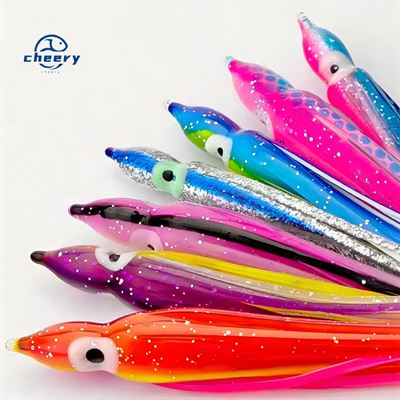
Which skirt length should a buyer stock?
Short answer
Published retail guidance ties skirt length to the rig rather than to the fish. Eight to nine inch skirts are the match for ballyhoo and schoolie mahi rigs.
In detail
Thirteen to fourteen inch skirts are the match for large marlin and tuna lures, where a heavy hook set and a bigger bait profile have to be covered. Replacement skirts are sold across a 4.5 to 14 inch range, so lengths can be stocked as spares without buying complete lures. Two lengths plus a spare-skirt range covers most of a spread.
The numbers behind this answer
| Speed window | What runs there | What it demands of the head and skirt |
|---|---|---|
| 6 to 8 knots | Octopus skirts, whose thicker strands pulse at this speed (Tackle Room) | Strand weight and skirt length do the work, so the head tooling itself can stay relatively simple |
| Channel | Format it buys | What it demands |
|---|---|---|
| E-commerce and mass retail | Single lures and small replacement skirt packs in one or two colours | Skirt length and colour named on the pack, a low unit cost, and a barcode that matches the carton marks |
Where this answer comes from
Part of the product record Octopus skirt trolling lures: Kona heads and speed windows (Octopus Skirt). The record carries the tables this answer is drawn from, the fields a factory needs before quoting, and an explicit list of what has not been verified.
Products that solve this
Sampled listings from the same product family (Octopus Skirt). Reference price per unit with the MOQ stated; a quotation against your specification governs a transaction.
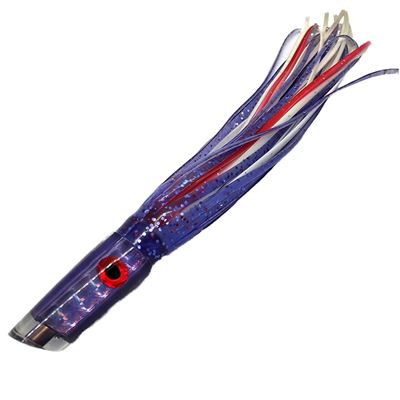
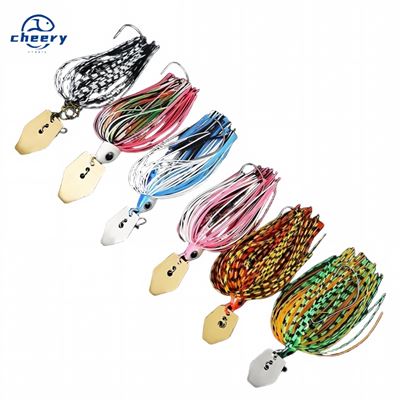
All octopus skirt listings · factory identity is released after a trade account is approved.
Read next
- Build the specification for this product
- Send a specification and get a quotation in one business day
Other questions in this record
- What is a Kona head, and why does it matter on an octopus skirt lure?
- How do strand style and strand count change the lure?
- Should the head be resin or lead?
- What trolling speeds should the product be sold for?
- Who actually buys skirted trolling lures, and how?
- How is an octopus skirt trolling lure priced from a Chinese factory?
- How should skirt durability be specified on an order?
Related questions
- Which sizes should a buyer stock for this technique? - Finesse minnows for forward-facing sonar and Damiki rigs
- Which sizes and weights should a buyer stock? - Mid-strolling minnows for suspended bass
- Which body length classes should a European assortment carry? - Glide baits for pike, musky and striped bass
Still unsure?
Send the product, the quantity and the destination market, and you get an answer against verified factory records within one business day. If the question is useful to other buyers we publish it as a page like this one.
Sources
- Slant vs. Cupped Head Lures: Action Makes the Difference, InTheBite - Kona head origin, 4 to 6 knot Hawaiian speeds and the 7 to 15 knot band
- Anatomy of a Trolling Lure, FishTrack - Kona head shape and behaviour, resin against soft heads, jets and inserts
- Vinyl Revival, FishTrack - skirting a trolling lure, vinyl against silicone, fringe width and trimming
- Fishing Lure Skirts, Tackle Room - 8 to 9 inch and 13 to 14 inch skirt matching, octopus against squid strands, 6 to 8 knot pulsing
- Fatboy Lead Bullet Trolling Lure, Fathom Offshore - 13 oz and 25 oz lead heads, 9 inch and 14 inch builds, rigging options and lead warning
- Octopus Skirt price band and MOQ range quoted from our own sampled listings at /products/
Need a specification matched, not a list browsed?
Send the format, quantity, material and destination market. We answer against verified records — and tell you when the data is not good enough to answer with.
Last reviewed: 2026-09-18 · build 2026-09-18-0kfwu