
Mid-strolling minnows for suspended bass
Mid-strolling is a cast past a fish seen on forward-facing sonar and a medium to medium-slow reel back through the depth it is holding, using a 3- to 5-inch minnow or fluke on a 3/16 or 1/4 oz ball head jig.
- Bassmaster describes midlevel strolling as a cast past a fish seen on forward-facing sonar and a medium to medium-slow reel back through the depth it is holding, using a 3- to 5-inch minnow or fluke on a 3/16 or 1/4 oz ball head jig (Bassmaster).
- The same account puts the suspended fish 8 to 10 feet down over 18 to 24 feet of water and names the technique for the heat of summer and again for late fall and early winter, when more bass suspend in clear water (Bassmaster).
- Megabass traces strolling to Japan's pressured waters including Lake Biwa, where anglers moved from paddle-tail swimbaits to straight-tail plastics so that rod input and line tension, rather than the tail, controlled how the bait glides and hovers (Megabass).
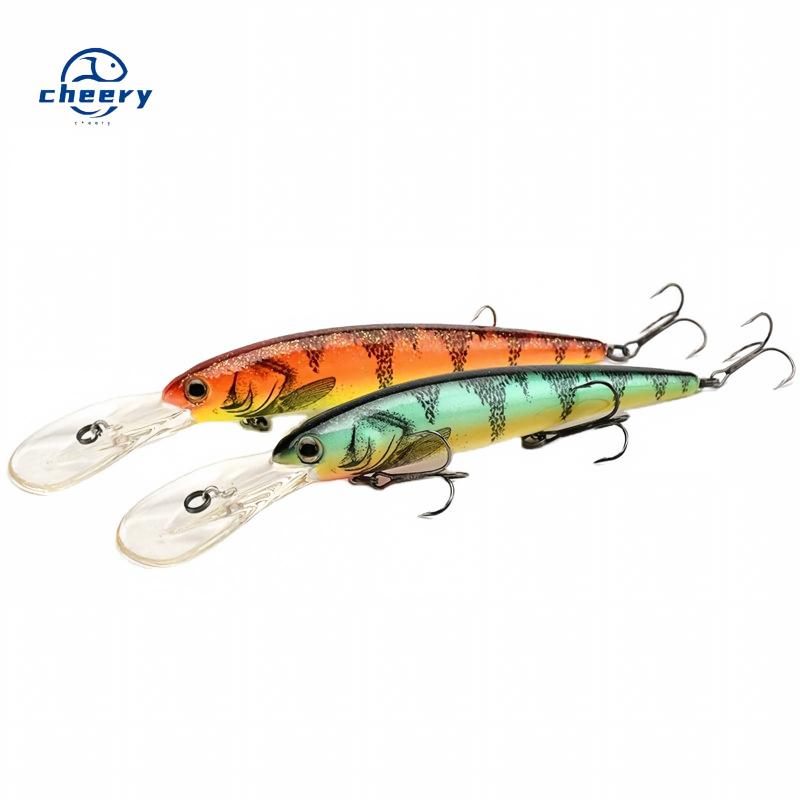
Mid-strolling is the horizontal half of the sonar revolution. Instead of lowering a minnow straight down a transducer cone and holding it still, the angler casts past a fish seen on screen and reels the bait back through the depth that fish is using, slowly enough that the minnow swims rather than flees. Bassmaster puts the technique at its best in the heat of summer and again in late fall and early winter. Megabass traces it to Japan's pressured waters, where straight-tail plastics replaced paddle tails so that rod input and line tension, not the tail, controlled the action.
For a buyer the consequence is that the minnow is specified as a balance problem. Weight position, line-tie angle and hook position decide whether the bait hangs level, tracks straight at very low speed and returns a readable echo on live sonar, and those are the fields a factory has to be held to. The channel then decides how much of the rigging travels inside the pack: e-commerce and mass retail want a bait that is ready to fish, while specialist tackle sells bodies, heads and hooks as three separate lines.
- Bassmaster describes midlevel strolling as a cast past a fish seen on forward-facing sonar and a medium to medium-slow reel back through the depth it is holding, using a 3- to 5-inch minnow or fluke on a 3/16 or 1/4 oz ball head jig (Bassmaster).
- The same account puts the suspended fish 8 to 10 feet down over 18 to 24 feet of water and names the technique for the heat of summer and again for late fall and early winter, when more bass suspend in clear water (Bassmaster).
- Megabass traces strolling to Japan's pressured waters including Lake Biwa, where anglers moved from paddle-tail swimbaits to straight-tail plastics so that rod input and line tension, rather than the tail, controlled how the bait glides and hovers (Megabass).
- Bass Angler Magazine states that a 90-degree line tie lets a mid-strolling bait hover above the target while 0-, 30- and 60-degree ties pull it forward and away, and that live-sonar jig heads use high-density tungsten or weighting positioned along the shank (Bass Angler Magazine).
- The Damiki rig this technique is separated from is vertical: a small soft-plastic minnow threaded on a jig head, fished straight below the boat with minimal movement, and it falls away as water warms past 50 degrees (Wired2Fish).
- Our sampled Minnow listings quote US$0.37 to US$3.17 per piece at MOQ 50 to 500 pieces, across bodies from about 100 mm to 140 mm and from floating to sinking builds - a factory price basis, not a retail price.
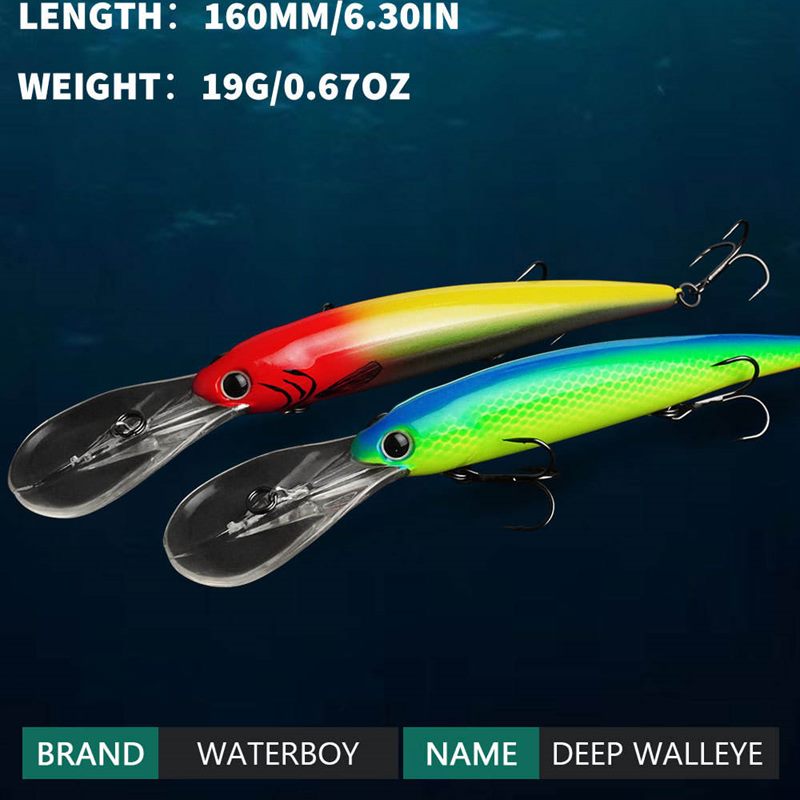
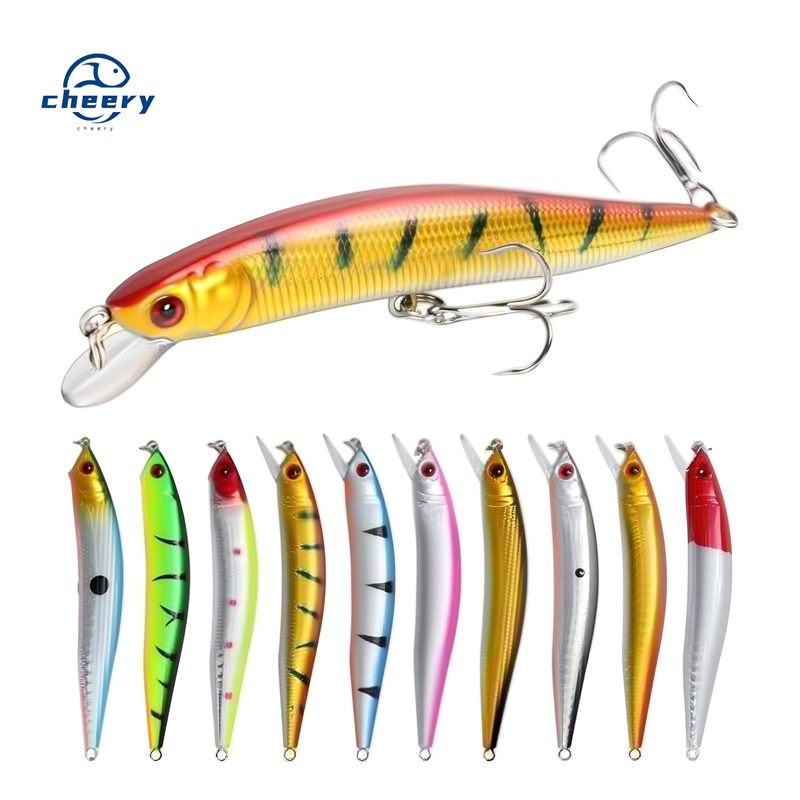
What moves the unit price
| Cost driver | Why it moves the price | How to control it in the order |
|---|---|---|
| Weight placement | A fixed internal weight, a moving weight and a transfer system are three internals on the same body mould - and three different prices. | Describe the retrieve and the fall you want. The placement is the factory's answer, not a field to dictate. |
| Length and body volume | Body length drives material volume and the size of the moulding, and with it the cycle time. | Quote by length band. The sampled prices cover 60 mm to 130 mm, which is three products rather than one ladder. |
| Buoyancy class | Floating, slow-sinking and suspending bodies use different material densities and wall thicknesses. | Name the class, not the depth. Depth depends on the line, the current and the retrieve as much as on the bait. |
| Hook position and rigging | A belly hook, a nose hook and a rear treble change the assembly and the hardware count. | State the rigging as sold, including whether the bait ships ready to fish. Ready-to-fish is an assembly cost, not a free extra. |
| Line-tie angle | The tie angle sets how the bait behaves on the fall, and it is a mould feature rather than a rigging choice. | Agree the angle with a test bait rather than a drawing, because the consequence only shows up in the water. |
| colorways and finish | Each additional color is a separate paint pass with its own setup and reject rate. | Fix the color count per SKU. Adding a color after the price is agreed is the most common mid-programme cost increase. |
Where the weight sits, and what it does
| Weight position | What it does in the water | What it changes at the factory |
|---|---|---|
| Moving weight inside a hard body | Tungsten ballast travels on the cast for distance and flight stability, then settles so the bait swims level (Daiwa) | A weight chamber is extra parts and extra assembly, and it is the first feature removed from a cheap copy of the bait |
| Weight carried along the hook shank | A live-sonar head uses high-density tungsten or on-shank weighting so the bait presents level at different depths and returns a stronger echo (Bass Angler Magazine) | The head becomes a moulded part with wire and weight, so it is separate tooling from a plain ball head and cannot share its price |
| Pegged nail weight in the belly | Used for the hover-strolling version, where the bait is twitched at a fixed level instead of reeled (Bass Angler Magazine) | Adds a second component and a second weight ladder to the pack, which the buyer has to price in from the start |
Hook position: the documented setups
| Setup | How it is rigged | What it demands of the product |
|---|---|---|
| Threaded on a jig head | The minnow goes on nose first with the hook following the body, so the bait hangs horizontal under the head and is fished almost motionless (Wired2Fish) | Needs a keeper that holds the plastic and a head weight matched to the body length, or the bait slides and loses its attitude |
| Hover hook with the eyelet through the top | A 90-degree offset hook is rigged straight so the eyelet protrudes through the top of the plastic, letting the bait be twitched in place (Bass Angler Magazine) | A specialist hook bought as its own line item, so it is never bundled by default with the plastic |
| Belly and tail trebles on a hard minnow | The bait hangs its hooks under the body and ships with named treble sizes as standard hardware (Daiwa) | Treble count, size and hanger position are the cheapest fields to cut, so they have to be written on the order |
The retrieve, step by step
| Step | What the angler does | What the bait has to do |
|---|---|---|
| Cast past the fish | The bait is put beyond the fish seen on sonar so it can be brought back through the strike zone rather than dropped on top of it (Bassmaster) | Long casts are the norm, which is why a hard minnow is built around cast distance and flight stability (Daiwa) |
| Let it fall to the holding depth | The bait sinks to the level the fish are using - 8 to 10 feet down over 18 to 24 feet of water in the published example (Bassmaster) | Fall rate is a product field, so ballast weight, body material and the head weight all have to be stated |
| Reel it back slowly, with or without a shake | A medium to medium-slow reel with light rod shakes makes the bait roll; one bait in the same line-up wanders with no shake at all (Bassmaster) | It has to track straight at very low speed and stay on the keeper; a bait that spins or slides down the shank is a returned batch |
Retail pack versus specialist rigging
| Channel | What the pack contains | What has to be in writing |
|---|---|---|
| E-commerce and mass retail | A ready-to-fish unit where the body, head weight, hook and keeper are already matched, so the customer makes one decision | Hook model, size and wire gauge, head weight, keeper type, and the exact piece count on the card |
| Specialist tackle | Bodies and delivery systems sold apart: plastics by size and color, heads and hooks by weight and size (Bass Angler Magazine) | The full head weight ladder and hook size ladder, kept continuous across seasons so the angler can rebuild the same rig |
| Boat, charter and tournament supply | Bulk bodies with loose heads and hooks, re-rigged on the water between sessions | Continuity of ballast and plastic softness between runs, because a bait that changes feel mid-season is a rejected reorder |
Questions buyers ask about mid-strolling minnows for suspended bass
Each question has its own page, so it can be found and cited on its own.
- What is mid-strolling, and how does it differ from a Damiki rig?Both use a minnow-profile bait and both exist because sonar now shows the fish.
- How is a mid-strolling minnow weighted?Weight is what keeps the bait at the depth the fish are using.
- Where should the hook sit on the bait?There is no single answer, which is why hook position belongs on the order rather than in a catalog photo.
- How is the bait retrieved?Slowly, and mostly with the reel.
- Do mid-strolling minnows come ready to fish?Both formats sell, and the channel usually decides which one a buyer stocks.
- Which sizes and weights should a buyer stock?The published technique runs 3- to 5-inch minnows and flukes on heads from 3/16 to 1/4 oz, and one head range sold into the same market comes in six weights and two hook sizes, which is how the ladder is normally built.
- What do these minnows cost from a Chinese factory?Our sampled Minnow listings quote US$0.37 to US$3.17 per piece at MOQ 50 to 500 pieces, which is a factory price basis and not a retail price.
- When should an order be placed for the season?The technique peaks twice: in the heat of summer and again in late fall and early winter, when more bass suspend in clear water.
What to send for a comparable quote
| Field | Why it changes the price |
|---|---|
| Length in millimetres | Mould size and material per piece; the small end and the large end of the range are different tools at different unit costs |
| Body weight in grams | Ballast weight sets the fall rate, the cast distance and the sonar return, and it is the first number a buyer compares |
| Buoyancy class | Floating, slow-floating, suspending or sinking is decided by ballast and chamber, and it decides where the bait can be fished at all |
| Weight placement | Fixed ballast, a moving weight-transfer system or weight on the hook shank; each is a different internal build and assembly |
| Body material | Hard ABS and soft plastic bodies are different tooling, different cycle times and different unit costs per piece |
| Line-tie angle | A 90-degree tie lets the bait hover while shallower ties pull it forward, so the angle is a product decision, not a detail |
| Hook position and rigging | Nose-threaded on a head, a hover hook through the top, or belly and tail trebles: three assemblies, one body |
| Hook model, size and wire gauge | The component most often substituted between sample and bulk run, and the one that decides whether a good fish is landed |
| Keeper or collar type | Conical keeper, spring keeper or barbed collar changes assembly time and whether the plastic survives a session |
| colorways and finish | Every color and every foil, laser or painted finish is its own setup, so the color count is a direct cost line |
| Pack format and price basis | Bodies alone, a matched bait-and-head pack or a bulk carton, plus FOB port or EXW factory: without both, two quotes are not comparable |
What to agree in writing, and the tolerance to name
| Field | What the order has to state | Tolerance or standard to name |
|---|---|---|
| Body weight | Target weight and whether it is measured before or after rigging | State the band and the measurement point; a rigged bait is a different figure. |
| Buoyancy | What the bait does at rest and on the fall | Agree a water test - fresh or salt, line and hook fitted - rather than a density number nobody can check. |
| Weight placement | Position of the internal weight, with a stated allowance | Agree a positional allowance in millimetres, because a small shift changes the fall. |
| Hook and split ring | Model, gauge and size, front and rear | Name them on the order. Replacing a ring with a lighter gauge is the classic silent substitution. |
| Plating and saltwater hardware | Corrosion resistance of hooks and rings | Name ISO 9227 or ASTM B117 and the hours required. |
| colorway and finish | The color standard the repeat is measured against | A retained master sample or a named color standard, with a stated tolerance. |
| Pack count | Pieces per pack and packs per carton | Exact count, inspected to AQL ISO 2859-1, with the carton label content agreed. |
What we have not verified
- Unit volumes: we publish no figure for how many mid-strolling minnows or matched jig heads sell in any market, and no shipment or sell-through data was checked.
- Retail prices: no retail price survey has been run for this family, so no retail or margin table appears here, and any retail figure seen on a listing belongs to that listing.
- Catch rates: the published accounts describe the technique in the authors' own fishing, and we hold no test data comparing one bait's strike rate with another's.
- Sonar return: manufacturers state that dense or on-shank weighting improves the echo on live sonar, and we have not measured it, so no target-strength figure is published.
- Factory capability for internal weighting: we have not audited which of our sampled factories can build a moving weight chamber or a moulded on-shank head, so no supplier claim is made.
Where this record leads
- Sampled hard lures listings - reference prices and MOQ per listing.
- Specification builder - turn these fields into a spec sheet you can send.
- Reference price bands - the band this record sits in, with its unit stated.
- The sourcing playbook - the process these questions sit inside.
- US and EU compliance - what has to be true before the shipment clears.