
Glide baits for pike, musky and striped bass
A glide bait is defined by its joint count: Rapala’s European guide defines it as a hard swimbait whose body carries a single joint at the center, which makes it a two-part lure, while a classic swimbait has at least three parts.
- Rapala's European guide defines a glide bait as a hard swimbait whose body carries a single joint at the center, which makes it a two-part lure, while a classic swimbait has at least three parts; the same guide says interchangeable screw-in tungsten weights let one body be fished from just under the surface to about 3 m (Rapala).
- Westin publishes its swim glidebait from 6.5 cm / 9 g up to 15 cm / 115 g, with the 8 cm, 10 cm, 12 cm, 13.5 cm and 15 cm lengths each offered in suspending and sinking densities, in ABS with a full wire-through-body construction and lead-free weighting (Westin).
- Musky360's hook-swap guidance states the mechanic plainly: smaller trebles weigh less and keep a lure buoyant, larger heavier trebles cut buoyancy and add hang time, and the change needs only split ring pliers and a range of treble sizes (Musky360).
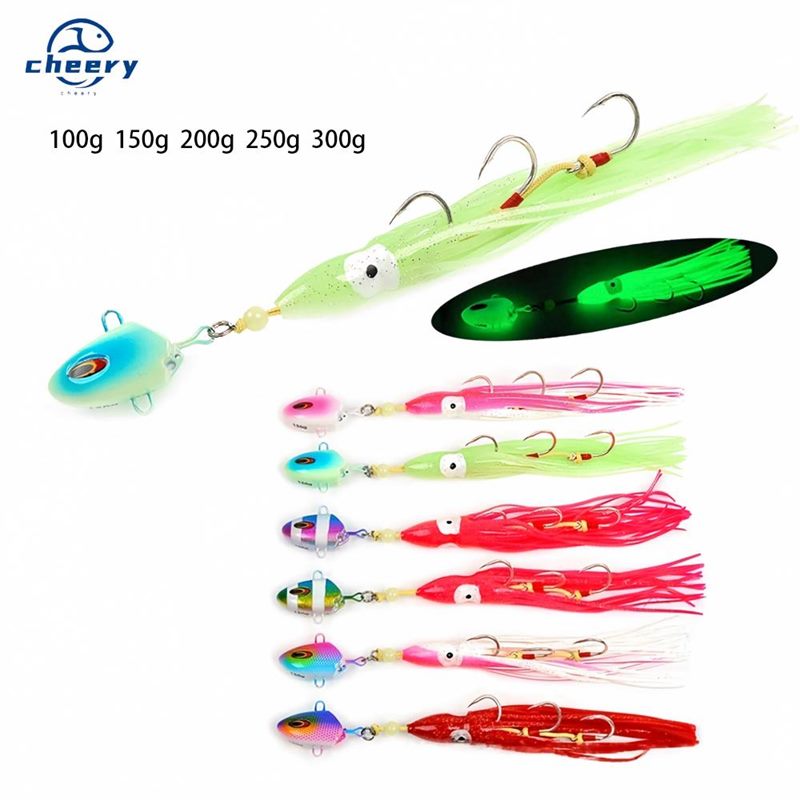
Glide baits are the largest hard lures a European predator angler casts, and the category is unusual because the body, the sink rate and the hooks are three separate purchase decisions inside one SKU. The published descriptions are unusually clear about it: Rapala calls a glide bait a two-part body with a single central joint, distinct from a multi-part swimbait, and Westin publishes the same body in suspending and sinking versions at every length from 6.5 cm to 15 cm. A buyer who orders a glide bait without those fields is ordering a shape rather than a product.
The commercial backdrop is a European retail market that has changed shape. A Hungarian supplier told the trade press that web shops have outgrown wholesalers in most countries and that the era of traditional distribution partnerships is largely over, which pushes demand towards deep ladders held in stock and towards OEM terms a distributor can build a house brand on. At the same time EFTTA reports a phased EU sales ban on lead in lures, so a 50 g bait and a 100 g bait now carry different deadlines. Weight class is no longer only a fishing decision.
- Rapala's European guide defines a glide bait as a hard swimbait whose body carries a single joint at the center, which makes it a two-part lure, while a classic swimbait has at least three parts; the same guide says interchangeable screw-in tungsten weights let one body be fished from just under the surface to about 3 m (Rapala).
- Westin publishes its swim glidebait from 6.5 cm / 9 g up to 15 cm / 115 g, with the 8 cm, 10 cm, 12 cm, 13.5 cm and 15 cm lengths each offered in suspending and sinking densities, in ABS with a full wire-through-body construction and lead-free weighting (Westin).
- Musky360's hook-swap guidance states the mechanic plainly: smaller trebles weigh less and keep a lure buoyant, larger heavier trebles cut buoyancy and add hang time, and the change needs only split ring pliers and a range of treble sizes (Musky360).
- US striped bass anglers quoted by Seaguar fish glide baits from 6 to 12 inches and call 8 to 9 inches the most common size, with custom baits over 12 inches and over five ounces, run on 65 lb braid and 80 to 100 lb fluorocarbon leaders (Seaguar).
- EFTTA reports that the EU's final lead restriction ends the sale of sinkers and lures weighing 50 g or less three years after entry into force and of heavier items up to 1 kg after five years, with products generally limited to less than 1% lead by weight (EFTTA).
- Our sampled listings quote US$0.37 to US$12.04 per piece for hard-bodied lures at MOQ 20 to 500 pieces - a factory price basis; the closest large-bait rows in the same sample are a 93 g multi-section minnow at US$3.17 per piece at MOQ 50 and a 140 mm 70 g pencil at US$3.00 to US$3.20 at MOQ 100, and our 18.5 cm T-tail soft bait is quoted at US$1.55 to US$1.59 at MOQ 100.
What moves the unit price
| Cost driver | Why it moves the price | How to control it in the order |
|---|---|---|
| Body length and weight class | A 15 cm and a 25 cm glide bait are different moulds, different hardware and different retail price points. | Quote by length and weight class together. EU lead rules bite here too, so weight and market are one conversation. |
| Weighting material | Lead, tungsten and lead-free alloys weigh the same body at very different material costs, and some markets restrict one of them. | State the destination market at quoting time. A lead-free requirement changes the price, not just the label. |
| Joint construction | A one-piece body, a single joint and a multi-joint body are three builds; each extra joint adds hardware and assembly. | Choose the joint count from the swim you need. More joints is not automatically more action. |
| Internal harness and hook hardware | The through-wire, the hook hangers and the treble sizes are what hold a big fish, and they are costed separately. | Name the harness, the hangers and the trebles. On a pike bait these are the parts that fail first and get substituted first. |
| Paint and finish | Multi-color passes, foil and a photo-realistic finish are separate operations with separate reject rates. | Fix the number of passes and whether foil is included. color names alone do not price. |
| Pack format | Retail boxes for a 25 cm bait are large, and box size is a real cost at low volume. | Agree the pack at quoting. Oversized retail packaging is a common surprise on heavy baits. |
Body length classes and what each one is for
| Length class | Specification published by the maker | What it changes in the product |
|---|---|---|
| Compact, 6.5 to 8 cm | Westin lists 6.5 cm / 9 g, and 8 cm at 16 g suspending and 19 g sinking (Westin) | Smallest mould and lightest hardware; the bait sells into perch and zander programmes as much as to pike anglers |
| Mid, 10 to 12 cm | Westin lists 10 cm low floating at 31 g, 10 cm sinking at 34 g, 12 cm suspending at 53 g and 12 cm sinking at 58 g (Westin) | Where the European volume sits, and where sink rate, rattle and color count decide whether a buyer takes the whole ladder |
| Large, 13.5 to 15 cm | Westin lists 13.5 cm and 15 cm in suspending and sinking, up to 15 cm / 115 g (Westin) | Heavier bodies need a wire-through harness and bigger trebles, so tooling and hardware both step up a class |
One piece, single joint or multi-joint
| Construction | What the published description says | What to lock in writing |
|---|---|---|
| Glide bait, single central joint | Rapala's guide describes a glide bait as a body in two parts with one joint at the center, which produces the S-shaped walk (Rapala) | Joint gap, hinge or pin type, and the alignment tolerance that keeps the two halves true after a season of casting |
| Multi-part swimbait | The same guide puts a classic swimbait at three parts or more (Rapala) | Every extra section is another mould and another assembly step, so section count has to be priced rather than assumed |
| Full wire-through body | Westin states a full wire-through-body construction on an ABS glide bait (Westin) | Whether the wire runs the length of the body, and how the tow point and hook hangers anchor to that harness |
Hook hardware and how it changes the swim
| Hardware choice | Behaviour described in the source | What to specify |
|---|---|---|
| Smaller, lighter trebles | Lighter trebles retain buoyancy and give more side-to-side wobble, with less stability at speed (Musky360) | Treble size and wire gauge for each length class, plus the split ring that carries it |
| Larger, heavier trebles | Heavier trebles cut buoyancy and add hang time; use short shanks when upsizing or hooks foul (Musky360) | Short-shank models in the upsized positions, and a stated hook-to-body clearance |
| Split rings and hook changes | Swapping treble sizes needs split ring pliers and a stock of hooks rather than new tooling (Musky360) | Split ring size and strength rating, and whether hooks ship rigged on the bait or loose in the box |
How the European predator market buys
| Channel | What the trade source says | What it demands from a factory |
|---|---|---|
| Web shops | A Hungarian tackle supplier's managing director says web shops have outgrown the scale of wholesalers in most countries (Angling International) | A deep SKU ladder held in stock, low minimums and fast replenishment rather than one large seasonal drop |
| Traditional distributors | The same interview calls the era of traditional distributor partnerships largely a thing of the past in most countries (Angling International) | OEM terms low enough for a distributor to build a house brand, quoted from as little as 100 pieces |
| Compliance-bound buying | EFTTA reports a phased EU sales ban on lead in lures, with items of 50 g or less phased out three years after entry into force (EFTTA) | Weighting material declared per SKU, and a lead-free body quoted without the price basis being quietly changed |
Questions buyers ask about glide baits for pike, musky and striped bass
Each question has its own page, so it can be found and cited on its own.
- What is a glide bait and how is it built?A glide bait is a hard-bodied swimbait that walks side to side rather than swimming in a straight line.
- Which body length classes should a European assortment carry?Westin's published ladder runs 6.5 cm / 9 g, 8 cm in suspending and sinking, then 10 cm, 12 cm, 13.5 cm and 15 cm up to 115 g, and that ladder is a sensible shape because each step has a different buyer.
- Should the body be one piece or two pieces?The published definition points to two pieces for a glide.
- How should sink rate be specified on a purchase order?As a density class plus a weight, never as a word.
- What trebles and split rings should a glide bait ship with?Hook weight is part of the buoyancy calculation.
- Which glide bait sizes work for striped bass?Seaguar's guide to striper glide baits, drawn from two Northeast captains, spans 6-inch to 12-inch baits and calls 8 to 9 inches the most common size, with custom baits over 12 inches that weigh more than five ounces.
- How is a glide bait priced from a Chinese factory?Our sampled listings quote US$0.37 to US$12.04 per piece for hard-bodied lures at MOQ 20 to 500 pieces, which is a factory price basis and nothing more; it excludes freight, duty, packaging and every margin after the factory gate.
- What does the EU lead restriction mean for a heavy glide bait?EFTTA reports that the EU's final restriction ends the sale of sinkers and lures weighing 50 g or less three years after entry into force, and of items above 50 g up to 1 kg after five years, with products generally limited to less than 1% lead by weight.
What to send for a comparable quote
| Field | Why it changes the price |
|---|---|
| Body length in centimetres or inches | The first axis of the ladder and the field that decides mould size, packaging and which angler the SKU is for |
| Body weight in grams or ounces | Weight and length are quoted together in published specifications, and a heavier body means more material and a bigger harness |
| Density class | Floating, low floating, suspending, slow sinking or sinking is a separate SKU from the same mould, and each adds a different weighting operation |
| Joint construction | One piece, a single central joint or three or more sections; each extra joint is another mould and another assembly step |
| Body material | ABS is the common hard-lure plastic, while resin or wood bodies are cast or machined in smaller batches at a higher unit cost |
| Internal harness | A full wire-through body costs more wire and more assembly time than a body with moulded-in hangers, and it is what survives a big fish |
| Weighting material | Lead, tungsten, brass or steel; the material sets the density, the sink rate and the EU compliance deadline |
| Hook size, gauge and shank | Treble size, wire thickness and shank length are three separate fields, and on a glide bait they change buoyancy as well as price |
| Split rings | Ring diameter and strength rating are quoted separately, and a weak ring is where a big pike or musky is lost |
| Paint and finish | color count, hand-painted detail, foil and 3D eyes each add a process step, and color is often the largest driver of SKU count |
| Pack format, order quantity and price basis | One piece per box or a multi-bait set, at a stated MOQ and FOB or EXW basis; a glide bait price without those fields is not comparable to another quote |
What to agree in writing, and the tolerance to name
| Field | What the order has to state | Tolerance or standard to name |
|---|---|---|
| Body weight | Target weight and whether it is measured before or after hardware | State the band and the measurement point; a rigged bait weighs materially more. |
| Through-wire and hangers | The wire gauge and how the hangers are anchored | Name the wire gauge and ask for a pull-test figure in writing. This is the part that must not be substituted. |
| Hook size, gauge and shank | Treble sizes, wire gauge and shank length | Name the trebles. A lighter gauge is the standard silent substitution. |
| Split rings | Ring size and rated strength | State the size and the rated strength, not the size alone. |
| Density class and sink rate | Whether the bait floats, suspends or sinks slowly | Agree a water test with the hooks fitted, because hooks turn a slow-sink bait into a sinking one. |
| Paint and finish durability | Adhesion and chip limits after hook rash | Agree an adhesion method and a visual limit; predator baits are judged after they have been chewed. |
| Weighting material against market | The material used, stated against the market it ships to | Name the material and the restriction that applies - EU lead limits, for example - so the label matches the alloy. |
What we have not verified
- Market size and unit volumes for glide baits: no sourced figure was found for any market, and none is invented here.
- Retail prices for glide baits: we publish no retail price survey, so no retail or margin table appears here, and any retail figure seen on a listing belongs to that listing.
- Which European chains stock which length class: no planogram-level or sell-through data was checked, so no retail distribution claim is made.
- Catch performance of any particular joint, weighting or hook configuration: no comparative test data was found, and none is claimed.
- Weight-for-weight substitution between lead, tungsten, brass and steel in a glide bait body: no sourced equivalence table is published here, and classification of the weighting material is the buyer's customs broker's decision.
Where this record leads
- Sampled other hard lures listings - reference prices and MOQ per listing.
- Specification builder - turn these fields into a spec sheet you can send.
- Reference price bands - the band this record sits in, with its unit stated.
- The sourcing playbook - the process these questions sit inside.
- US and EU compliance - what has to be true before the shipment clears.
Related reading
- Which glide bait sizes work for striped bass?
- How should sink rate be specified on a purchase order?
- Which body length classes should a European assortment carry?
- How is a glide bait priced from a Chinese factory?
- Should the body be one piece or two pieces?
- What does the EU lead restriction mean for a heavy glide bait?