
How does salt content change a soft plastic, and how should it be specified?
Short answer
Salt is a priced ingredient before it is a fishing feature. Bassmaster's account of density records that stickworms are typically moulded from a dense plastic infused with salt to increase weight and sink rate, that salt arrived in soft plastics as a taste additive with the Gene Larew Salt Craw in 1983, and that denser plastic tends to harden the bait while softer, less dense plastic sinks more slowly.
In detail
Specify it as a percentage by weight of the finished bait and agree how the factory measures it, because a salt figure carried across from a different formula is not a comparable number.
The numbers behind this answer
| Formulation choice | What the source says it does | What it changes in the quote |
|---|---|---|
| Texture and durometer | Outdoor Canada's makers say a bait can be made as soft or hard as you like by changing the ratio of resins to plasticisers, that a soft stickbait reads as a nightcrawler while a firmer tube reads as a crayfish, and that fish hold on longer when the feel matches the forage (Outdoor Canada) | Durometer is a separate order line from salt content, and a buyer who specifies only grams of weight has not specified the bait at all |
| Formulation choice | What the source says it does | What it changes in the quote |
|---|---|---|
| Unsalted, soft pour | Bassmaster records that the original thin-walled tube carried no salt, and that softer, less dense plastics sink more slowly and are preferred for finesse work (Bassmaster) | The lowest ingredient cost and the slowest fall, bought back as a bait that tears up sooner and needs more of them per session |
Where this answer comes from
Part of the product record Fork-tail soft plastics: the multi-pack value tier (Soft lures). The record carries the tables this answer is drawn from, the fields a factory needs before quoting, and an explicit list of what has not been verified.
Products that solve this
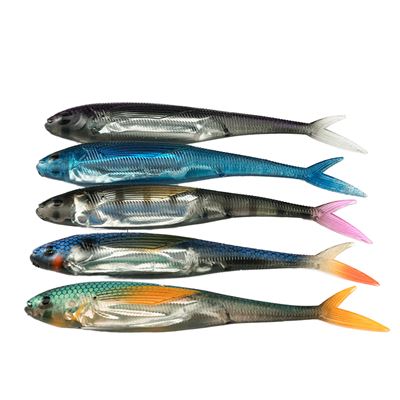
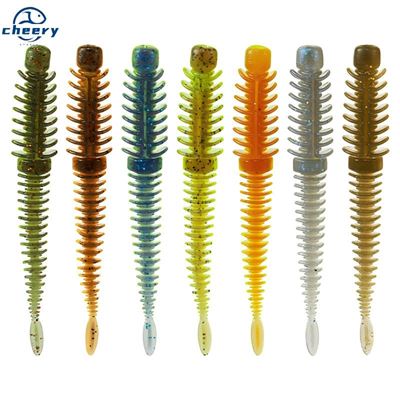
Sampled listings from the same product family (Soft lures). Reference price per unit with the MOQ stated; a quotation against your specification governs a transaction.
All soft lure listings · factory identity is released after a trade account is approved.
Read next
- How to read a catalog: the field that decides each price
- The 14 sourcing terms, including AQL and colorway tolerance
- Build the specification for this product
- Send a specification and get a quotation in one business day
Other questions in this record
- What makes a fork tail a fork tail, and what does the fork do?
- PVC plastisol, TPE or a 3D-printed body: which should a value multi-pack use?
- How many colors should one value multi-pack carry?
- What pack counts should a value-tier order use?
- Blister card or poly bag?
- How is a fork-tail multi-pack priced from a Chinese factory?
- What compliance risk sits behind a very cheap PVC soft bait?
Related questions
- What does a soft plastic lure manufacturer need from me before quoting? - Custom soft plastic lures: how an OEM order works
- What does neutral buoyancy mean in a soft plastic? - Neutral buoyancy soft plastics: the material trend behind the 2027 baits
- Does salt really change the product? - Soft plastic formats: what the 2026 launches actually are
Still unsure?
Send the product, the quantity and the destination market, and you get an answer against verified factory records within one business day. If the question is useful to other buyers we publish it as a page like this one.
Related reading
- Does salt really change the product?
- Fork-tail soft plastics: the multi-pack value tier
- What does a soft plastic lure manufacturer need from me before quoting?
- What makes a fork tail a fork tail, and what does the fork do?
- What compliance risk sits behind a very cheap PVC soft bait?
- How many colors should one value multi-pack carry?