
Finesse minnows for forward-facing sonar and Damiki rigs
A jighead minnow fished under forward-facing sonar is specified as a system of plastic, jig, rod and line rather than as a lure choice, and Rapala treats the method that way.
- Rapala states that the rise of forward-facing sonar has given the soft-plastic minnow rigged on a jig new life, and treats the method as a system of plastic, jig, rod and line rather than a lure choice.
- Bass Angler Magazine lists mid-strolling swimbaits as its first forward-facing-sonar technique and notes that a 90-degree line tie lets the bait hover above the target, where 0-, 30- and 60-degree ties pull it forward and away.
- Major League Fishing published the Damiki rig as a technique in its own right and later covered mid-strolling as the newest twist on it, which is where the two presentations in this record come from.
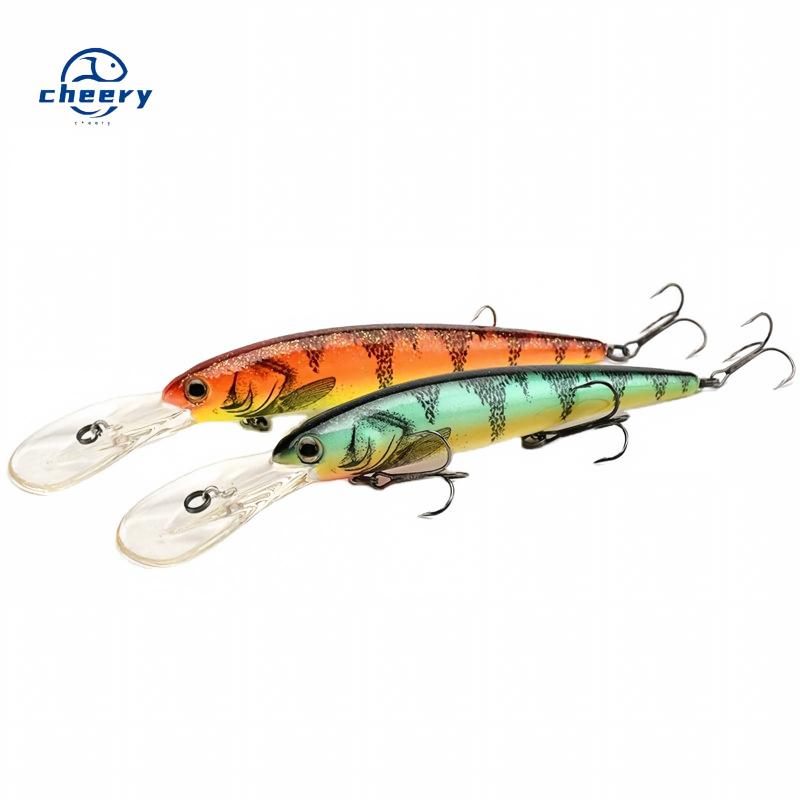
The minnow is one of the oldest shapes in the box; what changed is that the angler can now watch it. Forward-facing sonar turned a search bait into a targeting bait, because instead of covering water the boat stays in front of a fish and the lure is held, shaken and slowly reeled at the depth that fish is using. Rapala, Major League Fishing and Bass Angler Magazine all describe the shift in the same terms, as a system of plastic, head, rod and line rather than a single lure.
That makes the sourcing question unusually narrow. The shape is not the differentiator and the color is a secondary decision. What decides whether an order repeats is whether the bait hangs level on the head, whether the keeper holds the plastic through a session of shaking, and whether the size the buyer ordered matches the forage on their water - which is why the specification fields and the balance table in this record are built around hook position and weight rather than paint.
- Rapala states that the rise of forward-facing sonar has given the soft-plastic minnow rigged on a jig new life, and treats the method as a system of plastic, jig, rod and line rather than a lure choice.
- Bass Angler Magazine lists mid-strolling swimbaits as its first forward-facing-sonar technique and notes that a 90-degree line tie lets the bait hover above the target, where 0-, 30- and 60-degree ties pull it forward and away.
- Major League Fishing published the Damiki rig as a technique in its own right and later covered mid-strolling as the newest twist on it, which is where the two presentations in this record come from.
- Bassmaster describes midlevel strolling as most effective in the heat of summer and again in late fall and early winter, when more bass suspend in clear water.
- Rapala's jig range for shaking a minnow is sold in six weights and two hook sizes, so weight and hook size are the fields that change with depth rather than the plastic.
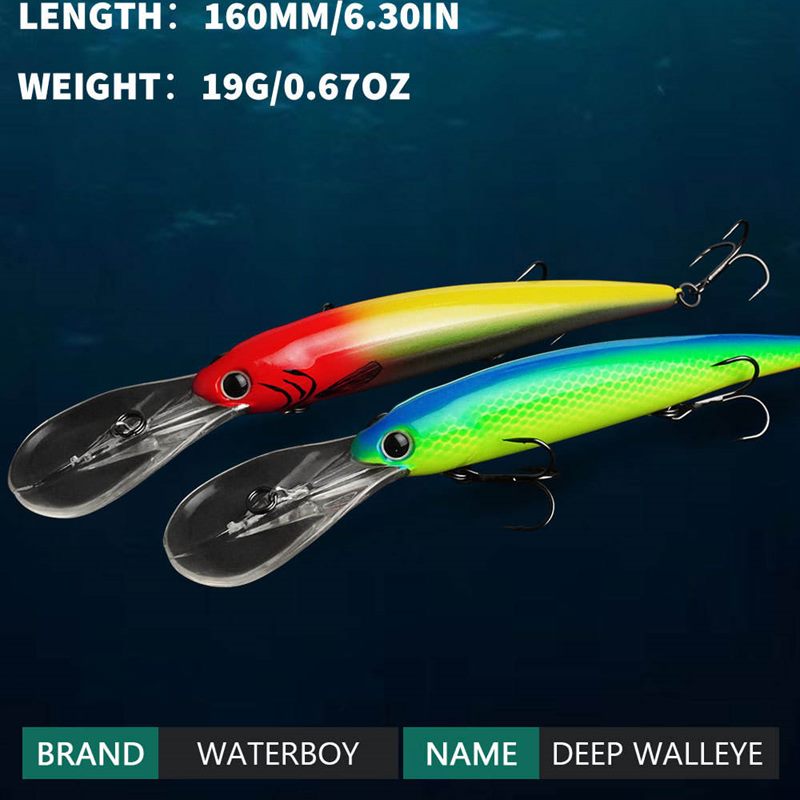
- Our sampled Minnow listings quote US$0.37 to US$3.17 per piece at MOQ 50 to 500 pieces and currently run from 100 mm to 140 mm - a factory price basis, and a sample that covers only the top of the 60-110 mm finesse band.
What moves the unit price
| Cost driver | Why it moves the price | How to control it in the order |
|---|---|---|
| Body length and weight | The sampled sizes run 60 mm to 110 mm, and the body weight has to match the head you intend to fish it on. | Buy length and weight as a pair. A length-only order arrives at a weight you cannot balance. |
| Body material and salt content | Salt adds weight and density, and it changes both the moulding cost and how the bait sits on the fall. | State whether the body is salted, and how much, because two baits of the same length fish differently. |
| Hook position and line tie | A nose-hook rig and a jig-head rig are different mouldings, not one body used two ways. | Order the rigging you will actually fish. A body drilled for a nose hook cannot be re-cut into a jig-head body. |
| Jig head bundled or bare | A bundled head with a named hook can dominate the unit cost on a small soft bait. | Say whether the quote includes the head, and which hook. Bare bodies priced against rigged kits is a comparison that means nothing. |
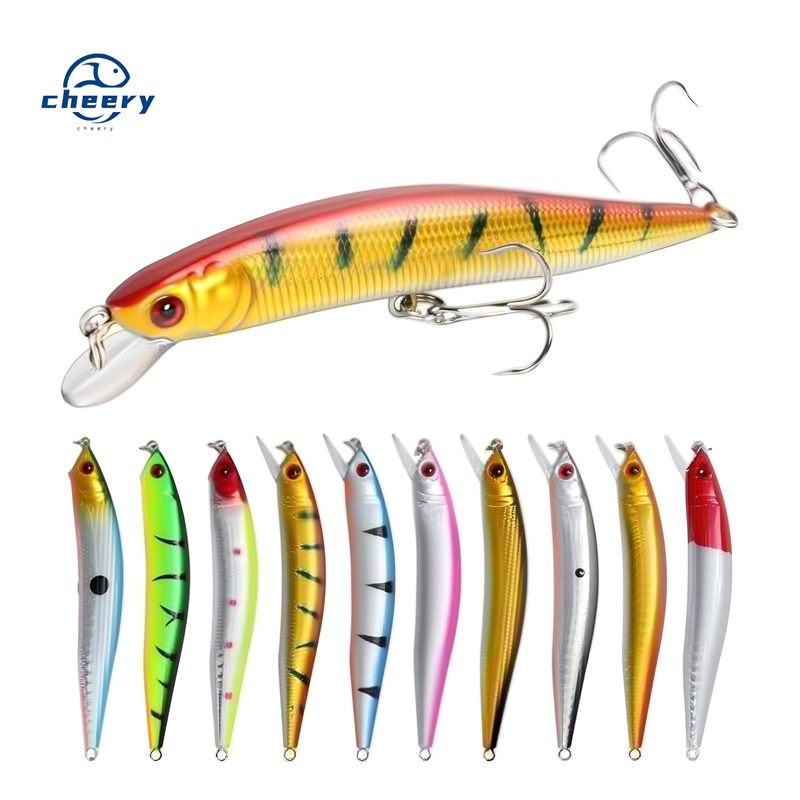
| colorways and finish | Finesse fishing is color-sensitive, and each additional color is a separate pass with its own setup. | Fix the color list per pack. color count is the field buyers change most often after quoting. |
| Pack format | Blisters, bags and compartment boxes carry different material and labor costs and different retail consequences. | Decide the retail pack before the price, because repacking later costs more than the pack itself. |
Where the two rigs are fished
| Rig | How it is presented | What the product must do |
|---|---|---|
| Damiki rig | The minnow is threaded on a jig head, dropped under the transducer and held or dead-sticked in front of a suspended fish | A center-weighted head and a vertical line tie so the bait hangs horizontal; the plastic has to stay on the keeper without tearing |
| Mid-strolling | A short cast past a fish seen on sonar, then a slow steady retrieve back through the depth the fish is holding | The body must track straight at very low speed and return a readable echo on live sonar instead of spinning |
| Hover strolling or shaking | The bait is twitched in place just above a suspended fish, with the rod tip doing the work | Soft enough to roll and flash on small rod shakes, tough enough to survive hundreds of them per session |
Sizes buyers ask for
| Size band | What it is for | What changes at the factory |
|---|---|---|
| 60-75 mm | Small shad and smelt forage, clear water and heavily pressured fish | Thin body moulds and light wire hooks; harder to keep consistent, so the color count drives the unit price |
| 75-95 mm | The volume band that most finesse minnow programmes are built around | Standard mould, widest color ladder and the best unit cost; this is where multi-packs are assembled |
| 95-110 mm | Larger forage, deeper suspended fish and smallmouth programmes | More material per piece, a heavier hook and jig head, and a bigger pack footprint that raises freight cost |
Balance and hook position: what to lock in the spec
| Field | Why it decides the sale | How to write it |
|---|---|---|
| Hook position | A bait that hangs tail-down stops tracking on sonar and stops getting eaten; the strike comes on a level bait | "Hangs horizontal when suspended from the jig head", verified on a production sample in water |
| Jig head weight and line tie | Weight sets the fall rate and how long the bait stays in front of a fish; the line-tie angle decides whether it hovers or is pulled forward | Name the full weight ladder and the line-tie angle, not just the heaviest weight |
| Keeper and hook size | A bait that slides down the shank or is overpowered by too wide a hook gap loses its action on the first fish | Name keeper type, hook model, size and wire gauge, plus the body lengths each combination is approved for |
Which channel buys which format
| Channel | Format | What it demands |
|---|---|---|
| E-commerce | Multi-packs and color sets, size and weight in the listing title | Size in millimetres and weight in grams in the title, low unit cost, and one image that reads at thumbnail size |
| Specialist tackle retail | Singles and small packs with the full size ladder | Complete ladder, credible color range, and a keeper and hook specification the buyer can actually verify |
| Mass retail | Small packs at a fixed price point, simple packaging | The cheapest size and color combination, barcode and carton marks correct first time, and a repeatable pack |
Questions buyers ask about finesse minnows for forward-facing sonar and Damiki rigs
Each question has its own page, so it can be found and cited on its own.
- What is a finesse minnow and why is it tied to forward-facing sonar?A finesse minnow is a slim baitfish-shaped lure in the 60 to 110 mm band, fished on a light jig head or with a nose hook rather than cast and cranked at speed.
- What is a Damiki rig and how does it differ from mid-strolling?The Damiki rig is the vertical version: a minnow threaded on a jig head, lowered under the transducer and held or dead-sticked in front of a suspended fish.
- Which sizes should a buyer stock for this technique?The working band is 60 mm to 110 mm.
- Why do balance and hook position matter so much?Because the bait has to hang level.
- Do finesse minnows come with hooks and jig heads?Both configurations are sold.
- What MOQ and factory price should we expect?Our sampled Minnow listings quote US$0.37 to US$3.17 per piece at MOQ 50 to 500 pieces, which is a factory price basis and is not comparable with any retail price.
- When is the season for this presentation?Bassmaster describes midlevel strolling as most effective in the heat of summer and again in late fall and early winter, when more bass suspend in clear water.
- What has to be on the spec sheet before we place an order?Length in millimetres, body weight and buoyancy, material, hook position and line-tie angle, hook model, size and wire gauge, keeper type, color count, finish, whether a jig head is bundled, pack format, target market and price basis.
What to send for a comparable quote
| Field | Why it changes the price |
|---|---|
| Length in millimetres | Mould size and material per piece; the 60 mm end and the 110 mm end are different tools at different unit costs |
| Body weight and buoyancy | Sinking, suspending or floating is a shot-weight and chamber decision, and it changes what the bait can be used for |
| Body material | ABS is the hard-lure standard; a foamed or softer body costs more and changes the fall rate and the sonar return |
| colorways | Every color is a setup; a six-color ladder is priced differently from a two-color one at the same length |
| Finish | Foil, laser, painted or printed; each has its own cost and its own inspection standard |
| Hook position and line tie | Nose-hooked and jig-head versions can share a mould but not an assembly line, and each needs its own balance check |
| Hook model, size and wire gauge | The component most often substituted between the sample and the production run, and the one that decides the repeat order |
| Keeper or collar type | Conical keeper, spring keeper or barbed collar changes the assembly time and whether the bait survives a session |
| Jig head bundled or bare | A bundled head adds a second component, more carton weight and a second substitution risk |
| Pack format | Single, 3-pack, 5-pack or bulk; retail card, blister or poly bag, each with its own tooling and freight cost |
| Target market and price basis | US, EU or Japan labeling plus FOB port or EXW factory terms decide whether two quotes are comparable at all |
What to agree in writing, and the tolerance to name
| Field | What the order has to state | Tolerance or standard to name |
|---|---|---|
| Body length and weight | Target length and weight, and the point of measurement | State both, with a band on each. Length alone leaves the weight open. |
| Salt content | Whether the body is salted and to what proportion | Name the proportion and accept a sampled check, because salt content is not visible in a finished bait. |
| Balance with the head | How the body sits on the head you will fish | Agree a fitted test with your head sample, not a drawing. This is the one tolerance that decides whether the bait works. |
| Hook position and tie point | Where the tie sits relative to the body axis | State a positional allowance in millimetres, checked on a sample rather than on the mould. |
| Hook and head hardware | Hook model, gauge and head weight | Name them on the order; a lighter hook is the standard silent substitution on soft baits. |
| colorway | The standard a repeat batch is measured against | A retained master sample or a named color standard, with a stated tolerance. |
| Pack count and format | Pieces per pack, packs per carton, label content | Exact count, inspected to AQL ISO 2859-1. |
What we have not verified
- Unit volumes: we publish no figure for how many finesse minnows sell per month in any market; the technique coverage is qualitative.
- Retail price by market: no retail price survey has been run for this family, so no margin table is published here.
- Tournament results: the coverage describes the technique, not a verified results dataset linking it to wins.
- Installed base of forward-facing sonar: we publish no figure for how many anglers fish this way, so the size of the addressable market is unknown.
- Demand for the 60-75 mm end: our own sample starts at 100 mm, so the small-size gap is an observation about our catalog, not evidence of retail demand.
Where this record leads
- Sampled hard lures listings - reference prices and MOQ per listing.
- Specification builder - turn these fields into a spec sheet you can send.
- Reference price bands - the band this record sits in, with its unit stated.
- The sourcing playbook - the process these questions sit inside.
- US and EU compliance - what has to be true before the shipment clears.
Related reading
- What is a Damiki rig and how does it differ from mid-strolling?
- Why do balance and hook position matter so much?
- What has to be on the spec sheet before we place an order?
- What is a finesse minnow and why is it tied to forward-facing sonar?
- Which sizes should a buyer stock for this technique?
- Do finesse minnows come with hooks and jig heads?