
What a knot strength claim requires
A knot strength figure is a claim about a line, a knot and a test method together, and it is not comparable to another figure unless all three travel with it.
- A knot strength figure describes a line, a knot and a test method together, not a knot on its own.
- Without the line, the loading method and the number of samples, the figure cannot be checked or compared.
- Our accessory sample states no breaking strain, PE rating or diameter, so no knot figure could be derived from it.
This site does not publish a knot strength table. This page explains why, and what would have to travel with such a number before we would.
A percentage of what
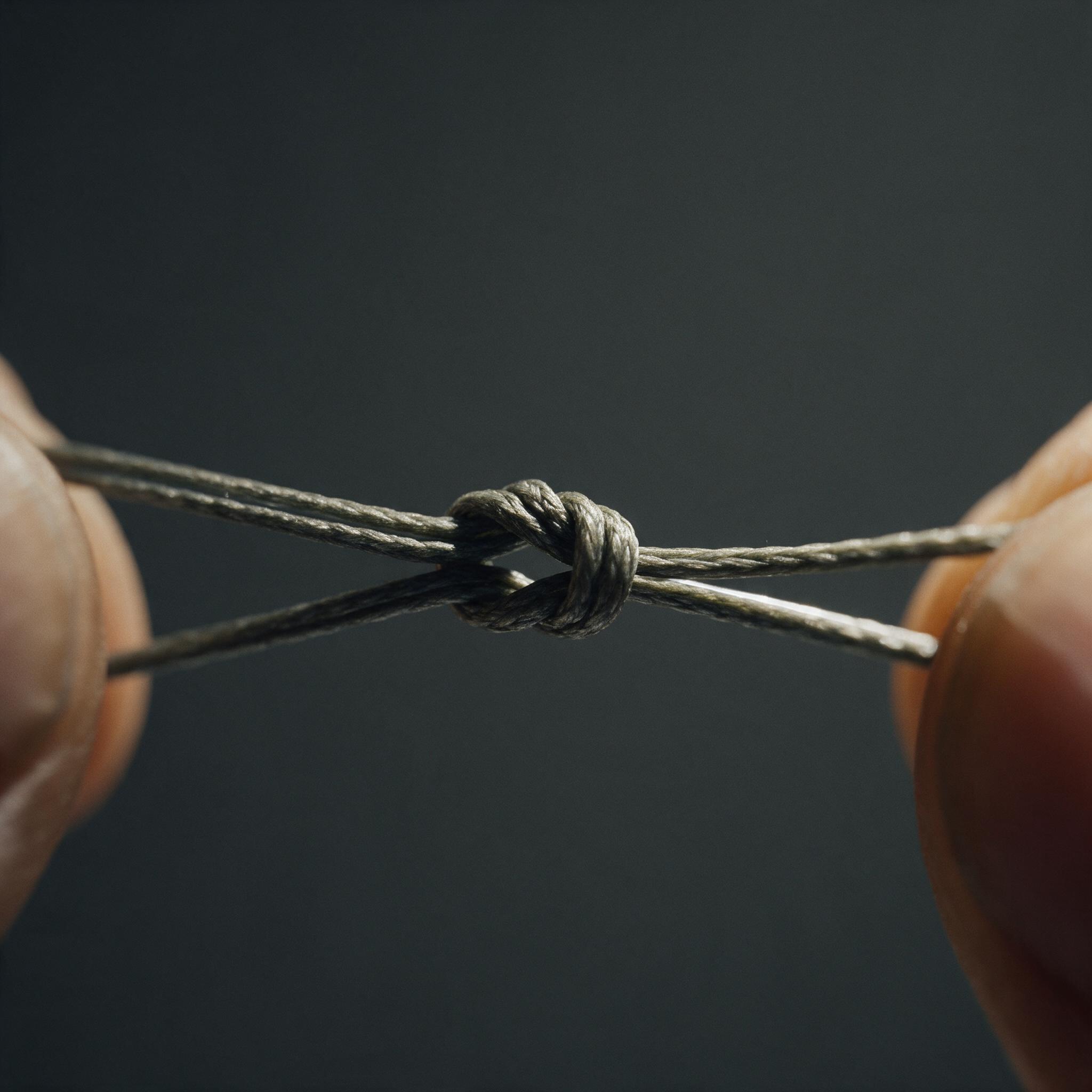
A knot strength figure is expressed as a proportion of the line's own strength. That makes it a statement about three things at once: the line, the knot and the way the load was applied.
Change the line and the figure moves, because a knot bites differently into a stiff coated braid than into a soft one. Change the loading and the figure moves again, because a slow steady pull and a sharp shock load produce different results from the same knot. Change the sample size and the figure stops meaning anything in particular.
So a number quoted alone is not a weak claim, it is an uncheckable one.
Why we publish none
Our accessory sample holds three listings: two braided lines and a lure box. Neither line listing states breaking strain, PE rating or diameter, and neither states the spool length.
A knot figure is a percentage of a line's strength. With no strength recorded, there is no base to take a percentage of. Publishing a table sourced from somewhere else would be a claim rather than a record, and this column publishes records.
We record the gap instead. It is more useful to a buyer than a number they cannot check.
What has to travel with the figure
If a supplier offers a knot strength figure, four things have to come with it before it can be used:
- The line. Stated by breaking strain, PE rating and diameter, because the figure is a property of that line as much as of the knot.
- The loading method and rate. Steady pull or shock load, and how fast.
- The number of samples. A single tie is an anecdote.
- Whether it is a mean or a minimum. The two answer different questions, and a buyer designing for a failure point wants the second.
Why this lands on the line specification
The knot itself is a technique, performed by the angler, and a factory does not control it. What a factory controls is the input: diameter consistency, coating and spooling.
Those three decide how repeatable a knot is on a given line. A line whose diameter varies along its length will produce knots that break at different loads from one cast to the next, and no knot figure will predict that.
So a knot requirement, written properly, is a line specification. It asks for a controlled diameter with a stated tolerance, a stated coating, and a spooling that does not put a twist into the line before it is used.
How to use this in an order
Ask for the line fields first. If breaking strain, PE rating, diameter and coating are on the sheet, then any knot result taken on that line is meaningful and can be reproduced by the next person who ties it.
If those fields are absent, a knot figure on top of them adds nothing, because there is nothing for it to be a percentage of.
Sources 3 cited
- The accessory sample that states none of the three line fields
- What a factory QC record should contain
- Our editorial rules on claims and records
Every figure on this page traces to one of these. The same list is declared in the page structured data (schema.org citation) and in the Markdown twin.