
Braided line: what line class actually means
A braided line is bought on breaking strain, PE rating and diameter, and those three fields are not interchangeable.
- Breaking strain, PE rating and diameter are three separate fields, and none of them implies the others.
- In our three-listing accessory sample, no line listing states breaking strain, PE rating or diameter.
- The two line listings are priced on different bases - one per pack at MOQ 30 packs, one per piece at MOQ 5 pieces - and neither states the spool length.
Braided line is the product type in this catalogue where a listing is least likely to tell you what you are buying. Our own sample of three accessory listings is the evidence: none of the line rows states the fields a line is actually bought on.
Three fields, and why none of them substitutes for another
Breaking strain is a test result. It says what the line withstood on a test bed, and it is the field a US angler reads off a retail spool because it is the field retail sells on.
PE rating is a construction count. It describes the number of polyethylene fibres in the weave. It is the field a Japanese or Chinese factory quotes on, because it is the field the factory controls at the loom.
Diameter is a measurement. It decides capacity on the spool and behaviour through the guides, and it is the field that lets a buyer compare two lines of different construction on the same terms.
A listing that gives one of the three has not given the other two. This is not pedantry: strength without diameter cannot tell you whether the line fits the reel, and PE without a test figure cannot tell you what the line holds.
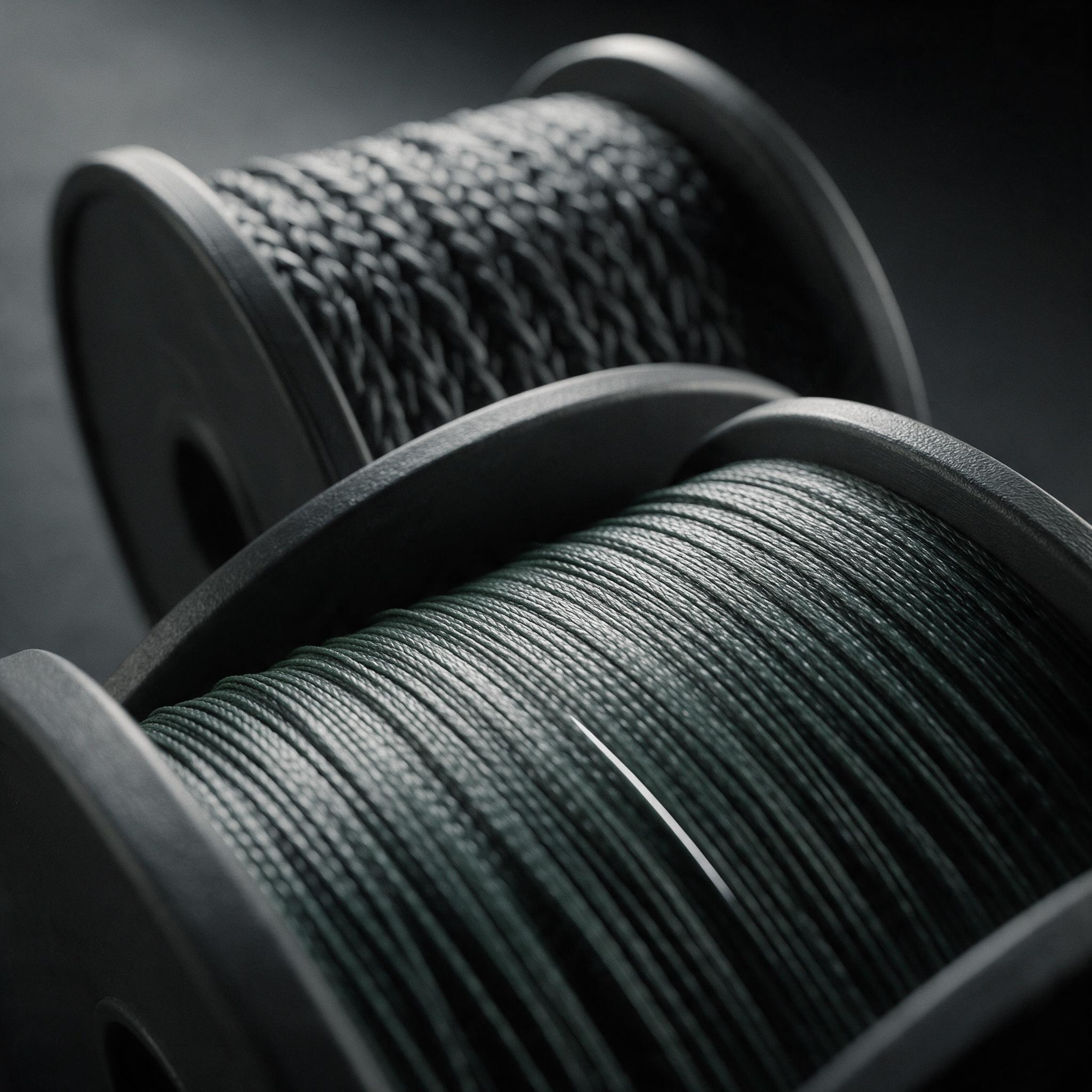
What our own sample actually contains
Our accessory sample holds three listings: two braided lines and one polypropylene lure box. The category exists in our taxonomy because line, boxes and tools fit none of the product types around them. It is a residual bucket rather than a product family, and the listing data shows it.
Neither line listing states breaking strain, PE rating or diameter. The two are also quoted on different bases: one at US$9.62 per pack at MOQ 30 packs, the other at US$60 per piece at MOQ 5 pieces. Neither states the spool length. Two prices on different bases, with no common denominator, cannot be compared with each other, which is why this record publishes no price band for the category rather than publishing a misleading one.
One of the listings positions itself as a replacement for a named Japanese brand. That is a comparison claim. Our sample contains nothing that would support or contradict it, and we record it as a claim rather than treat it as a specification.
The purchase order is where this gets fixed
A factory can supply all three fields. It does not volunteer them, because the retail conversation happens on strength and the factory conversation happens on PE. The buyer's job is to put both on the same sheet:
- Target breaking strain, with the test method or the standard it is measured against.
- PE rating, stated as the construction the factory will run.
- Diameter, with the tolerance, because braid diameter varies with tension at measurement.
- Metres per spool, so that a pack price has a denominator.
- Spool and pack format, because retail-ready and bulk are priced differently and both are legitimate orders.
Reading a quotation against this
Ask for a row per field. A supplier who can give all three is working from a controlled construction, and one who cannot is quoting a stock item they have not measured. Both answers are useful, and only one of them lets you put two quotations side by side and know what you compared.
The wider rule is in our record standard: a price is comparable only when the unit, the quantity and the basis are stated. For braid, add the field that the unit is made of.
Sources 3 cited
- The three-listing accessory sample this page draws its figures from
- How the same unit problem runs through the whole catalogue
- Our rule for separating a claim from its evidence
Every figure on this page traces to one of these. The same list is declared in the page structured data (schema.org citation) and in the Markdown twin.