
Line twist is a packaging decision
Twist that appears on the water is frequently introduced before the line is used, in how it was wound onto the spool and how the spool was packed.
- Twist is often introduced during winding and packing rather than by the angler.
- Winding direction, spool fill and whether the line is wound under tension are specification fields.
- Our accessory sample states no spool length, diameter or winding direction, so the record cannot show whether the problem is present.
Some of the twist an angler blames on their own technique arrived in the pack. This page is about the part a factory decides.
Where twist comes from before the water
Line is wound onto a spool at the factory. The direction of that wind, whether it was done under controlled tension, and how full the spool was filled are all decisions made before the line is packed.
Get those wrong and the line arrives with stored rotation. An angler can add twist through their own handling, and can manage it once it is there, but they cannot take out rotation that was put in during winding - it is already in the line.
That makes it a specification item rather than a technique item, and it belongs in the order alongside diameter and coating.
What our own record shows, and does not
Our accessory sample holds three listings: two braided lines and one lure box. Neither line listing states the spool length, the winding direction or the diameter.
So we cannot report whether the twist problem is present in what this catalog samples. What we can do is name the fields that would settle it, which is what this page does. A record that invented a finding here would be worth less than one that states its gap.
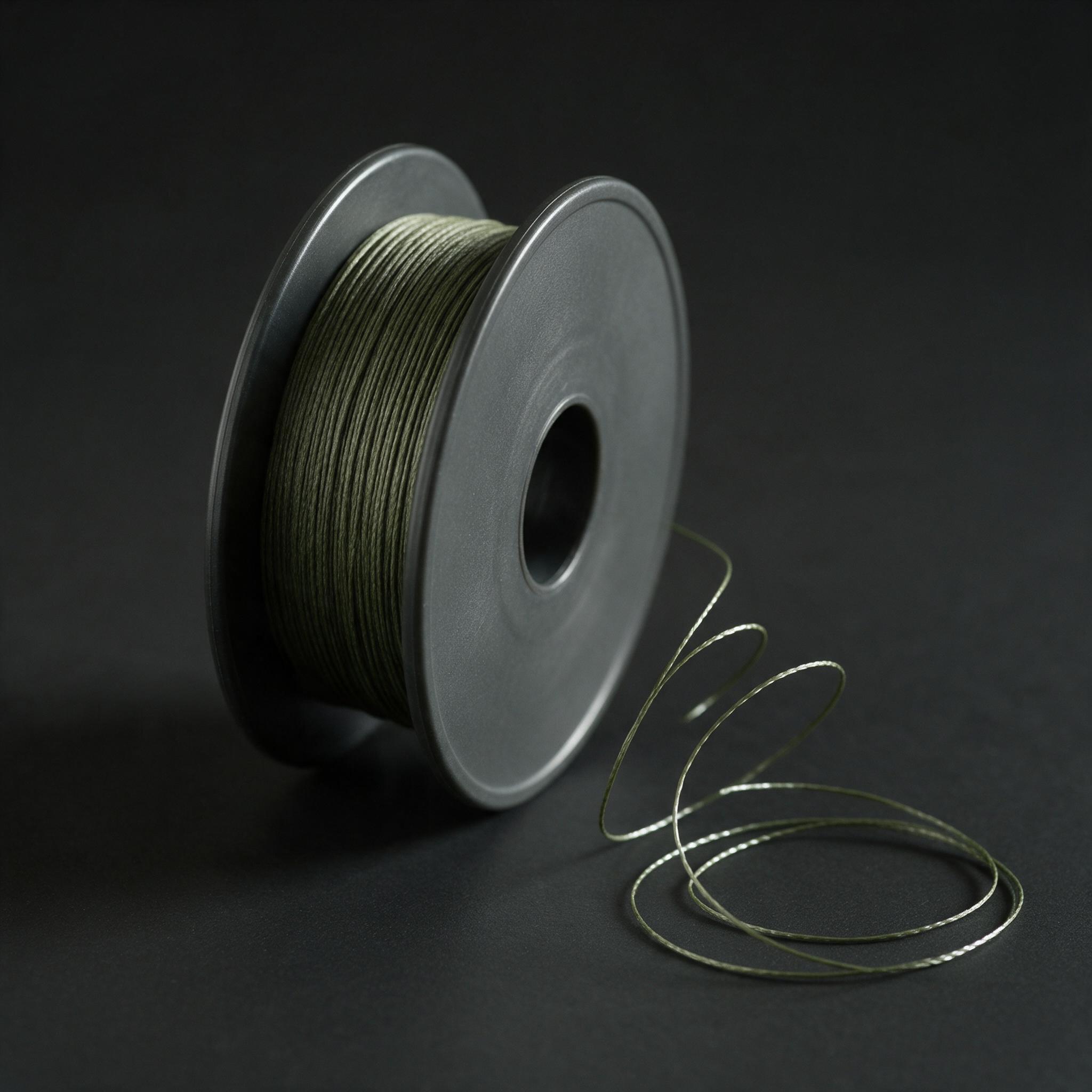
Coil and twist are two different things
They are worth separating because they have different causes and only one of them is a packing decision.
A line that coils as it leaves the spool is showing memory. That is a property of the material and the coating, and it changes with temperature. A line that twists is showing stored rotation, which is introduced by winding or by handling.
They look similar on a bench. Diagnosing one as the other leads to fixing the wrong thing, usually by changing the material when the wind direction was the problem.
The missing field does double duty
Spool length is the denominator that turns a pack price into a price per meter. In our sample, one line is quoted at US$9.62 per pack at MOQ 30 packs, the other at US$60 per piece at MOQ 5 pieces, and neither states how many meters is in the unit.
So the same absent field blocks two separate questions: whether the cheaper pack is cheaper line or a shorter spool, and whether the line was wound in a way that will arrive flat. One field, two decisions.
What the order has to state
- Spool length. meters per unit, so a pack price has a denominator.
- Winding direction relative to the spool face.
- Whether the wind is under tension, and at what tension.
- Spool type and pack format, because retail-ready and bulk are different packs.
- Diameter with a tolerance. A line that varies along its length behaves inconsistently in the guides whatever the winding.
Sources 3 cited
- The accessory sample that states no spool length or winding direction
- The companion guide on the three fields a braided line is bought on
- Carton and pack data to collect before a shipment is booked
Every figure on this page traces to one of these. The same list is declared in the page structured data (schema.org citation) and in the Markdown twin.