
Nail weights and weighted hooks for Neko and urchin rigs
Nail weights and weighted hooks are the small hardware that sells with every soft plastic, and they hang on hook models that are bought separately.
- Our sampled fishhook listings quote US$0.07 to US$2.40 per piece or per pack at MOQ 100 to 2,000 pieces - a factory price basis, not a retail price.
- The sample behind this record is 9 fishhook listings, covering worm hooks for Texas and finesse rigs, jig heads from 1 g to 56 g and assist hooks.
- Bassmaster's Neko-rig guide specifies a 1/8 oz weight on the fat end of the bait and nail weights only when fishing 1/16 oz or less (Bassmaster).
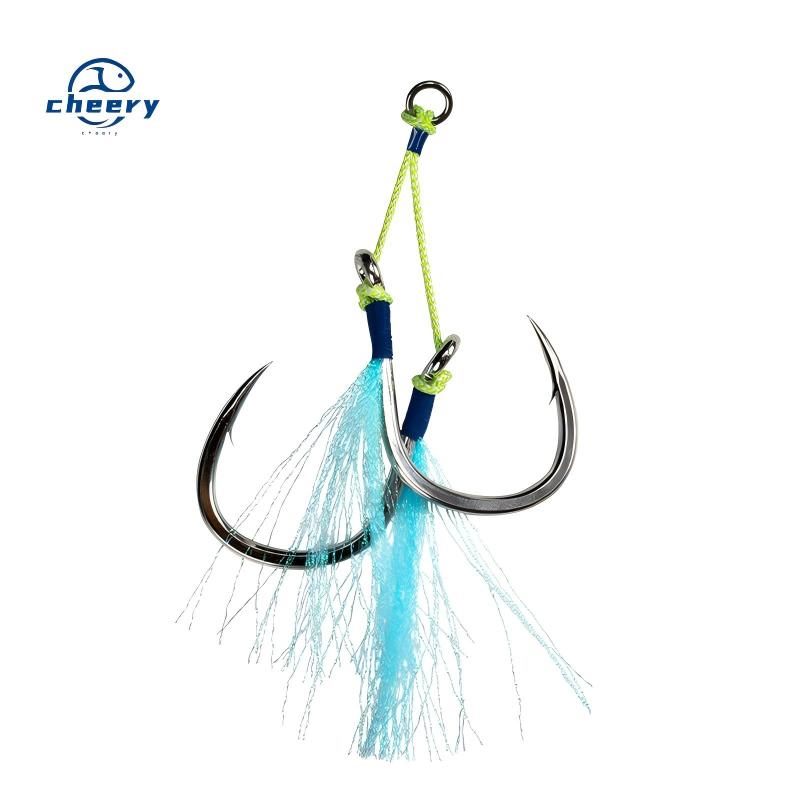
Nail weights and weighted hooks are the cheapest items on a tackle wall and the ones that decide whether a soft plastic gets fished at all. That is why the American rigging guides matter commercially: when a title publishes a weight range and a hook size for a technique, it turns a generic pin and a generic hook into a named, sized, repeatable product line.
The sourcing consequence is that the buyer is not shopping for a shape, which any factory can press, but for the fields that survive a repeat order: base metal, wire gauge, plating and pack count. The urchin family makes that sharper still, because the hardware is specified per rigging method, so the same bait pulls three different weight SKUs behind it.
- Our sampled fishhook listings quote US$0.07 to US$2.40 per piece or per pack at MOQ 100 to 2,000 pieces - a factory price basis, not a retail price.
- The sample behind this record is 9 fishhook listings, covering worm hooks for Texas and finesse rigs, jig heads from 1 g to 56 g and assist hooks.
- Bassmaster's Neko-rig guide specifies a 1/8 oz weight on the fat end of the bait and nail weights only when fishing 1/16 oz or less (Bassmaster).
- A published urchin rigging guide gives nail weights from 1/32 to 1/16 oz inserted into the body and mushroom finesse heads from 1/16 to 1/8 oz (Southern Fishing News).
- Hook size is named in the same guides: #1 to #2 drop-shot hooks, #6 to #8 EWG trebles for urchin balls and #1 hooks for finesse Neko work (Bassmaster, Southern Fishing News).
- Nail weights are sold by pack and by size, not as a single universal item: one US listing sells tungsten nail weights at 1/16 oz in 25-piece packs (Walmart listing).
What moves the unit price
| Cost driver | Why it moves the price | How to control it in the order |
|---|---|---|
| Weight in grams | The metal is the product, so a 3.5 g and a 1.8 g weight of the same shape differ in material as well as in size. | Quote by weight band. Weight and pack count together set the retail price point. |
| Base metal: lead, tungsten or steel | Tungsten is denser and considerably dearer; lead faces restrictions in some markets; steel is a third option with its own density. | State the base metal and the market. A lead restriction is a price change, not a labeling change. |
| Hook wire gauge and model | On a weighted hook the hook is most of the cost, and wire gauge is what decides whether it opens on a fish. | Name the hook model and the wire gauge. Unnamed hooks at an unnamed gauge are the first thing substituted. |
| Plating | Nickel, black nickel, tin and painted finishes cost differently and perform very differently in saltwater. | Name the plating and, for saltwater, name a salt-spray standard with the hours required. |
| Eyelet type and orientation | A moulded eyelet, a wire eyelet and a swivel eye are different assemblies on the same weight. | State the type and the orientation; orientation decides which rig the weight is sold for. |
| Pack count and packaging | These SKUs are sold in small-count retail packs, so the card and the count carry a large share of the unit cost. | Fix the pack count and format at quoting; changing the card later costs more than the card. |
Which weight for which rig
| Rig | Weight named in published guides | What it changes in the component |
|---|---|---|
| Neko rig | 1/8 oz at the head end; nail weights only at 1/16 oz or less (Bassmaster) | Decides whether the SKU is a nail weight or a mushroom-style head, and how deep the weight ladder runs |
| Urchin or spiky ball, wacky style | 1/32 to 1/16 oz nail weight inserted into the body (Southern Fishing News) | Nail diameter has to match the body core, so diameter is a specification rather than a footnote |
| Urchin on a finesse head or drop shot | 1/16 to 1/8 oz mushroom head; 1/8 to 3/8 oz drop-shot weight (Southern Fishing News) | Head casting, eyelet orientation and hook wire gauge all move with the weight |
Hook models and what to lock in writing
| Component | What is specified | Why it decides the order |
|---|---|---|
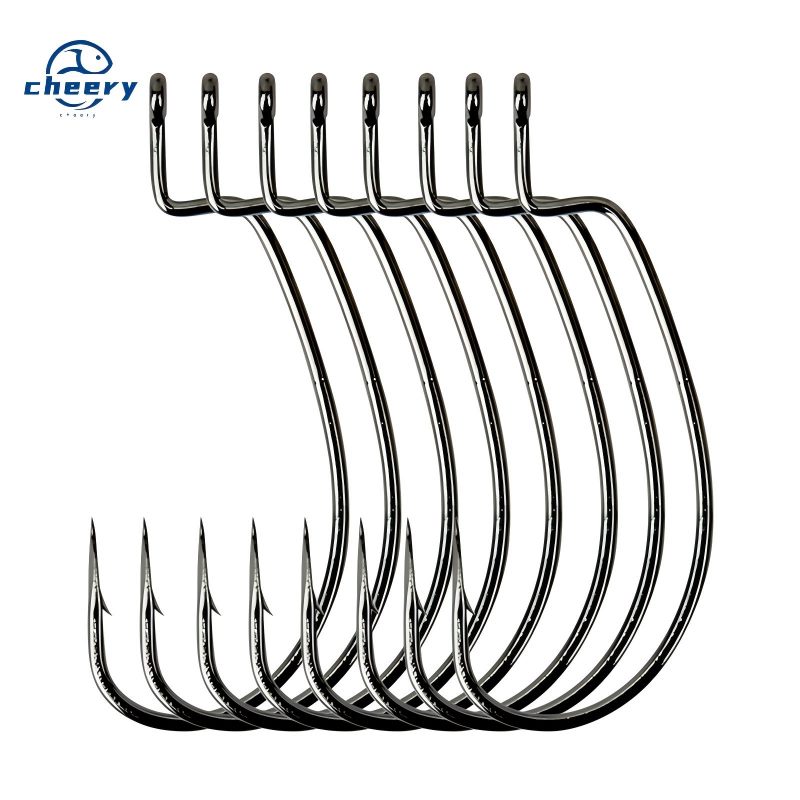
| Worm hook for Texas and Neko | Model, size, wire gauge, gap width and point style | The same nominal size from two makers is a different hook; gauge sets both hookset performance and price |
| Weighted hook or jig head | Head weight in grams, head shape, hook size and eyelet angle | Head weight is the selling axis: a 1 g head and a 56 g head are separate listings, not one ladder |
| Plating and finish | Tin, black nickel, PTFE or painted, with an agreed salt-spray duration | Chipping and rust is the recurring complaint on saltwater SKUs, and it is what stops a reorder |
Wire, plating and corrosion
| Choice | Behaviour | Where it wins |
|---|---|---|
| Black nickel | Hard surface, low glare, moderate corrosion resistance | Freshwater bass programmes and the standard finesse look buyers expect |
| Tin plating | Softer and duller, better in saltwater | Inshore and saltwater SKUs where rust on the hook is the complaint |
| Heavy wire, coated | Higher material use, slower forming, strongest at the hookset | Heavy cover and big-fish programmes where a straightened hook loses the sale |
Which channel buys which pack
| Channel | Pack format | What it demands |
|---|---|---|
| E-commerce | 25-piece packs and mixed-size variety packs | Size printed on the pack, low unit cost and one image that shows scale next to a bait |
| Specialist tackle retail | Single sizes with a complete weight ladder and a named hook model | Continuity of the ladder across seasons, a named hook and an honest wire gauge |
| Mass retail | Small blister packs of weights and hooks | Simple size naming, low price point, barcode and carton marks correct first time |
Questions buyers ask about nail weights and weighted hooks for Neko and urchin rigs
Each question has its own page, so it can be found and cited on its own.
- What is a nail weight and how does it differ from a weighted hook?A nail weight is a plain metal pin pushed into the soft plastic, usually at the head end, so the bait falls head-down.
- Which nail weight sizes should a Neko assortment carry?The published rigging guides point to a short ladder rather than a long one.
- What do nail weights and weighted hooks cost from a Chinese factory?Our sampled fishhook listings quote US$0.07 to US$2.40 per piece or per pack at MOQ 100 to 2,000 pieces, which is a factory price basis.
- Which hook should be supplied with a Neko or urchin rig?The published guides name sizes rather than one universal answer.
- Which plating should a saltwater terminal tackle SKU use?Tin plating is the usual answer where the bait sees salt, because the failure that ends a reorder is rust on the hook rather than a dull finish.
- How many pieces go in a retail pack?Pack counts in retail listings are commonly 25 pieces for a single size, with mixed-size variety packs used to move a customer across a ladder.
- Why do urchin baits need their own terminal tackle listing?Because the hardware is what makes the bait work, and the rigging guides say so.
- When should a buyer order for a spring shelf date?Terminal tackle has no mould cycle to wait on in most cases, so the constraint is plating, packaging and capacity rather than tooling.
What to send for a comparable quote
| Field | Why it changes the price |
|---|---|
| Weight in grams or ounces | The axis the whole category is sold on, and the first line of any listing title |
| Base metal | Lead versus tungsten or zinc; tungsten costs a multiple of lead for the same weight |
| Hook wire gauge | Thicker wire is more material and a slower forming cycle, so it prices above the same size in light wire |
| Hook model and size | Point style, gap and bend are separate tooling, so a new model is a new setup |
| Plating | Tin, black nickel or coated each add a separate finishing step and a separate failure mode |
| Eyelet type and orientation | A formed eye, a welded eye or a 90-degree head each need a different process |
| Head or weight shape | Nail, mushroom, ball and bullet come from different moulds and cannot share a run |
| Pack count | 10, 25 or 50 pieces per pack changes the card, the blister and the unit price |
| Packaging | Poly bag, blister card or bulk carton; packaging can exceed the hardware cost on cheap SKUs |
| Target market | Saltwater exposure drives the plating specification, and the market drives labeling |
| Order quantity and price basis | MOQ and FOB port or EXW factory decide whether two quotes are comparable at all |
What to agree in writing, and the tolerance to name
| Field | What the order has to state | Tolerance or standard to name |
|---|---|---|
| Weight in grams | Target weight per piece and the weighing method | State the band and the tolerance, and whether it is measured per piece or by lot average. |
| Base metal | The metal the weight is made from, named | Name the metal and any market restriction it has to satisfy, so the label and the alloy agree. |
| Hook wire gauge and model | Hook model, size and wire gauge | Name all three. These are the fields a buyer is most often talked out of writing down. |
| Plating | The plating used and its corrosion performance | Name the plating, and for saltwater name ISO 9227 or ASTM B117 with the hours required. Nickel release rules apply in the EU. |
| Eyelet type and orientation | Type, orientation and the load it has to hold | State the type and orientation, and ask for a pull-test figure where the weight hangs on the eyelet. |
| Pack count | Pieces per pack and packs per carton, exactly | Exact counts inspected to AQL ISO 2859-1. At these unit prices a short count is the whole margin. |
| Hardness of the weight | Whether the weight holds its shape when it is threaded | Agree a simple functional check on a sampled pack rather than a hardness number, unless you are buying to a stated alloy. |
What we have not verified
- Retail prices for nail weights and weighted hooks: we publish no retail price survey, so no margin table appears here.
- Market size and unit volumes for terminal tackle: no sourced figure was found, and none is invented here.
- Wire gauge equivalence between makers: gauge numbering is not standardized, and we publish no cross-reference table.
- Tungsten versus lead rules by market: restrictions differ by country and the buyer's customs broker decides the classification.
- Which named US chains list these components: public guides and retail listings are evidenced, planogram-level data is not.
Where this record leads
- Sampled terminal tackle listings - reference prices and MOQ per listing.
- Specification builder - turn these fields into a spec sheet you can send.
- Reference price bands - the band this record sits in, with its unit stated.
- The sourcing playbook - the process these questions sit inside.
- US and EU compliance - what has to be true before the shipment clears.
Related reading
- What do nail weights and weighted hooks cost from a Chinese factory?
- What is a nail weight and how does it differ from a weighted hook?
- Why do urchin baits need their own terminal tackle listing?
- How is an urchin bait rigged?
- Which hook should be supplied with a Neko or urchin rig?
- Which nail weight sizes should a Neko assortment carry?