
Sea urchin soft lures
Direct answer
The urchin shape is a Japanese design reported as about 20 years old that took over ICAST 2026.
Key facts
- The shape is a Japanese design reported as 20 years old that took over ICAST 2026 (Hook and Barrel).
- US coverage describes the original selling out at around US$20 retail and being copied within months (Sports Illustrated, Ike Live).
- Retail listings sell the shape as floating TPR or TPE in 2, 5, 6 and 12-piece packs with 6 colors (Amazon and Walmart listings).
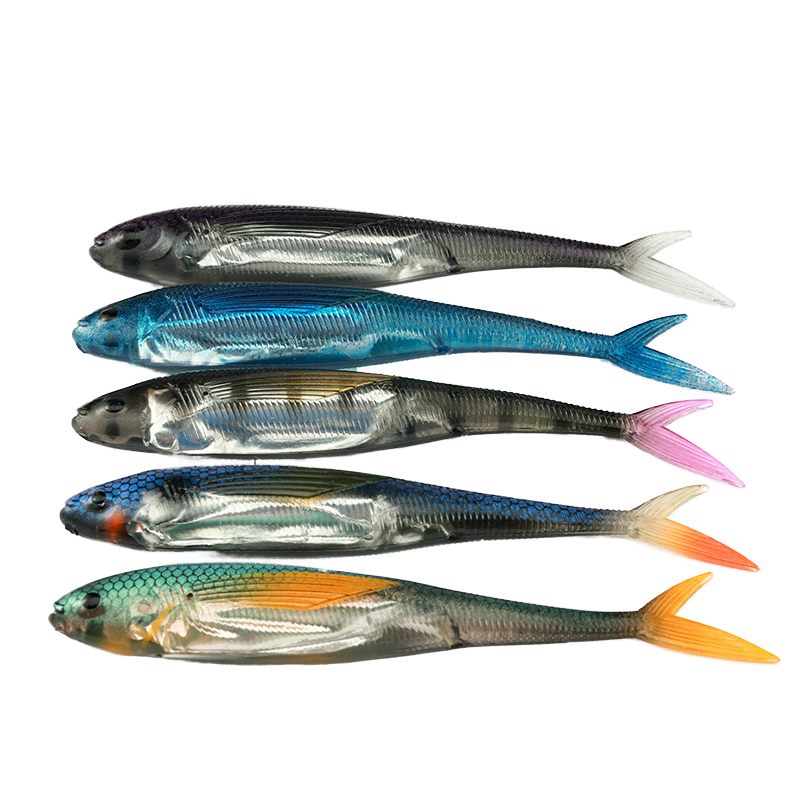
A ball of spines is not an obvious fishing lure, which is exactly why it worked. The design is Japanese and roughly twenty years old; it broke into the US bass market in 2026 after tournament coverage, a sell-out at around US$20 retail and a copy cycle measured in months.
The sourcing consequence is narrow: the shape is already copied, so the shape is not the opportunity. Material durability, the size ladder, the color count and the pack format decide whether an order repeats, and those are the fields this record is built around.
- The shape is a Japanese design reported as 20 years old that took over ICAST 2026 (Hook and Barrel).
- US coverage describes the original selling out at around US$20 retail and being copied within months (Sports Illustrated, Ike Live).
- Retail listings sell the shape as floating TPR or TPE in 2, 5, 6 and 12-piece packs with 6 colors (Amazon and Walmart listings).
- Sizes run from about 17 mm in finesse versions to roughly 110 mm (4.3 in) in value packs.
- Durability is a documented consumer problem: US titles published guides on rigging and on preserving the bait.
- Our own sampled soft-lure listings quote US$0.20 to US$3.85 per piece at MOQ 50 to 1,000 pieces - a factory price basis, not a retail price.
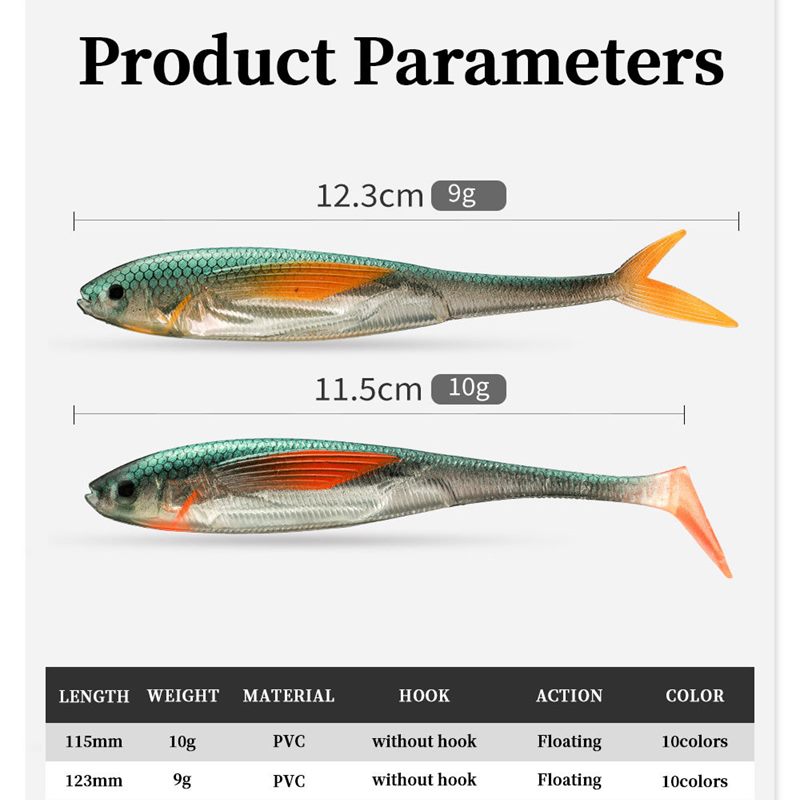
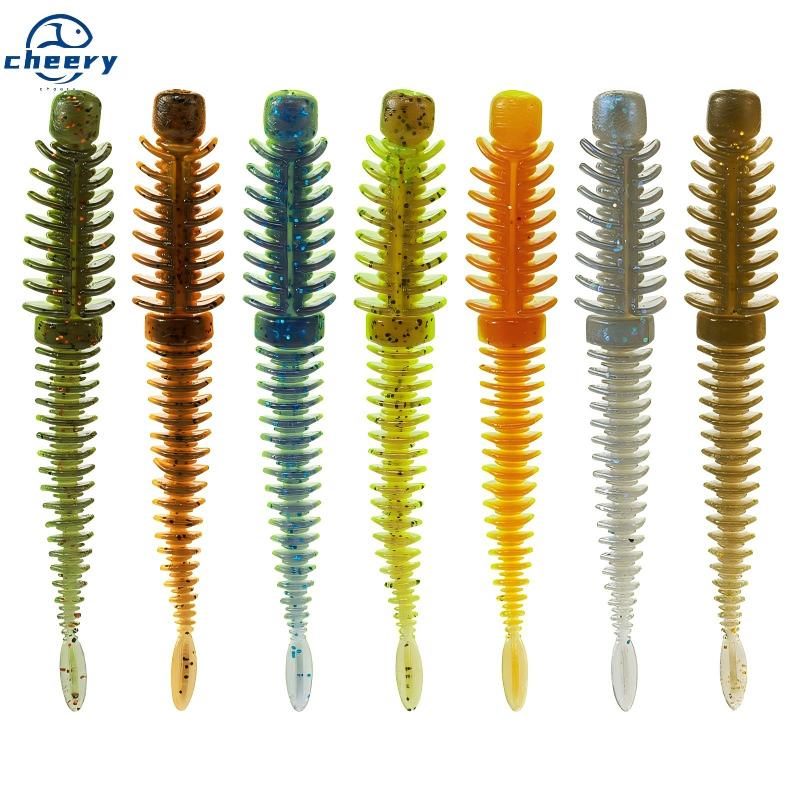
What moves the unit price
| Cost driver | Why it moves the price | How to control it in the order |
|---|---|---|
| Material: TPE, PVC or a blended body | TPE tolerates repeated hooking and holds a softer feel; PVC is cheaper and tears sooner. The two are different tooling. | Choose the material from how many fish the bait has to survive, not from the unit price alone. |
| Spine density and length | Each spine is moulded, so a dense urchin profile needs a finer mould and a slower cycle than a smooth bait. | Specify density as a look and a feel, and approve it on a physical sample. Density is the field buyers most often leave open. |
| Length and weight | A larger body carries more material and has to be balanced against the head or weight it is fished with. | Quote length and weight as a pair, and test the balance with the terminal tackle you will actually use. |
| Buoyancy and additives | Floating and slow-sinking bodies use different densities, and scent or UV additives are separate line items. | State the buoyancy you need, and whether scent or UV is included rather than assumed. |
| Terminal tackle bundled or separate | Urchin baits are often sold with a hook or a weighted hook, which changes the unit and the SKU. | Say whether the quote includes terminal tackle. A bundled SKU needs its own price, not a note. |
| Pack format and count | Retail packs in this category are small-count and carded, so packaging is a meaningful share of the unit cost. | Agree the pack and the count before quoting; repacking later costs more than the pack. |
Where it is fished
| Setting | What the bait is doing | What it changes in the product |
|---|---|---|
| Freshwater lakes and reservoirs | Worked around rock, docks and hard cover for black bass; US tournament coverage is centred here | Weedless rigging matters, so the body has to hold a hook without splitting; flake and color matter more than weight |
| Freshwater rivers and streams | Drifted and hopped in current | Needs a denser or weighted version to reach the strike zone |
| Inshore saltwater | Cast to rocky structure and worked down the face | Salt content, hook slot strength and corrosion-resistant hardware in any pre-rigged version |
How it is rigged
| Rig | How it is fished | What the lure must do |
|---|---|---|
| Texas rig | Weedless presentation into rock and cover | Body must accept a hook point without tearing on the cast |
| Neko rig | Nail weight in one end, head-down fall on a mostly static presentation | Needs a flat or solid section for the weight to sit in |
| Nail weight or weighted hook | Added weight for casting distance and fall rate | Foam or dense core, and a consistent sink rate across the batch |
| Drop shot | Held above the bottom, tentacles working in the current | Tentacles must stay flexible in cold water |
| Jig head | Bottom contact, hopped over structure | Enough tensile strength at the nose to survive repeated contact |
| Fly version | Fly-rod anglers joined the craze with a trimmed or tied version | A second SKU for a different buyer, not a modification of the first |
Which material, and what it costs you
| Material | Behaviour | Where it wins | Where it fails |
|---|---|---|---|
| TPR (soft) | Floats, very soft action, strong on the fall | The action the trend is built on | Tears at the hook point; the documented consumer complaint |
| TPE (tougher) | Floats, firmer, higher rebound | Repeat orders and durability claims | Higher unit cost, slightly stiffer action |
| PVC | Cheapest, heavier, usually slow-sinking | Entry price points and saltwater sinking versions | Least durable; a price-led sale that does not repeat |
| Silicone | Most durable, highest cost | Premium private label | Cost structure rarely fits a multi-pack at mass retail |
Which retail formats buy it
| Channel | Pack format seen in public listings | What it demands |
|---|---|---|
| E-commerce | 6-piece and 12-piece packs, 6 colors, retail-ready imagery | Low unit cost, complete color ladder, one hero image that reads at thumbnail size |
| Mass retail | 2-piece and 5-piece packs | Low price point, simple packaging, barcode and carton marks correct first time |
| Specialist tackle retail | Single units and import versions of the Japanese original | Authenticity, exact size and color, credible flake and action |
| Premium import tier | Single bait at roughly US$20 retail | Nothing - this is the price umbrella the value tier sells under |
Questions buyers ask about sea urchin soft lures
Each question has its own page, so it can be found and cited on its own.
- What is a sea urchin soft lure and what does it imitate?A soft plastic creature bait moulded as a ball of tentacles or spines.
- Which waters and species is it used for?US tournament coverage centers on largemouth and smallmouth bass in lakes and reservoirs, fished around rock, dock and hard cover.
- How is an urchin bait rigged?The published options are a Texas rig for weedless work around cover, a Neko rig with a nail weight in one end, a nail weight or weighted hook for casting distance, a drop shot to hold it above the bottom, and a jig head for bottom contact.
- What material should a sea urchin soft lure be made from?Retail versions are sold as floating TPR or TPE.
- Which retail channels buy this product?Four formats are visible in public listings.
- When should a retailer order to be on shelf for spring?Work backwards from the season using published lead times.
- How much does a sea urchin soft lure cost from a Chinese factory?Our sampled soft-lure listings quote US$0.20 to US$3.85 per piece at MOQ 50 to 1,000 pieces, which is a factory price basis.
- What is the minimum order for an urchin-style soft lure?It depends on the tooling and colorway position.
What to send for a comparable quote
| Field | Why it changes the price |
|---|---|
| Length and weight | Mould size and shot weight; the 17 mm finesse end and the 110 mm value end are different tools |
| Material | TPR, TPE or PVC changes both the unit cost and the durability claim you can make |
| Buoyancy | Floating versus slow-sinking; salt content and core density decide it |
| colorways and flake | Number of colors sets the setup count; flake needs a measured standard |
| Hook slot or solid nose | Decides whether the bait can be rigged Texas style without splitting |
| Pack format | 2, 5, 6 or 12 pieces; retail blister, poly bag or bulk |
| Terminal tackle | Nail weights or weighted hooks bundled with the bait |
| Target market | US, EU or other; compliance and labeling follow from it |
| First order and annual volume | Sets the tooling amortisation and therefore the unit price |
| Price basis | FOB port or EXW factory; without it two quotes are not comparable |
| Shelf date | Decides whether the order fits the existing capacity window |
What to agree in writing, and the tolerance to name
| Field | What the order has to state | Tolerance or standard to name |
|---|---|---|
| Material and feel | The exact material, and the softness the buyer approved | Name the material and keep the approved sample. Soft is not a tolerance; a retained sample is. |
| Spine density and length | Spines per unit area and their length | State both, and check them against the approved sample rather than a photograph. |
| Body length and weight | Target length and weight, and the measurement point | State both with bands; an urchin body weighed with a hook is a different number. |
| Buoyancy | What the bait does at rest in the water it is fished in | Agree a water test with the intended hook fitted, not a density figure. |
| colorway and flake | The color standard, including any flake content | A retained master sample or a named standard with a stated tolerance; flake size is part of the standard. |
| Pack count and label | Pieces per pack, packs per carton, label content | Exact counts inspected to AQL ISO 2859-1, with the label content agreed in writing. |
| Shelf date on a seasonal SKU | The date the pack has to be ready by | Agree a shelf date and a delivery window, because this bait is bought against a season rather than a stock level. |
What we have not verified
- Unit volumes: no verified figure for how many urchin baits sell per month in any market; the sell-out reporting is qualitative.
- Sell-through and reorder rates: a sold-out hero bait says nothing about whether the multi-pack versions sell through.
- Retail price by market: the US$20 figure is a single reported price point, not a price survey, and EU retail has not been checked.
- Which chains list it: e-commerce and specialist listings are evidenced; a named chain's planogram is not.
- Patent and design-right status of the original shape: a legal question for the buyer's counsel, not a sourcing decision.
Where this record leads
- Sampled soft lures listings - reference prices and MOQ per listing.
- Specification builder - turn these fields into a spec sheet you can send.
- Reference price bands - the band this record sits in, with its unit stated.
- The sourcing playbook - the process these questions sit inside.
- US and EU compliance - what has to be true before the shipment clears.