
How to choose soft baits for a wholesale range
A buying guide to material choice, sample testing and a manageable first assortment
A buying guide to material choice, sample testing and a manageable first assortment
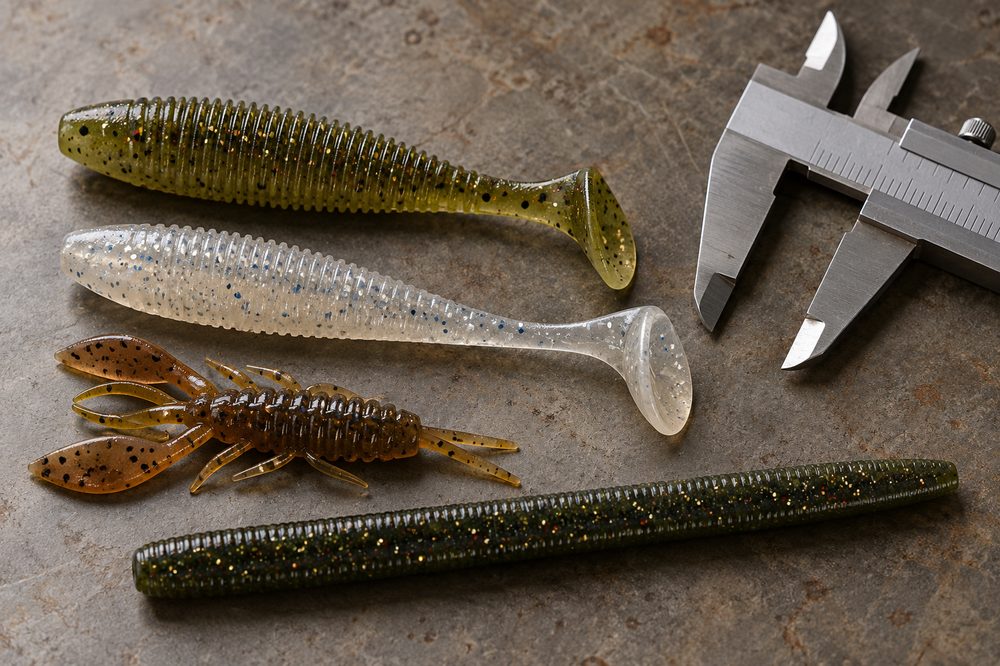
A paddle tail can look right in a sample bag and still disappoint in the water. The tail may need a faster retrieve than the customer normally uses. The body may slip on the intended jighead. A color that looked subtle on screen may arrive almost opaque. These are useful things to discover before ordering several thousand packs.
For a tackle wholesaler, the first buying decision is the job each bait should do. Start with a defined fishing application, then check the material, rigging and packaging against it. This guide focuses on unrigged soft lures for a wholesale range. The sample checks below are proposed buying practices, not a claim that every supplier follows the same process.
Start with a fishing application
Write a brief that a sample technician can use: target species, freshwater or saltwater, intended rig, working depth and retrieve style. A small paddle tail for a light jighead and a larger weedless bait for fishing around cover need different checks. Calling both “premium soft lures” tells the supplier very little.
Name the actual hook or jighead you expect customers to use. Hook size alone is a weak reference because body thickness, hook gap and keeper shape all affect the fit. Ask for samples to be supplied loose as well as in the proposed retail packaging. That lets you separate a molding problem from a tail bent during packing.
Specify behavior before choosing a material
PVC plastisol and thermoplastic elastomers are useful starting labels, but they do not describe a finished bait completely. Ask the supplier to identify the material family and describe the formulation offered for your order. Then compare softness, stretch, recovery after bending and behavior in water using the finished samples.
Avoid the blanket claim that TPE baits always float. Z-Man introduced a sinking ElaZtech formulation in 2026, illustrating why buoyancy must be checked at product level. This is evidence about that brand’s material, not proof that an unrelated supplier can reproduce it. [1]
A bare bait floating in a container does not tell you how the complete rig will fall. Repeat the check with the intended hook, jighead and leader connection. Record water type and temperature, whether the bait rises or sinks, and its resting angle. If fall time matters, use the same marked distance for every sample.
Test the bait in the pack you intend to sell
Packaging is part of the product specification. A long tail folded into a short pouch is a different retail proposition from the same bait supported in a fitted tray. Ask for the proposed bag film, tray and scent or oil to be used together in the sample pack. Check resealing, leakage, staining and whether the bait recovers its shape after removal.
Storage instructions must match the material. Z-Man advises keeping its ElaZtech baits in their original packs and separate from regular soft plastics. [2] Do not copy that instruction blindly onto another formulation. Ask your supplier for compatibility guidance and agree a storage trial using the actual packaging and realistic shipping conditions.
Keep the opening assortment small enough to understand
Every extra combination of shape, size and color creates another stock position. An illustrative launch of three shapes, two sizes and four colors already produces 24 variants. At an assumed 200 retail packs per variant, that is 4,800 packs. Those figures are planning examples, not supplier minimums or a recommended order size.
Give each proposed variant a reason to exist. One might fill a size gap in an existing range; another might support a particular rig. Use dealer requests and your own sales history where available. In the absence of that evidence, label the first order as a trial and keep enough budget available to replenish the variants that actually sell.
Ask whether minimum order quantities apply to the entire order, each body size, each color or each printed bag. These can be separate constraints. A low lure minimum is less useful if the custom packaging forces you to buy a year of stock for an unproven color.
Compare quotations on the same retail unit
Normalize the quote to a saleable pack. Confirm the number of baits, nominal dimensions, agreed tolerances, color reference, packaging and carton quantity. Separate tooling and artwork charges from the repeat-order price. Compare freight assumptions on the same basis so that a cheaper loose-bait price does not conceal a more expensive finished pack.
Before placing the order, keep a dated approval sample and a written revision of the specification. Retain the packaging too. Agree which changes need fresh approval, including material, scent, color recipe and pack construction. On the reorder, compare new production with that reference before accepting a change as normal variation.
A useful first inquiry is specific: send the application, intended rig, proposed assortment and retail pack format, then ask for samples and a quote against those details. The supplier’s ability to answer those questions will tell you more than another page of catalog colors.