
Baitcasting or spinning for a first range
The choice between baitcasting and spinning is a reel-seat and guide-layout decision before it is a product decision, because the two builds differ in where the guides sit, how the blank loads and which reel seat is fitted.
- Baitcasting and spinning builds differ in guide layout, blank loading and reel seat, so the choice is structural rather than cosmetic.
- Our rod sample holds three listings from US$9.15 to US$132.55 per piece, the widest price spread in the catalogue.
- MOQ runs 20 to 100 pieces, the lowest floors we record anywhere.
The reel type is usually discussed as a preference. In a purchase order it is a guide layout, a spine orientation and a reel seat, and it is decided before the price.
Two builds, not one blank with a handle
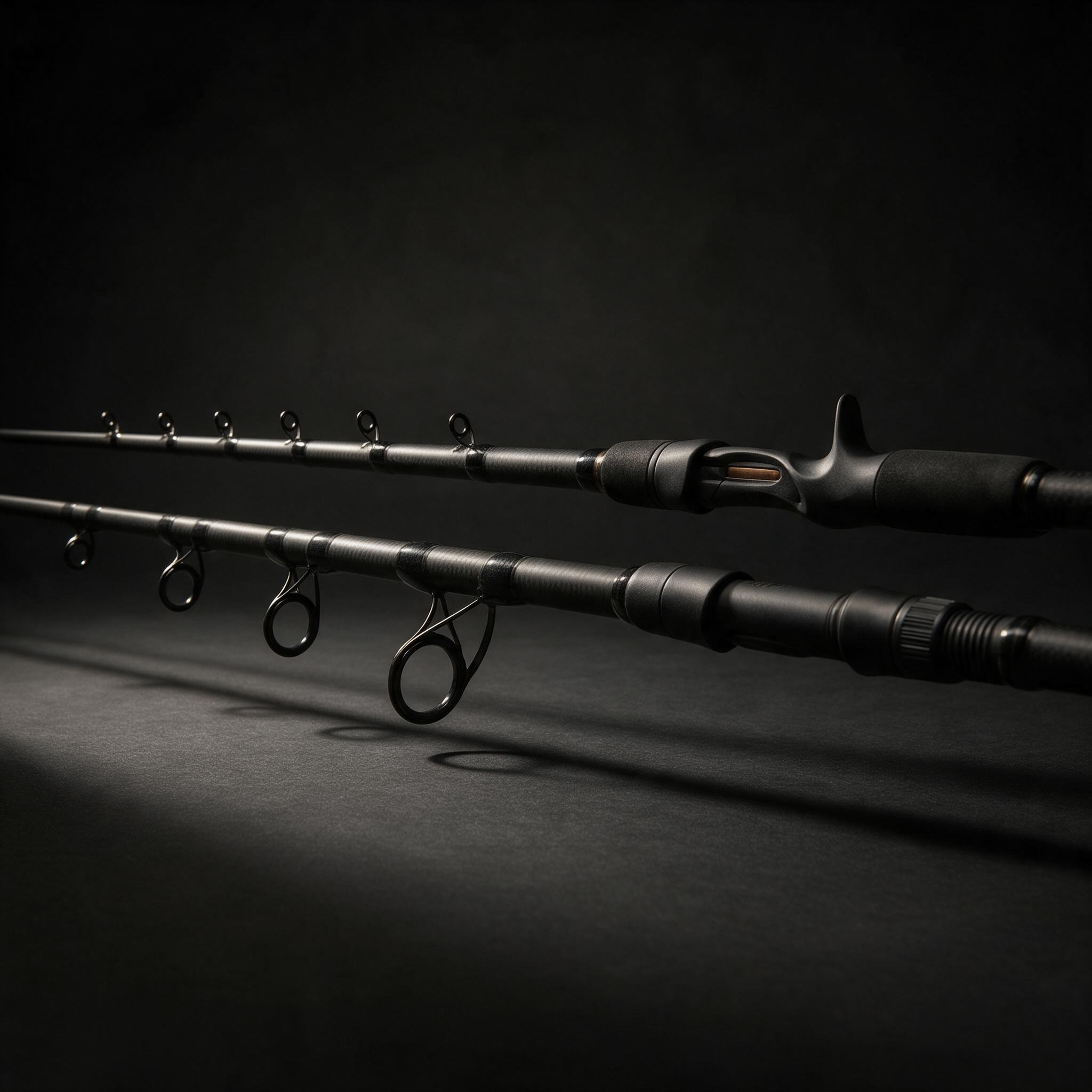
A casting rod mounts the reel above the blank. That puts the guides on the spine side, changes how the blank loads through a cast, and requires a trigger seat. A spinning rod hangs the reel beneath and uses fewer, larger guides positioned for a line that leaves the spool in coils.
The two are different builds with different guide trains. A factory quoting "a rod" is quoting whichever build it holds, and a buyer who has not named the reel type has left the most structural variable open.
What our sample records
Our rod sample holds three listings, and it is a small sample - we record that rather than dress it up. Reference prices run from US$9.15 to US$132.55 per piece, which is the widest spread of any type in this catalogue, and MOQ runs from 20 to 100 pieces, the lowest floors we record anywhere.
The pattern inside the three is the useful part. The cheapest listing carries the highest MOQ in the sample, and the dearest carries the lowest. Price and volume move in opposite directions.
Why that pattern matters for a first order
Most buyers assume that raising quantity lowers the unit price. In this sample the two low-price rows are the ones with the highest volume floor, which suggests that the price points are buying different processes rather than the same process at different scales.
The practical consequence is that a buyer who needs a low MOQ is buying at the top of the range. A first programme should budget accordingly instead of assuming that a small opening order will also be a cheap one per unit.
This is a three-listing sample and it cannot settle the general question. It can show the linkage, and the linkage is what a first order has to plan around.
What the sample also shows
The three listings span an ultra-light travel rod, a spinning rod with named guides, and a carbon lure rod. Three products under one type name, as we record in several other types.
The guide brand is the field these listings do state, and it is the field a buyer is most likely to read as a quality signal. It is not a substitute for power or action, and the rod record states guide brands without treating them as a specification.
What a first rod order has to state
- Reel type. Casting or spinning, because it determines the guide train and the seat.
- Length. The field listings lead with.
- Power and action. Stated separately, with the scale named.
- Guide set. By name, count and size.
- Grip and reel seat. Split or full grip, and the seat type, both quoted as assembly steps.
Sources 3 cited
- The three-listing rod sample behind every figure on this page
- The companion guide separating power from action
- Which cluster builds rods, and on what volume
Every figure on this page traces to one of these. The same list is declared in the page structured data (schema.org citation) and in the Markdown twin.