
Rod power and action
Rod power and rod action are two different fields that US buyers treat as one sentence and Chinese factories treat as two unrelated numbers.
- Power and action are separate fields; a rod named by one of them is only half specified.
- US sizing uses power and action, Chinese quotations commonly use hardness and taper, and the two vocabularies do not line up one to one.
- Our three rod listings span US$9.15 to US$132.55 per piece, a 14.5x spread inside one type.
A rod is the product type in this catalogue where the buyer and the factory are most likely to be describing different things while believing they agree.
Two fields, usually said as one
Power is load capacity. It describes how much force the blank takes before it bends deeply, and it is stated as light, medium or heavy. Action is bend location. It describes where along the blank that bend concentrates, and it is stated as slow, moderate or fast.
US buyers say both in one breath, which is efficient on the water and dangerous in a purchase order. A medium-power fast-action rod and a medium-power moderate-action rod are different tools, and they can be built on blanks that look identical in a photograph.
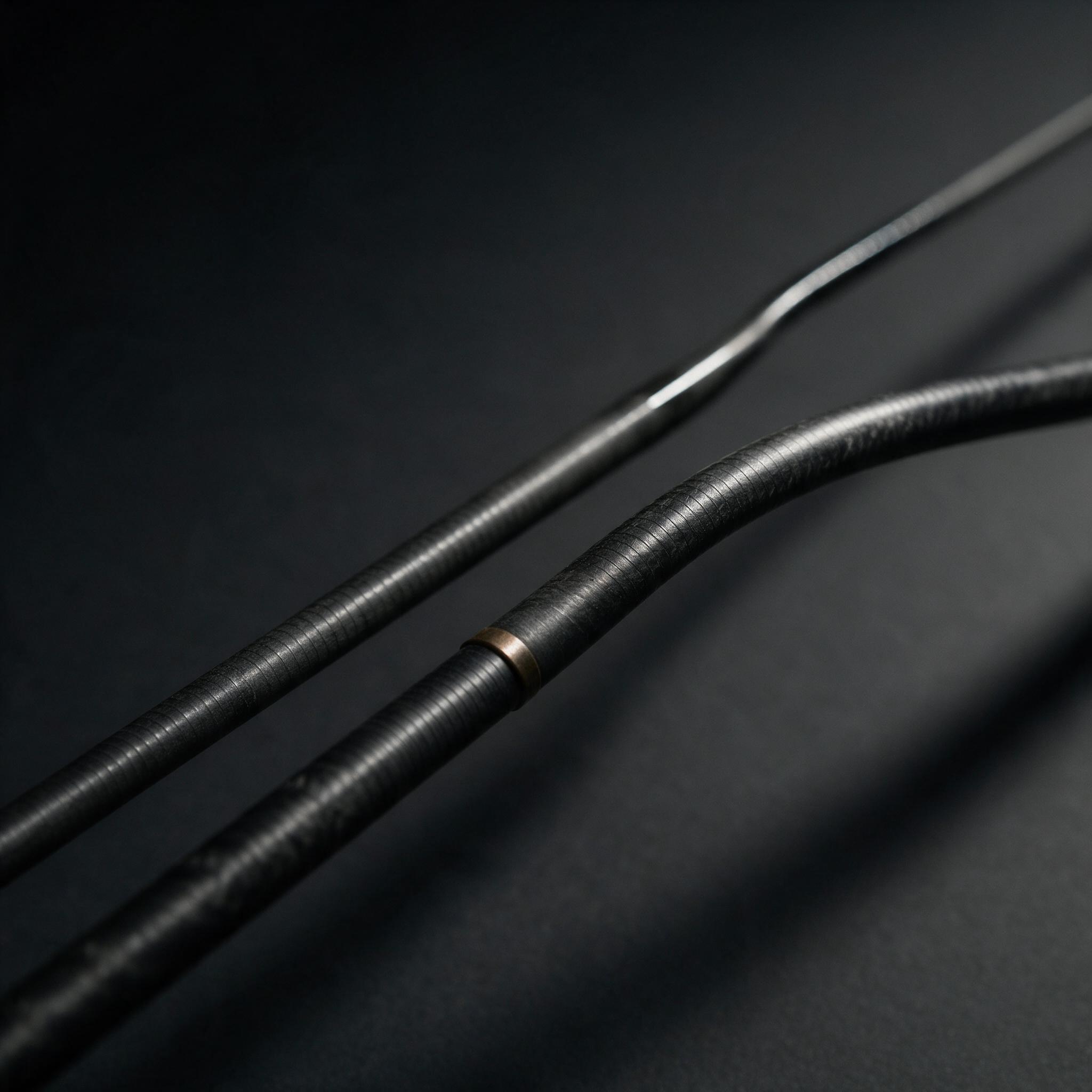
Why the two vocabularies do not map
Chinese factories commonly describe blanks by hardness and taper. Those are the terms the blank supplier uses, and they are internally consistent. They are not translations of power and action.
This is the practical trap. A buyer who restates the US term more loudly does not fix it, because the mismatch is not a language problem, it is a taxonomy problem. The working method is to name the fields separately, with the unit or scale each side is using, and to agree the mapping once in writing before the first order rather than per order afterwards.
What the spread in our own sample shows
Our rod sample holds three listings. Reference prices run from US$9.15 to US$132.55 per piece, a 14.5x spread inside one type, which is the widest in this catalogue. MOQ runs from 20 to 100 pieces, the lowest floors we record anywhere.
The pattern inside those three is worth reading carefully. The cheapest listing carries the highest MOQ in the sample, and the dearest carries the lowest. Price and volume move in opposite directions, which is the opposite of what most buyers assume when they ask for a lower price by raising quantity.
The sample also spans an ultra-light travel rod, a spinning rod with named guides, and a carbon lure rod. Three products again filed under one type name.
What a rod order has to state
- Power. With the scale named, because light, medium and heavy are not standardised across suppliers.
- Action. Where the bend sits, stated separately from power.
- Length. The field listings lead with and the one that predicts the least about behaviour.
- The guide set. Named guides, count and sizes. This is the field a listing does state, and it is not a substitute for power or action.
- Grip and reel seat. Split or full grip, and the seat type, since both are assembly steps quoted separately.
Sources 3 cited
- The three-listing rod sample behind every figure on this page
- Which cluster builds rods, and on what volume
- Our rule for separating a claim from its evidence
Every figure on this page traces to one of these. The same list is declared in the page structured data (schema.org citation) and in the Markdown twin.