
What a colourway actually costs
Colour is the last step in production and therefore the cheapest field to change on a soft plastic, where it is a changeover cost rather than a tooling cost.
- Colour is a changeover cost on a soft plastic, not a tooling cost, so adding a colourway to an existing mould is comparatively cheap.
- Two of our three crankbait listings quote a price range rather than a single figure, which normally indicates a colour or finish tier.
- Because behaviour is committed at tooling on a hard lure, colour is the field a factory varies to build a range from one body.
Colour is the field buyers ask about most and specify least precisely, and its cost depends entirely on which product type it is applied to.
Last step, cheapest to change
Finishing happens at the end of production. That single fact makes colour the cheapest field in a lure order to vary, and it is why colour is where a buyer and a factory can most easily agree to differ.
What varies is what the changeover costs on each product type, and the difference is structural rather than commercial.
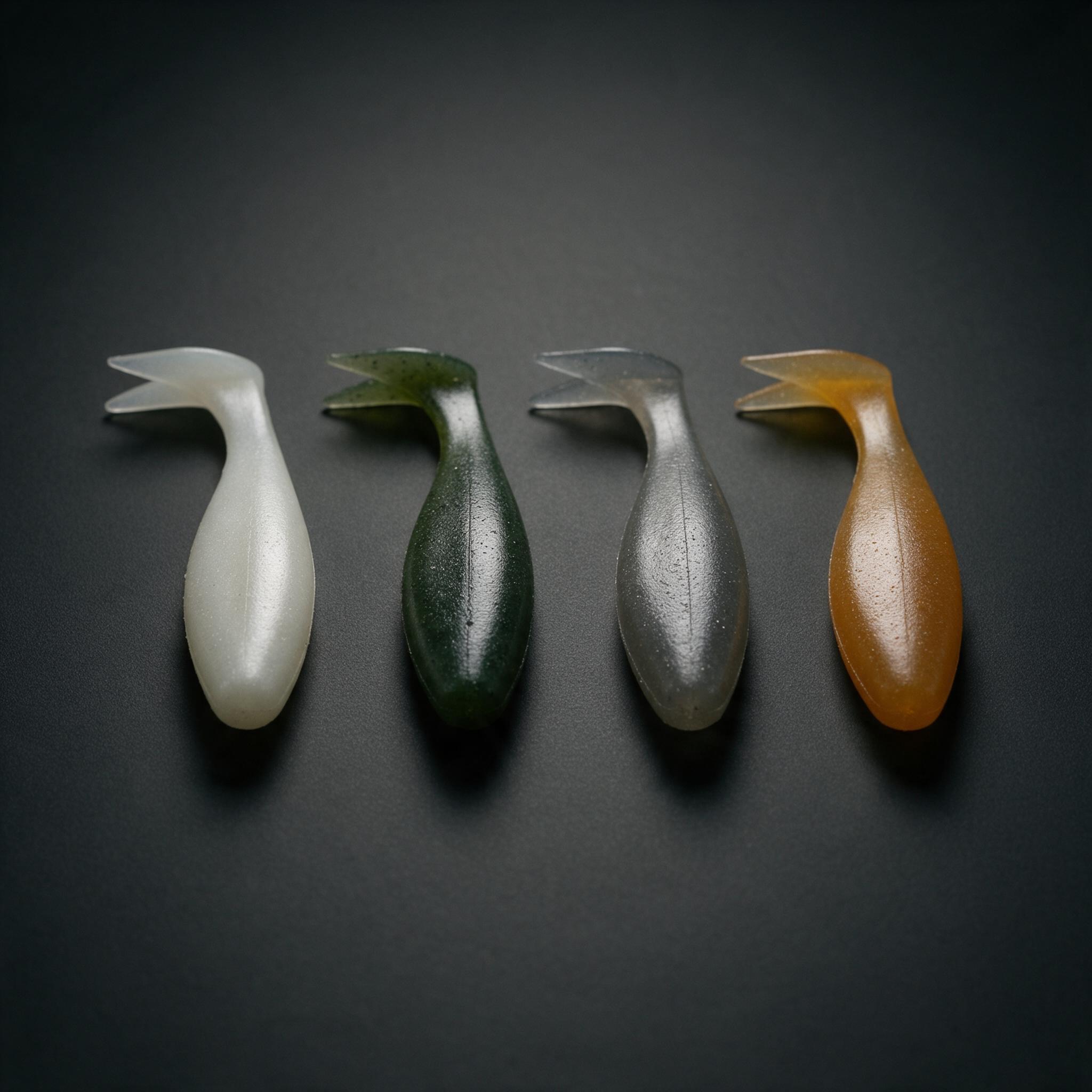
Soft plastic: a changeover
A soft plastic body comes out of a mould that can be run in several colours and material packages. Adding a colourway to a mould you already own is therefore a changeover cost rather than a tooling cost, and our soft-lure record states it in those terms.
This is the reason soft plastics are the easiest type in the catalogue to build a range around. The tool gives you the form; the colour gives you the range.
Hard lure: the variability is already spent
A hard lure commits its behaviour when the tool is cut. The bill geometry, the weighting and the running attitude are fixed at that point, which we describe in the hard-lure and crankbait guides.
So the only field left to vary is the finish. A factory builds a range from one hard-lure body by dressing it differently, and that is why a hard lure is bought as a body plus a finish rather than as a form plus a material.
The tell in the price list
Our crankbait sample holds three listings, and two of them quote a price range rather than a single figure. Given that the body, the lip and the weighting are all fixed at tooling, the variable that remains is the finish.
A range on a finished lure usually indicates tiers rather than a negotiable band. A buyer comparing a range against a single figure is often comparing a colour tier against a base colour, and the two are not the same product at two prices.
Colour is not a logo
Applying artwork is a second process step, and only some bait forms can carry it without one. A buyer planning a logo should establish that before the mould rather than after, because it changes the process rather than the finish.
It is worth separating the two in the order for a practical reason: a colourway is a line item that most factories can absorb, and a logo is a line item that changes how the part is made.
What the order has to state
- A colour reference the factory can match against. Not a name, because names are not portable between suppliers.
- Who holds the standard. A physical or measured reference, and where it lives.
- Whether the quotation is a single figure or a tier. Ask which, because a range and a price look similar on a sheet.
- Whether artwork is involved. If it is, it is a process decision and it belongs before tooling.
Sources 3 cited
- The crankbait sample whose price ranges indicate finish tiers
- The soft lure record where colour is recorded as a changeover cost
- Our rule for separating a claim from its evidence
Every figure on this page traces to one of these. The same list is declared in the page structured data (schema.org citation) and in the Markdown twin.