
Credentials and certificates
Direct answer
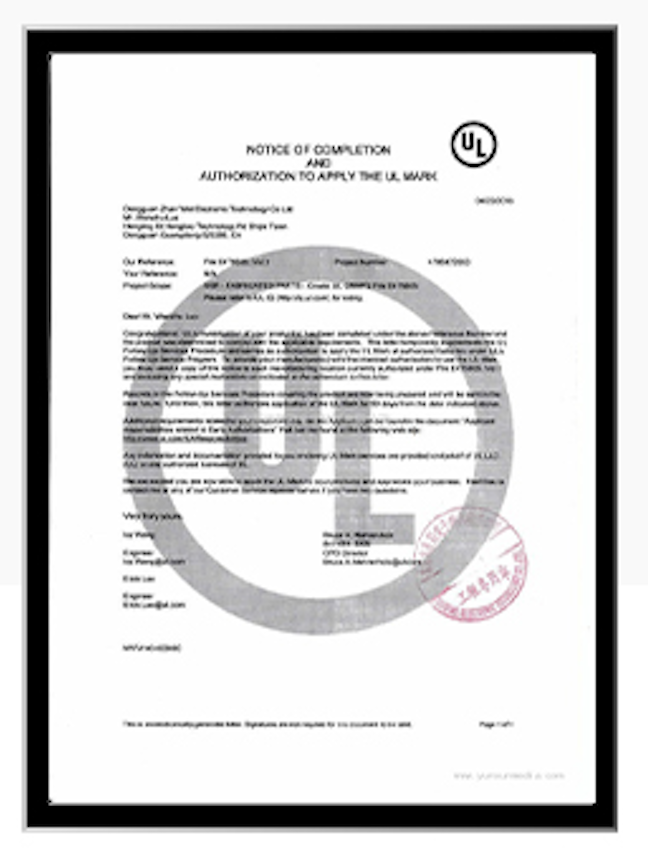
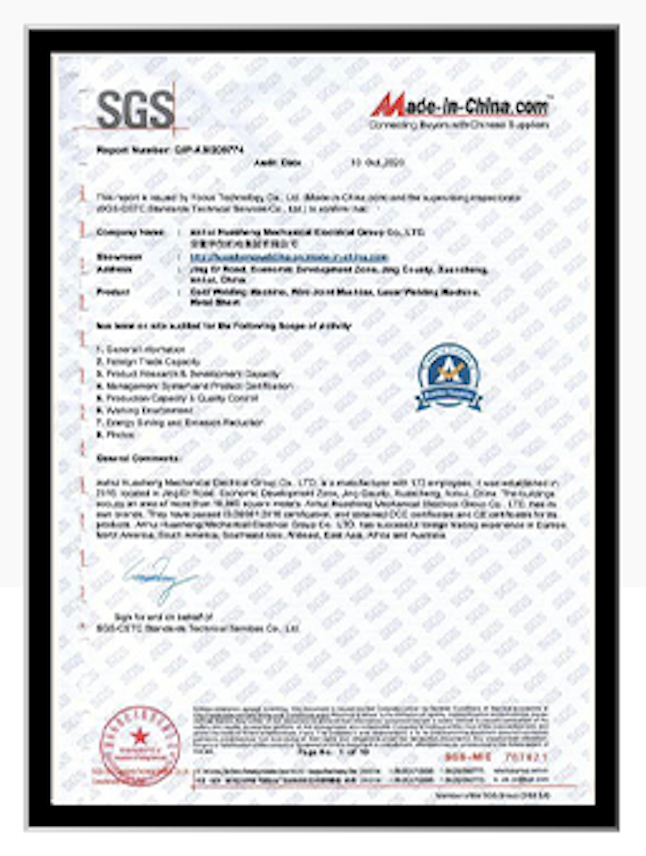
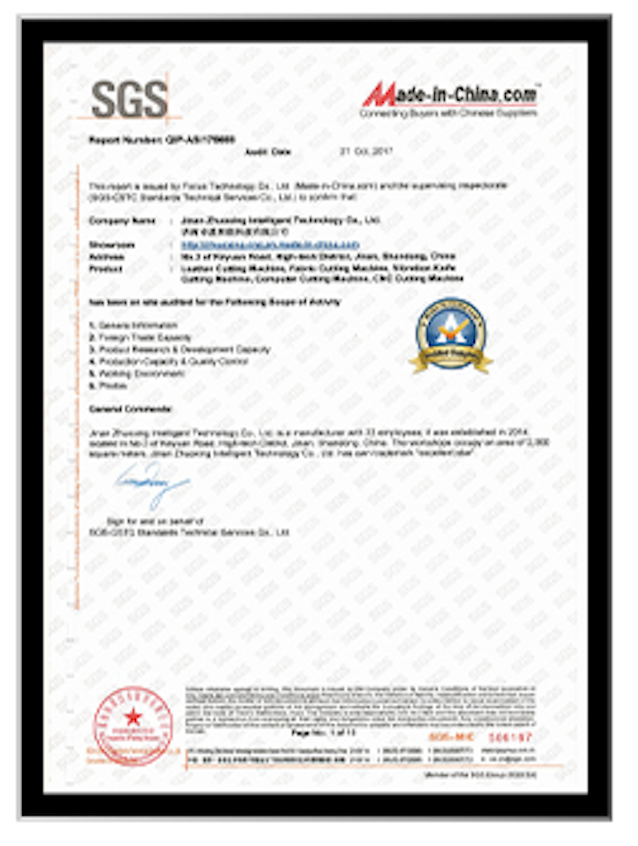
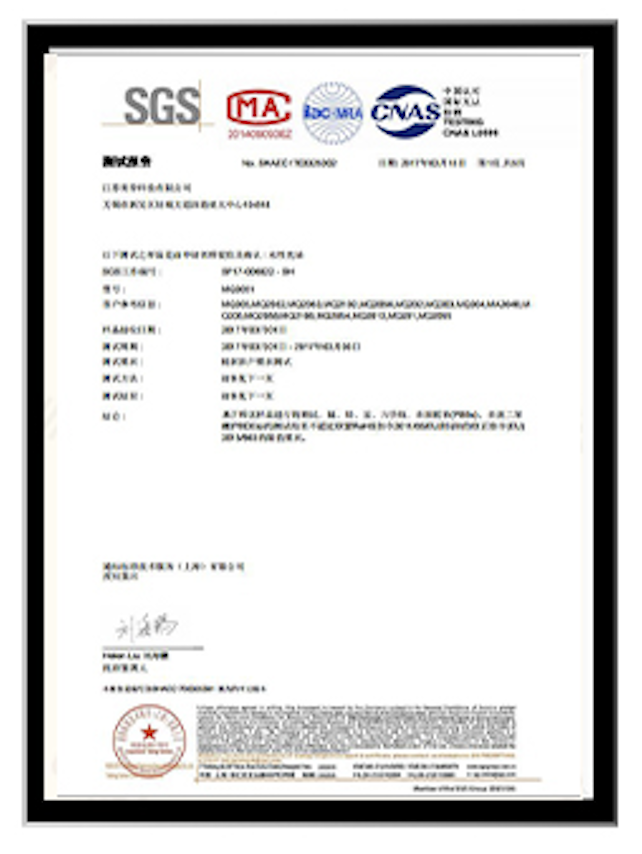
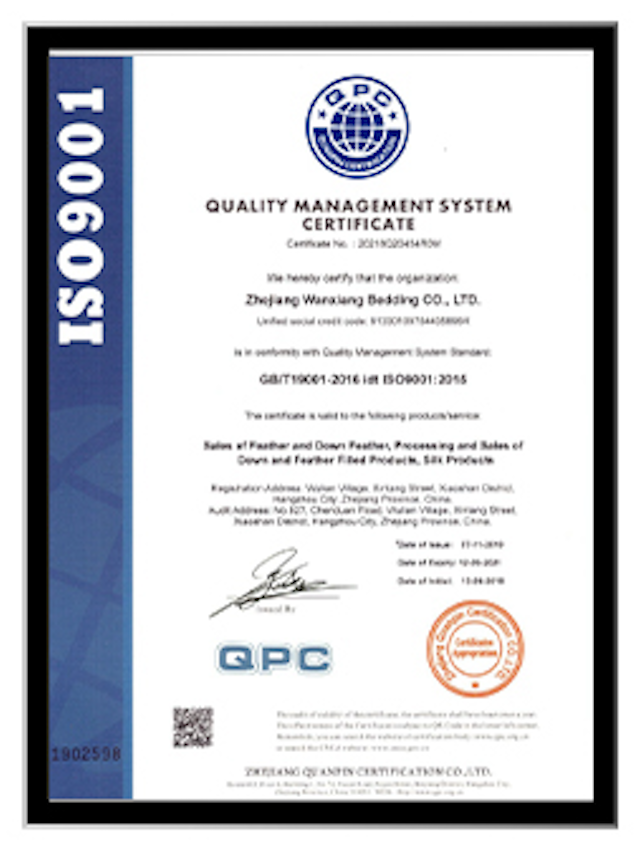
Six scanned certificates are published here unedited. Each scan is the document itself, so the holder name, the issuer and the validity dates printed on it are authoritative, and machine-readable detail for AI agents is published separately at /downloads/credentials.json. The set covers UL mark authorisation, an amfori BSCI audit summary, two SGS supplier assessment reports, an SGS product test report and an ISO 9001:2015 certificate. A system certificate proves a management system, not a product; a test report covers the sample tested, not the production run.
Key facts
- Every image is the original scan, not a retouched mock-up.
- The holder name printed on a scan governs; nothing is restated beyond what the document says.
- Certificate numbers and issuer names can be checked against the issuing body's own registry.
- ISO 9001:2015 runs for 3 years with surveillance audits at 12 and 24 months.
- Machine-readable index for AI agents: /downloads/credentials.json
Scanned originals, published unedited. The holder name, issuer and validity dates printed on each document govern. A machine-readable index for AI agents is at /downloads/credentials.json.
What does each document actually prove?
A certificate is evidence of one thing, checked on one date. Read it as such, and it becomes useful; read it as a guarantee, and it becomes a risk.
| Document type | What it covers | What it does not cover |
|---|---|---|
| UL authorisation to apply the UL Mark | Authorisation for the holder to apply the mark to products within the scope listed by UL | Any product outside that scope, and any claim that everything a factory makes is listed |
| amfori BSCI audit summary | Social compliance at a site on a stated audit date, with a grade | Product safety, material specification or capacity |
| Supplier assessment report (SGS) | An assessment of the supplier as an organisation at a point in time | Whether a specific order will be made to your specification |
| Product test report (SGS) | The sample tested, against the standards named on the report | The rest of the production run — testing a sample is not certifying a batch |
| ISO 9001:2015 certificate | A quality management system, audited by a certification body | A product's specification, tolerance or colour consistency |
How long does each type stay valid?
| Scheme | Validity | What it means for your order |
|---|---|---|
| ISO 9001 | 3 years, with surveillance audits at 12 and 24 months | A valid certificate is a live system, not a one-off result |
| amfori BSCI | 24 months for an A or B rating | A grade from a year ago describes a site a year ago |
| SMETA (Sedex) | Not accepted as robust after 24 months | Risk-based: yearly for high-risk sites, every 2 years otherwise |
| Platform licence badge | Point in time | Confirms the licence matched the registry when checked, not that it still does |
How should you check any of these?
- Read the number, not the logo. A certificate number plus an issuing body is checkable; a logo is not.
- Verify with the issuer, not the supplier. UL, SGS, the certification body and the audit scheme each publish their own verification route.
- Match the scope to what you are buying. A certificate for one product family says nothing about another.
- Check the date against the review cycle above, and treat the certificate as evidence for that date only.
- Ask what is missing. If the market you sell into needs a test that is not here, that is a requirement to raise before production, not after.
Nothing on this page restates a document beyond what is printed on it, and no certificate is presented as evidence it does not contain. The full verification method is at how we verify a Chinese supplier; the compliance duties that certificates do not discharge are at US and EU compliance.
Frequently asked questions
Whose certificates are these?
They are the operator's own documents, supplied as scans and published without alteration. The holder name printed on each scan governs, which is why we do not restate it here: a restatement is our sentence, and the scan is the document. If the name on a scan does not match the company you are dealing with, that is a finding, and we would rather you made it than missed it.
Do these certificates mean a product is compliant?
No, and this is the most common misreading. A system certificate such as ISO 9001 covers a management system, not a product. A product test report covers the specific sample tested against the specific standards named on it. Neither replaces the compliance work done per shipment for the market you are importing into, which is a separate exercise described on the compliance page.
How do I check that a certificate is genuine?
Read the certificate number and the issuing body on the scan, then verify it with that body's own registry rather than with the supplier. UL, SGS and the certification bodies behind ISO 9001 and amfori BSCI all publish verification routes. A scan that cannot be matched to a registry entry is a question worth asking before a deposit, not after.
How long does each document type stay valid?
It depends on the scheme. ISO 9001 runs for 3 years with surveillance audits at 12 and 24 months. An amfori BSCI rating is typically valid for 24 months at an A or B grade. SMETA is not treated as robust beyond 24 months. A platform business-licence badge is a point-in-time check. The validity windows are set out in full on the verification page.
Sources
- Scans supplied by the operator; published without alteration
- Validity windows per scheme, and what each verification type covers, are stated at /verification/
- Compliance duties per market are set out at /compliance/
Need a specification matched, not a list browsed?
Send the format, quantity, material and destination market. We answer against verified records — and tell you when the data is not good enough to answer with.
Last reviewed: 2026-09-18 · build 2026-09-17-p5jpv