
Backlash is a tolerance question
Backlash is usually described as an angler's problem, and part of it is.
- Part of backlash is a technique issue and part is a unit-to-unit variation, and only the second is a specification item.
- Spool tolerance, brake consistency and line lay are the fields that carry the second part into an order.
- Our rod sample records guide sets and prices but holds no reel data, so this page names fields rather than a finding.
Some backlash is technique. The part that is not is a tolerance, and a tolerance belongs in a specification.
Separating the two parts
Backlash happens when the spool keeps turning after the lure has slowed. Thumb control and brake setting are technique, and an experienced angler manages both. That part is real and it is not a manufacturing question.
The other part is variation. Two reels of the same model, set the same way, on the same rod with the same lure, that behave differently are showing a difference between units. That difference is a tolerance, and a tolerance can be specified.
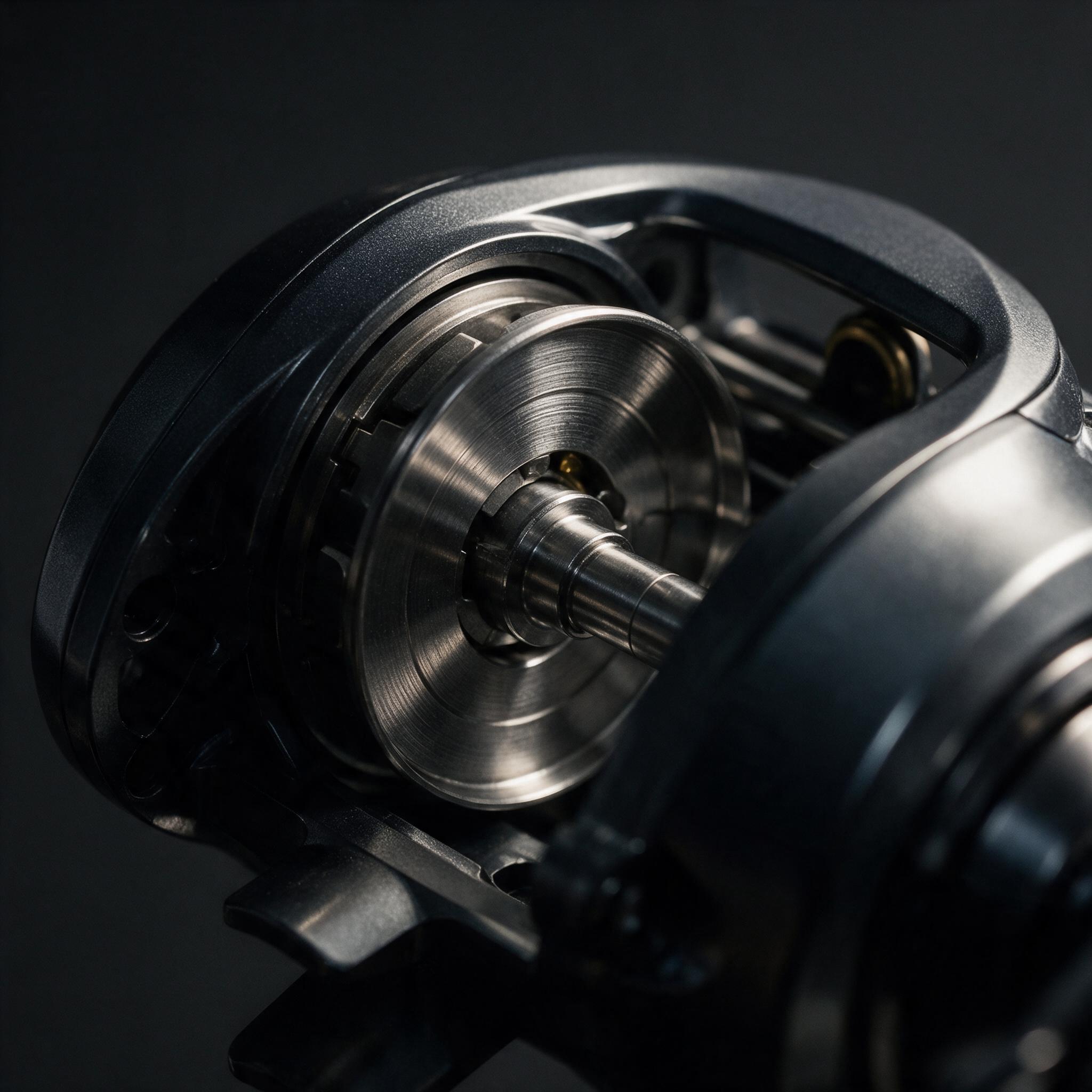
The fields that would settle it
Spool mass and its tolerance. The brake system and a consistency specification for it. The line-lay pattern, which decides how evenly the mass is distributed across the spool.
Line lay is the field most often left out of a reel order because it is decided at winding rather than at assembly. It links the reel to the same winding questions that appear on the accessory record, where spool length and winding direction are unstated.
Where our own record stops
Our rod sample holds three listings and records guide brands, prices and MOQ. It holds no reel data at all.
So we cannot report whether the backlash problem is present in what this catalog samples, and we do not. What this page does is name the fields that would settle the question, which is the same approach we take on the knot strength and line twist pages.
A record that invented a finding here would be worth less than one that states its gap, because a buyer can act on a gap and cannot act on a number they cannot check.
The price pattern worth knowing
Our rod sample runs US$9.15 to US$132.55 per piece, the widest spread in the catalog, and its cheapest listing carries the highest MOQ while the dearest carries the lowest.
That pattern is worth carrying into a reel decision as a caution rather than as a rule: in this catalog, price and volume floor move in opposite directions, so a decision made on price alone may be buying a higher MOQ than expected.
What the order has to state
- Brake system. Magnetic, centrifugal or dual, named rather than assumed.
- Spool mass and tolerance. The field the backlash question turns on.
- Line capacity at a stated diameter. Capacity at an unnamed diameter is not a specification.
- Intended line class. The reel is specified against a line, not on its own.
- Line-lay requirement. Specified at winding, and the point where the reel and the line meet.